
If you are living in ECIL, Nagaram, Kapra, AS Rao Nagar, Kushaiguda, Sainikpuri, Cherlapalli or the surrounding East Hyderabad areas, you may have noticed more people complaining of fever, cough, body pain, headache, weakness or flu-like symptoms during the prolonged monsoon season.
Recent health reports from Hyderabad have highlighted an increase in viral fever and influenza-like illnesses (ILI), with hospitals and clinics reporting more patients with fever and respiratory symptoms. Importantly, early viral fever, influenza and illnesses such as dengue can sometimes produce similar symptoms, making medical evaluation important when fever is persistent or severe.
What Is Viral Fever?
“Viral fever” is a general term commonly used when a viral infection causes an elevated body temperature along with other symptoms.
The underlying infection may involve the respiratory tract or another part of the body. Influenza and other viral respiratory infections can cause fever together with symptoms such as cough, sore throat, headache, muscle aches and fatigue.
Not every fever is necessarily a viral infection.
Fever can also occur with bacterial infections, dengue, typhoid and other illnesses. Therefore, the symptoms alone may not always be enough to determine the cause.
Why Are Viral Fevers Increasing During Seasonal Changes?
Weather conditions can influence how people interact, spend time indoors and are exposed to respiratory infections.
During prolonged rainy or humid periods, people may also experience:
- More indoor crowding
- Increased exposure to respiratory infections
- Sudden temperature changes
- Reduced ventilation in enclosed spaces
- Increased contact with people who are already sick
- Greater exposure to mosquitoes and other seasonal health risks
This means that a person with fever during monsoon should not automatically assume that it is “just viral fever.”
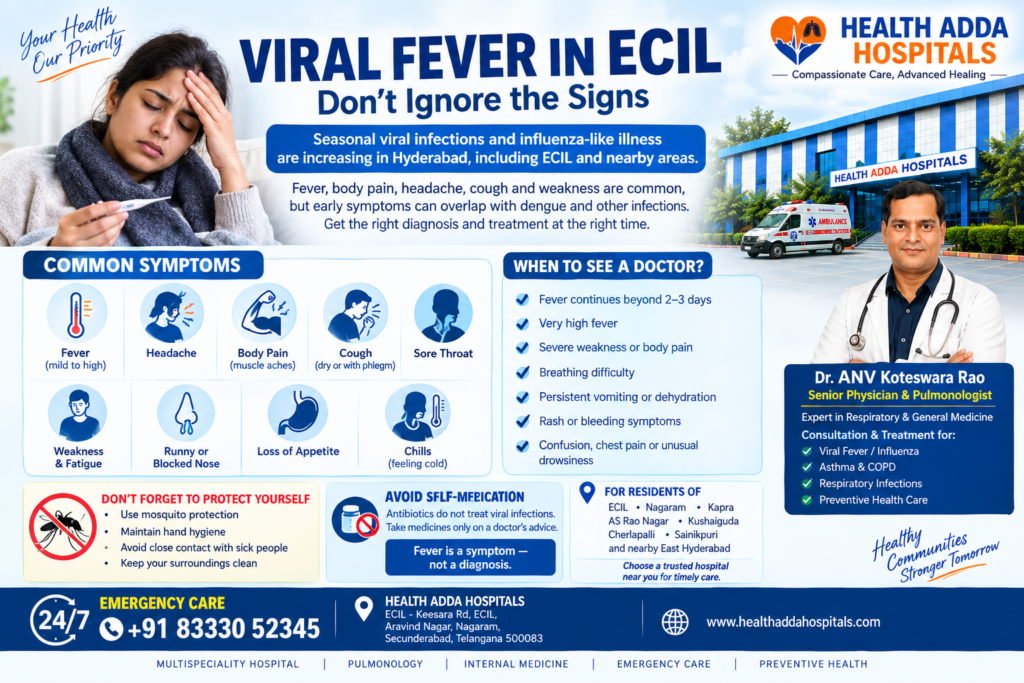
Common Symptoms of Viral Fever
Symptoms vary depending on the virus and the individual.
Common symptoms can include:
1. Fever
The temperature may be mild or high. Some viral illnesses can produce significant fever.
2. Body Pain and Muscle Aches
Generalised body pain, muscle aches and joint discomfort can occur with influenza-like illnesses.
3. Headache
Headache may accompany fever, dehydration or respiratory infection.
4. Weakness and Fatigue
Feeling unusually tired or weak is common during many viral infections.
5. Cough
A dry or productive cough may occur when the respiratory tract is involved.
6. Sore Throat
Throat irritation or pain can accompany influenza-like respiratory infections.
7. Runny or Blocked Nose
Nasal symptoms may occur with viral respiratory infections.
8. Chills or Feeling Cold
Some people experience chills or shivering when their temperature is rising.
9. Reduced Appetite
Fever and infection can temporarily reduce appetite.
10. Nausea or Other Symptoms
Some viral infections can cause gastrointestinal symptoms such as nausea, vomiting or loose stools.
Viral Fever vs Flu vs Dengue: Why Diagnosis Matters
One of the biggest problems during fever season is assuming that every fever has the same cause.
Early symptoms can overlap.
| Symptom | Viral Fever / ILI | Influenza | Dengue |
|---|---|---|---|
| Fever | Common | Common | Common |
| Body aches | Common | Often prominent | Often prominent |
| Headache | Possible | Common | Common |
| Cough | Possible | Common | Usually less prominent |
| Sore throat | Possible | Common | Less typical |
| Extreme weakness | Possible | Common | Common |
| Rash | Sometimes | Less typical | Can occur |
| Bleeding symptoms | Not typical | Not typical | Can occur in severe disease |
This table is only a general guide. Symptoms cannot reliably confirm the diagnosis by themselves.
During the current Hyderabad fever season, doctors have specifically highlighted the overlap between viral fever, influenza-like illness and dengue symptoms.
That is why persistent or severe fever may require clinical evaluation and, when appropriate, laboratory testing.
When Should You See a Doctor for Fever?
A mild viral illness may improve with supportive care and rest.
However, medical evaluation becomes particularly important when:
- Fever persists for more than 2–3 days
- Fever is very high
- Symptoms are getting worse rather than improving
- There is significant weakness
- You develop breathing difficulty
- There is persistent vomiting
- You cannot maintain adequate fluid intake
- Severe headache or unusual drowsiness develops
- You develop a rash or bleeding symptoms
- You have significant underlying medical conditions
- The patient is a young child, older adult or otherwise medically vulnerable
Do not rely solely on the assumption that persistent fever is “viral.”
What About Very High Fever?
A very high temperature deserves attention, particularly when accompanied by severe weakness, confusion, breathing difficulty, dehydration, chest pain or other concerning symptoms.
Recent Hyderabad reports have described patients presenting with high-grade fever and flu-like symptoms, while many tested negative for dengue. This illustrates an important point:
High fever does not automatically mean dengue, but it should not be ignored.
The cause needs to be assessed according to the patient’s symptoms, examination and, when necessary, appropriate tests.
Can Viral Fever Spread Within a Family?
Yes, depending on the virus causing the illness.
Respiratory viruses can spread through respiratory droplets and close contact, particularly when people spend significant time together indoors.
If one family member becomes sick:
- Wash hands regularly
- Avoid sharing personal items
- Improve ventilation
- Cover coughs and sneezes
- Consider masking in crowded indoor settings when appropriate
- Clean frequently touched surfaces
- Avoid unnecessary close contact with vulnerable family members
- Stay home from work or school when significantly unwell
Good respiratory hygiene can help reduce transmission.
What Should You Do at Home?
For many uncomplicated viral illnesses, supportive care is important.
Rest
Your body needs adequate rest while recovering.
Maintain Hydration
Drink sufficient fluids unless a doctor has advised you to restrict fluids.
Water, appropriate oral fluids and other suitable beverages can help prevent dehydration.
Eat Light, Nutritious Food
If your appetite is reduced, smaller meals may be easier to tolerate.
Monitor Symptoms
Keep track of:
- Temperature
- Hydration
- Breathing
- Urine output
- New symptoms
- Whether the fever is improving or worsening
Avoid Unnecessary Antibiotics
Antibiotics treat bacterial infections. They do not treat ordinary viral infections.
Do not start antibiotics simply because you have fever unless they have been prescribed following appropriate medical assessment.
Should You Take Fever Medicine Without Seeing a Doctor?
Self-medication can sometimes create problems, especially when the cause of fever has not been established.
Different illnesses can require different approaches.
For example, because dengue can involve bleeding risk, people should not casually take medicines without considering the possibility of dengue or other conditions.
If the fever is persistent, unusually high, recurrent or accompanied by warning symptoms, medical evaluation is safer than repeatedly taking over-the-counter medicines.
Viral Fever and People With Asthma or Lung Disease
People with asthma, COPD or other chronic respiratory conditions should pay particular attention to fever accompanied by:
- Increasing cough
- Wheezing
- Chest tightness
- Increasing phlegm
- Breathlessness
- Reduced exercise tolerance
A respiratory infection can worsen an existing lung condition.
If you already have a doctor-prescribed asthma or COPD action plan, follow it as directed. Do not stop or change regular respiratory medicines without medical advice.
For significant breathing difficulty, seek urgent medical care.
When Is Fever an Emergency?
Seek urgent medical attention if fever is accompanied by symptoms such as:
🚨 Severe difficulty breathing
🚨 Chest pain
🚨 Confusion or difficulty staying awake
🚨 Fainting
🚨 Severe dehydration
🚨 Persistent vomiting
🚨 Seizures
🚨 Blue or grey lips or fingertips
🚨 Significant bleeding
🚨 Rapid deterioration
Children, older adults and people with significant underlying illnesses may require earlier medical assessment.
Where Can ECIL Residents Get Medical Evaluation for Fever?
For residents of ECIL, Nagaram, Kapra, AS Rao Nagar, Kushaiguda, Cherlapalli, Sainikpuri and surrounding East Hyderabad areas, choosing a nearby medical facility can make evaluation easier when symptoms persist.
Health Adda Hospitals is located on ECIL – Keesara Road, Aravind Nagar, Nagaram, Secunderabad, Telangana 500083.
The hospital provides multispecialty medical care, with respiratory care and pulmonology services available under Dr. ANV Koteswara Rao, Senior Physician & Pulmonologist.
For patients with fever accompanied by cough, wheezing, breathlessness or other respiratory symptoms, appropriate medical evaluation can help determine whether the problem is a simple viral illness or requires further investigation.
Viral Fever in ECIL: When Should You Get Checked?
A useful rule is:
Mild symptoms + improving
Continue appropriate supportive care and monitor.
Fever continuing beyond 72 hours
Consider medical evaluation.
High or worsening fever
Seek medical advice sooner.
Fever + breathing difficulty
Seek urgent medical attention.
Fever + bleeding, confusion or severe weakness
Seek emergency care.
The exact evaluation depends on age, symptoms, medical history, examination findings and local disease patterns.
How Can You Reduce the Risk of Viral Infections?
You cannot prevent every viral infection, but you can reduce exposure.
Practice regular hand hygiene
Wash your hands with soap and water, particularly before eating and after coughing, sneezing or returning from public places.
Improve indoor ventilation
Fresh air and appropriate ventilation can help reduce exposure to respiratory infections.
Avoid close contact with sick people
If someone is unwell, minimise unnecessary close contact where practical.
Cover coughs and sneezes
Use a tissue or your elbow rather than your hands.
Stay home when sick
Avoid spreading infection to colleagues, classmates and other family members.
Maintain good general health
Adequate sleep, hydration, balanced nutrition and management of chronic conditions support overall health.
Keep mosquito breeding areas under control
During monsoon, remember that fever may have several causes. Removing stagnant water around homes and communities can help reduce mosquito breeding.
Frequently Asked Questions
Is viral fever common in ECIL?
Viral fever and influenza-like illnesses are seasonal concerns across Hyderabad, including the East Hyderabad region. However, local disease prevalence can change over time, so persistent or severe fever should be medically evaluated rather than assumed to be viral.
How long does viral fever usually last?
The duration depends on the virus and the person’s health. Many uncomplicated viral infections improve over several days, but persistent, worsening or unusually severe fever warrants medical assessment.
Is viral fever contagious?
Some viruses that cause fever, particularly respiratory viruses, can spread from person to person.
Can dengue look like viral fever?
Yes. Early dengue can share symptoms with other viral illnesses, including fever and body aches. Testing may be required when clinically indicated.
Should I take antibiotics for viral fever?
Antibiotics do not treat viral infections. They should only be used when medically indicated and prescribed by an appropriate healthcare professional.
When should I see a doctor for fever in ECIL?
If fever persists beyond approximately 72 hours, is unusually high, worsens, or is accompanied by breathing difficulty, severe weakness, dehydration, chest pain, confusion, bleeding or other warning signs, seek medical evaluation.
Is fever with cough always influenza?
No. Fever and cough can occur with many respiratory infections. A clinical assessment may be required to determine the likely cause.
Can children get influenza-like illness?
Yes. Children can develop respiratory viral infections and may experience fever, cough, sore throat, headache, body aches and fatigue.
What if fever is accompanied by breathlessness?
Breathlessness is a warning symptom and should not be dismissed as ordinary viral fever. Seek prompt medical evaluation, particularly if breathing difficulty is significant or worsening.
Where can I consult a doctor for fever near ECIL?
Residents of ECIL, Nagaram, Kapra, AS Rao Nagar, Kushaiguda, Cherlapalli and surrounding areas can seek medical evaluation at a nearby hospital or qualified physician. Health Adda Hospitals is located on ECIL – Keesara Road, Nagaram.
Final Takeaway
Fever is a symptom, not a diagnosis.
During Hyderabad’s current seasonal fever period, viral fever and influenza-like illnesses are being reported alongside other infections that can initially produce similar symptoms.
If you have persistent fever, high fever, severe weakness, breathing difficulty or other warning signs, do not rely on self-diagnosis.
Early medical evaluation can help identify the likely cause and determine whether further testing or treatment is necessary.
For residents of ECIL, Nagaram, Kapra, AS Rao Nagar, Kushaiguda, Cherlapalli and nearby East Hyderabad areas, timely access to medical care can be especially useful when fever does not improve or symptoms become concerning.
Health Adda Hospitals
ECIL – Keesara Road, Aravind Nagar, Nagaram, Secunderabad, Telangana 500083
24/7 Emergency Care
+91 83330 52345
www.healthaddahospitals.com