
People with COPD may experience worsening cough, phlegm, wheezing or breathlessness when exposed to respiratory infections, air pollution, smoke, dust or sudden temperature changes. Cold air can make breathing more difficult for people with chronic lung disease, while humidity and weather changes may also aggravate symptoms. A COPD flare-up means symptoms become noticeably worse than the person’s usual condition and may require medical assessment.
Introduction
If you have COPD, you may notice that your breathing is not the same every day.
Some days you may walk normally, complete household activities and manage your usual routine. On other days, even a short walk may leave you unusually breathless.
You may also notice:
- More coughing
- More phlegm
- Wheezing
- Chest tightness
- Reduced ability to perform normal activities
- Increased tiredness
When these symptoms become significantly worse than your normal day-to-day symptoms, it may be a COPD flare-up, also called an exacerbation.
Weather changes can be one of the factors that aggravate symptoms. Cold spells, humidity, air pollution, smoke, dust and respiratory infections can all contribute to worsening COPD symptoms.
For patients in ECIL, Nagaram, Kapra, AS Rao Nagar, Kushaiguda and surrounding East Hyderabad, understanding these warning signs is especially important.
What Is a COPD Flare-Up?
COPD is a chronic lung condition that causes persistent airflow limitation and breathing-related symptoms.
A flare-up occurs when your usual symptoms suddenly become worse than normal.
For example, you may normally have:
“A little cough when I wake up.”
But during a flare-up, you may experience:
“I am coughing much more, producing more mucus and becoming breathless while doing things I normally manage.”
That change from your normal pattern is important.
Why Can Weather Changes Affect COPD?
Weather does not cause every COPD flare-up, but certain environmental conditions can make symptoms worse.
🌡️ Cold Air
Cold air can make breathing more uncomfortable for people with chronic lung conditions and may aggravate coughing, wheezing and breathlessness.
Early mornings can be particularly uncomfortable for some patients when temperatures are lower.
💧 Humidity & Weather Changes
Periods of high humidity and rapid weather changes can aggravate breathing problems in some people with COPD. The NHS specifically advises people with COPD to be aware of cold spells as well as hot weather and humidity because these conditions can worsen breathing symptoms.
🌫️ Air Pollution
Polluted air can be particularly problematic for people living with chronic respiratory disease.
Potential irritants include:
- Traffic exhaust
- Dust
- Smoke
- Industrial fumes
- Fine particulate matter
- Strong chemical fumes
Air pollution can irritate the respiratory system and worsen COPD symptoms.
The Four Warning Signs of a COPD Flare-Up
1. Your Cough Becomes Much Worse
A chronic cough may already be part of COPD.
But pay attention if your cough suddenly becomes:
- More frequent
- More severe
- More persistent
- Associated with significantly increased mucus
A change from your normal cough can be an early warning sign.
2. You Become More Breathless During Normal Activities
One of the most important warning signs is increased breathlessness.
You may suddenly struggle with activities you previously managed comfortably, such as:
- Walking around the house
- Going to the bathroom
- Climbing a few stairs
- Bathing
- Getting dressed
- Walking outside
A reduction in your normal activity level can indicate that your COPD symptoms are worsening.
3. Your Phlegm Changes
If you normally produce sputum, pay attention to changes in:
- Amount
- Thickness
- Colour
An increase in sputum or a change in its colour or consistency can accompany a COPD flare-up and may sometimes indicate infection.
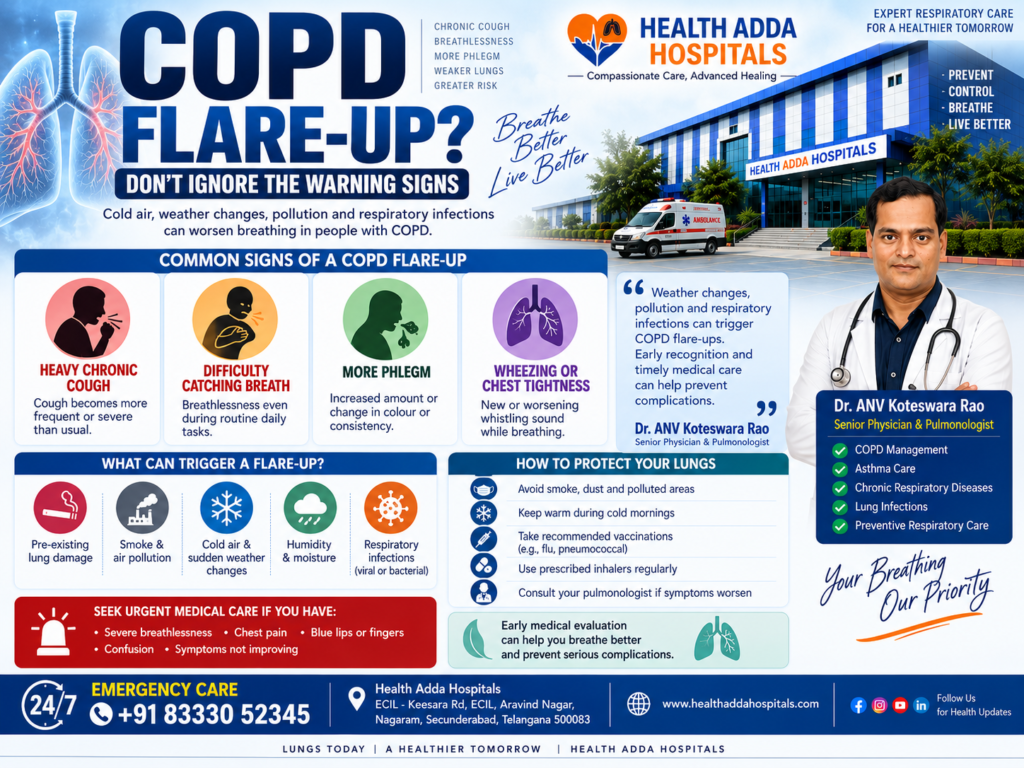
4. Wheezing or Chest Tightness Increases
A new or worsening wheeze, chest tightness or whistling sound can also signal worsening respiratory symptoms.
What Can Trigger a COPD Flare-Up?
COPD exacerbations can have several triggers.
Common triggers include:
🦠 Respiratory infections
Viruses are among the common causes of COPD exacerbations.
🌫️ Air pollution
Pollution, fumes and particulate matter can worsen respiratory symptoms.
🌡️ Temperature changes
Very cold or very hot weather can aggravate symptoms in some patients.
🚬 Smoke
Tobacco smoke and secondhand smoke are important respiratory irritants.
🧹 Dust and chemical fumes
Dust, cleaning products, strong smells and other airborne irritants may worsen symptoms.
COPD Is Not Just “A Smoker’s Cough”
A persistent cough with phlegm and breathlessness should not automatically be dismissed as a normal consequence of ageing or smoking.
COPD can affect people with different exposure histories, including some people who have never smoked. Long-term exposure to harmful fumes, dust and air pollution can also contribute to COPD risk.
If breathing difficulty is affecting your daily activities, a medical evaluation is important.
How Can COPD Patients Protect Their Lungs?
Keep Track of Your Normal Symptoms
Know what is normal for you.
For example:
- How much do you normally cough?
- How much sputum do you normally produce?
- How far can you normally walk?
- How breathless do you usually become?
Knowing your baseline makes it easier to recognise a flare-up early.
Reduce Exposure to Irritants
Where practical:
✔ Avoid cigarette smoke.
✔ Avoid heavily polluted areas when pollution levels are high.
✔ Reduce exposure to dust.
✔ Avoid strong fumes and chemical irritants.
✔ Keep indoor areas adequately ventilated.
These measures can help reduce exposure to common COPD triggers.
Follow Your Prescribed Treatment Plan
COPD is a long-term condition.
If your doctor has prescribed regular inhalers or other medicines, use them exactly as directed.
Don’t stop or change your medication simply because you feel better.
A personalised COPD action plan can help patients understand what to do when symptoms are stable, worsening or severe.
When Should You See a Pulmonologist?
Consider medical evaluation if you notice:
- Increasing breathlessness
- Persistent worsening cough
- Increased mucus
- Change in sputum colour
- New or worsening wheezing
- Reduced ability to perform everyday activities
- Repeated respiratory infections
- Symptoms that are progressively getting worse
Early recognition of COPD deterioration allows timely medical assessment.
🚨 When Is It an Emergency?
Do not wait for a routine appointment if you develop severe breathing difficulty, especially if it is significantly worse than your usual symptoms.
Urgent medical attention is particularly important if there is:
- Severe breathlessness
- Chest pain
- Coughing up blood
- Blue or grey lips/fingertips
- Confusion
- Severe weakness
- Very low oxygen levels
- Breathing difficulty that is not improving with your prescribed emergency plan
These can be signs of a serious respiratory problem requiring urgent assessment.
COPD & Seasonal Changes: Don’t Ignore the Pattern
If you notice that your breathing repeatedly becomes worse during particular weather conditions, keep a record.
Note:
📅 Date
🌡️ Weather conditions
😮💨 Breathlessness
🫁 Cough
💧 Phlegm
💊 Medication use
This information can help your pulmonologist understand your symptom pattern and develop an appropriate management plan.
Expert Advice from Dr. ANV Koteswara Rao
“If you have COPD, don’t wait until breathing becomes severely difficult. Learn your normal symptoms and recognise changes early. Cold weather, pollution, respiratory infections and other environmental triggers can worsen symptoms. Early medical evaluation can help prevent a flare-up from becoming more serious.”
Why Choose Health Adda Hospitals for Respiratory Care?
Health Adda Hospitals provides pulmonology and respiratory care near ECIL and Nagaram, including care for asthma, COPD, pneumonia, lung infections, respiratory allergies and related conditions. The hospital also lists 24/7 emergency support.
Dr. ANV Koteswara Rao is a pulmonologist and senior physician associated with Health Adda Hospitals, with expertise in asthma, COPD and respiratory care.
Key Takeaways
🫁 Remember the COPD “CHANGE”
C — Cough becoming worse
H — Harder to breathe during normal activities
A — Amount/appearance of phlegm changes
N — New or increased wheezing
G — General activity level decreases
E — Evaluate early
A COPD flare-up is more than simply having a “bad breathing day.” A significant change from your usual symptoms deserves attention.
Frequently Asked Questions
Can cold weather worsen COPD?
Yes. Cold weather can make breathing more difficult for some people with COPD and may aggravate respiratory symptoms.
Can pollution trigger a COPD flare-up?
Yes. Air pollution, smoke, dust and fumes can aggravate COPD symptoms and contribute to flare-ups.
Is increased coughing a sign of a COPD flare-up?
A noticeable increase in coughing compared with your normal symptoms can be a sign of worsening COPD.
Why am I becoming breathless while doing normal activities?
Increased breathlessness during activities you normally tolerate can be a warning sign that your COPD is worsening.
Can an infection cause COPD exacerbation?
Yes. Respiratory infections, particularly viral infections, are common triggers of COPD exacerbations.