
If you live in ECIL, Nagaram, Kapra, AS Rao Nagar, Kushaiguda, Cherlapalli, Sainikpuri or other parts of East Hyderabad, you may have noticed more people around you complaining of fever, body aches, weakness, headache, cough or flu-like symptoms.
A recent report by The New Indian Express highlighted a noticeable increase in fever cases being seen by clinics and hospitals across Hyderabad. Doctors reported patients with high-grade fever, severe body and joint pains, headaches, fatigue and weakness, with some temperatures reportedly reaching 104°F–105°F. At the same time, dengue positivity among those tested was relatively low, suggesting that other viral infections may be contributing to the current fever pattern.
But there is an important message for patients:
A high fever does not automatically mean dengue — and it should not automatically be dismissed as “just viral.”
Fever can have many causes.
Depending on the symptoms and clinical findings, possibilities may include:
- Viral fever
- Influenza
- Dengue
- Typhoid
- Other respiratory infections
- Other bacterial infections
- Gastrointestinal infections
- Other medical conditions
This is why persistent or unusually high fever deserves proper medical evaluation.
What Is Happening in Hyderabad?
The current situation is best understood as a seasonal increase in fever and influenza-like illness, rather than a confirmed “viral fever outbreak.”
The recent New Indian Express report noted that doctors were seeing more fever patients than usual, while public-health surveillance indicated that the overall fever trend in 2026 remained lower than the previous year.
This distinction matters.
Health information should help people understand their symptoms without creating unnecessary fear.
For residents of ECIL and surrounding East Hyderabad areas, the practical question is therefore not:
“Is there an outbreak?”
The better question is:
“If I develop a high fever, how do I know when I should see a doctor?”
Viral Fever, Influenza or Dengue?
This is one of the most common questions patients have during fever season.
Unfortunately, the early symptoms of several infections can overlap.
Viral Fever
Viral infections may cause:
- Fever
- Body aches
- Headache
- Fatigue
- Weakness
- Cough or cold symptoms
- Sore throat
- Reduced appetite
Many uncomplicated viral illnesses improve with supportive care, but persistent or severe symptoms require evaluation.
Influenza
Influenza can begin relatively suddenly.
Symptoms can include:
- Fever
- Dry cough
- Sore throat
- Nasal congestion
- Headache
- Muscle aches
- Fatigue
A recent New Indian Express medical explainer noted that distinguishing influenza from dengue and routine viral fever early in the illness can be difficult because symptoms overlap.
Dengue
Dengue can cause:
- High fever
- Severe muscle and joint pain
- Headache
- Pain behind the eyes
- Weakness
- Nausea
- Rash in some patients
Because dengue and viral fever can look similar initially, medical assessment and appropriate testing may be required.
Why Are People Worried About Dengue?
When a person develops a sudden high fever and severe body pain, dengue is naturally one of the concerns in Hyderabad.
However, the current New Indian Express report is important because it found that only a small proportion of patients being tested were positive for dengue, despite the increase in fever cases.
That means:
High fever ≠ automatically dengue.
At the same time:
High fever ≠ something to ignore.
The appropriate approach is to assess the patient and determine whether testing is necessary.
7 Symptoms You Should Not Ignore
Whether you are in ECIL, Nagaram, Kapra, Sainikpuri or anywhere else in Hyderabad, pay attention to the overall pattern of symptoms.
1. Fever That Is Very High
Temperatures around or above 103°F deserve medical attention, particularly when accompanied by significant weakness or other symptoms.
2. Fever That Persists
If fever continues for several days instead of improving, medical evaluation may be appropriate.
3. Severe Body or Joint Pain
Strong body aches can occur with several infections and should be considered along with the other symptoms.
4. Difficulty Breathing
Breathlessness is particularly important.
A respiratory infection can sometimes worsen asthma, COPD or other underlying lung conditions.
5. Persistent Vomiting
Repeated vomiting can result in dehydration and may require medical assessment.
6. Severe Weakness or Drowsiness
Extreme weakness, confusion or unusual drowsiness should not be dismissed as ordinary fever.
7. Symptoms That Improve and Then Suddenly Worsen
A patient who initially appears to be recovering but then develops worsening fever, breathing difficulty, chest symptoms or severe weakness should be reassessed promptly.
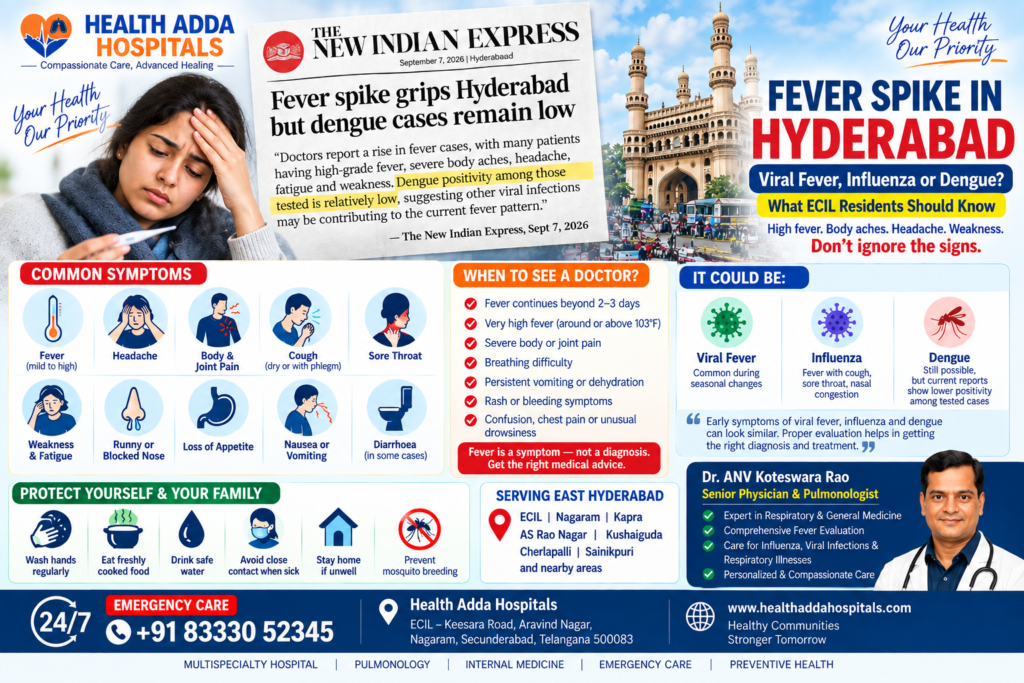
When Should You Visit a Doctor for Fever in ECIL?
A practical approach is:
Mild fever + mild symptoms + improving
Continue appropriate supportive care and monitor.
Fever continuing beyond 2–3 days
Consider medical evaluation.
Very high fever
Seek medical advice rather than repeatedly self-medicating.
Fever + severe body pain
Get assessed if symptoms are significant or persistent.
Fever + breathing difficulty
Seek prompt medical attention.
Fever + confusion, severe dehydration or chest pain
Seek urgent medical care.
The exact evaluation depends on the patient’s age, medical history, symptoms and examination.
What If You Have Asthma or COPD?
This is especially important for people with chronic respiratory conditions.
Influenza and other respiratory infections can aggravate:
- Asthma
- COPD
- Chronic bronchitis
- Other chronic lung diseases
Watch for:
- Increasing cough
- Wheezing
- Chest tightness
- Increasing phlegm
- Breathlessness
- Reduced ability to perform normal activities
If you already have a doctor-prescribed respiratory action plan, follow it as directed.
Do not stop regular prescribed medicines without medical advice.
If breathing becomes significantly difficult, seek urgent medical care.
Fever in Children: Don’t Look Only at the Temperature
Children can present differently from adults.
A child with influenza may have:
- Fever
- Cough
- Sore throat
- Fatigue
- Muscle aches
- Reduced appetite
Some children can also develop:
- Vomiting
- Diarrhoea
- Abdominal symptoms
Recent medical reporting has highlighted that influenza in children can sometimes be misleading because gastrointestinal symptoms may accompany respiratory symptoms.
Parents should seek prompt medical attention if a child develops:
- Difficulty breathing
- Fast breathing
- Blue or grey lips
- Severe lethargy
- Inability to drink fluids
- Persistent chest pain
- Worsening symptoms after initial improvement
What About Older Adults?
Older adults may not always present with the same classic symptoms as younger adults.
Fever, weakness, reduced appetite, confusion or worsening of an existing medical condition may be important warning signs.
Extra caution is also appropriate for people with:
- Diabetes
- Heart disease
- Chronic lung disease
- Kidney disease
- Weakened immunity
A lower threshold for medical evaluation may be appropriate in these groups.
Don’t Start Antibiotics Just Because You Have Fever
This is one of the most important messages during a seasonal fever surge.
Antibiotics do not treat influenza or other viral infections.
Recent medical reporting has again highlighted concerns around inappropriate antibiotic use during influenza-like illness.
Taking antibiotics without medical advice can expose you to unnecessary side effects and contribute to antimicrobial resistance.
If your fever requires treatment, the appropriate medicine depends on the underlying cause.
Do not use leftover antibiotics or someone else’s prescription.
What About Antiviral Treatment?
Antiviral medicines may be appropriate for certain influenza patients, particularly those at higher risk of complications or those with more severe disease.
Treatment decisions should be made by a qualified doctor based on:
- Symptoms
- Duration of illness
- Risk factors
- Clinical examination
- Local disease patterns
- Other relevant findings
Some influenza antivirals work best when started early, particularly in people at increased risk of complications.
That is one reason why high-risk patients should not delay medical consultation.
How Can ECIL Families Reduce Infection Spread?
You cannot eliminate every infection, but several simple measures can reduce transmission.
Wash your hands regularly
Especially before eating and after coughing, sneezing or returning from crowded places.
Improve ventilation
Fresh-air circulation can be helpful in reducing exposure to respiratory infections.
Cover coughs and sneezes
Use a tissue or your elbow rather than your hands.
Avoid close contact when sick
If you have fever or significant respiratory symptoms, avoid unnecessary close contact with vulnerable family members.
Stay home when unwell
Avoid spreading illness at workplaces, schools and other crowded settings.
Keep vulnerable family members protected
Pay particular attention to infants, older adults and people with chronic diseases.
Why ECIL Residents Should Pay Attention
ECIL is part of the densely populated East Hyderabad urban belt, connecting residential areas including:
ECIL → Nagaram → Kapra → AS Rao Nagar → Kushaiguda → Cherlapalli → Sainikpuri → Malkajgiri
During seasonal changes, residents may be exposed to multiple overlapping health risks, including respiratory infections, vector-borne diseases and other seasonal illnesses.
A Telangana health advisory has also warned that changes in temperature and increased humidity can contribute to seasonal vector-borne, waterborne and airborne disease risks.
That makes symptom awareness particularly important.
When Is Fever an Emergency?
Do not wait for a routine consultation if a patient develops:
🚨 Severe difficulty breathing
🚨 Chest pain
🚨 Blue or grey lips
🚨 Confusion
🚨 Fainting
🚨 Severe dehydration
🚨 Persistent vomiting
🚨 Seizures
🚨 Significant bleeding
🚨 Rapid deterioration
These symptoms require urgent medical assessment.
Where Can ECIL Residents Seek Medical Evaluation?
If you are searching for a fever doctor near ECIL, physician near Nagaram, or medical evaluation for persistent fever in East Hyderabad, choosing an accessible healthcare facility can help you obtain timely assessment.
Health Adda Hospitals is located at:
ECIL – Keesara Road, ECIL, Aravind Nagar, Nagaram, Secunderabad, Telangana 500083
The hospital provides multispecialty medical care and has pulmonology services for patients whose fever is accompanied by cough, wheezing, breathlessness or other respiratory symptoms.
Dr. ANV Koteswara Rao is a Senior Physician & Pulmonologist at Health Adda Hospitals.
Need medical evaluation?
📞 +91 83330 52345
🏥 Health Adda Hospitals
24/7 Emergency Care
Final Takeaway for Hyderabad & ECIL Residents
The current fever situation in Hyderabad should encourage awareness, not panic.
A high fever with body aches can occur with viral infections, influenza, dengue and other illnesses.
You cannot reliably determine the cause simply by looking at the temperature.
Remember:
High fever → don’t panic.
Persistent fever → don’t ignore it.
Breathing difficulty → seek urgent care.
Severe weakness/dehydration → get medical attention.
Don’t self-prescribe antibiotics.
If you or a family member develops persistent or unusually high fever, particularly with respiratory symptoms or other warning signs, consult a qualified healthcare professional.
For residents of ECIL, Nagaram, Kapra, AS Rao Nagar, Kushaiguda, Cherlapalli, Sainikpuri and surrounding East Hyderabad, timely medical evaluation can help determine whether the illness is likely to be a routine viral infection or requires further investigation.
Health Adda Hospitals
ECIL – Keesara Road, Aravind Nagar, Nagaram, Secunderabad, Telangana 500083
📞 +91 83330 52345
24/7 Emergency Care