
Introduction
For many people, the arrival of the monsoon brings welcome relief from the summer heat. However, for individuals living with asthma, allergies, COPD, or other respiratory conditions, the rainy season can also bring increased breathing difficulties.
Higher humidity, mold growth, dust mites, pollen, and seasonal viral infections create an environment that can trigger asthma attacks and worsen existing lung diseases.
If you notice that your cough, wheezing, or breathlessness becomes worse during the rainy season, you are not alone.
Understanding why this happens can help you manage your symptoms and protect your lungs.
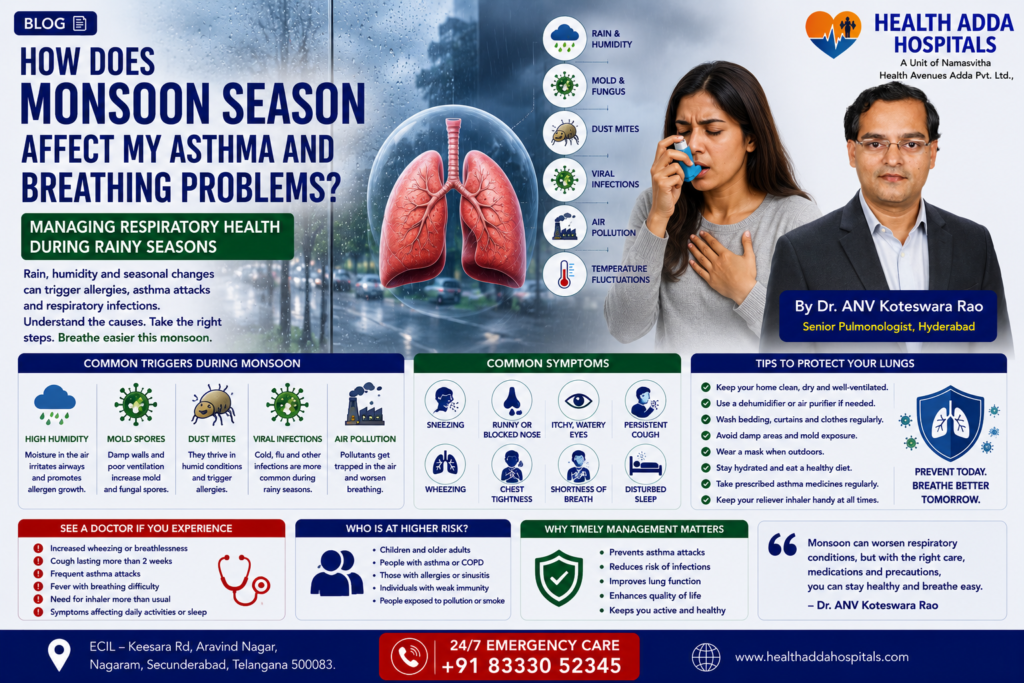
Why Does the Monsoon Affect Breathing?
During the rainy season, environmental conditions change significantly.
Common changes include:
- Increased humidity
- Mold and fungal growth
- Higher dust mite populations
- Seasonal viral infections
- Air pollution trapped near the ground
- Sudden temperature changes
These factors can irritate sensitive airways and trigger respiratory symptoms.
Common Monsoon Triggers for Asthma
High Humidity
Excess moisture in the air makes breathing uncomfortable for many asthma patients.
Humidity may also encourage mold and dust mite growth inside homes.
Mold Spores
Damp walls, bathrooms, kitchens, and poorly ventilated rooms can develop mold.
Breathing mold spores may trigger:
- Wheezing
- Sneezing
- Persistent cough
- Asthma flare-ups
Dust Mites
Dust mites thrive in humid conditions.
They commonly live in:
- Mattresses
- Pillows
- Sofas
- Curtains
- Carpets
For people with allergies, exposure may worsen respiratory symptoms.
Seasonal Viral Infections
The rainy season often sees an increase in:
- Viral fever
- Common cold
- Influenza
- Respiratory tract infections
These illnesses may aggravate asthma and COPD.
Air Pollution
Even during the monsoon, pollutants may remain suspended in the air, irritating already inflamed airways.
Common Symptoms
People with asthma or allergies may experience:
✔️ Wheezing
✔️ Persistent cough
✔️ Chest tightness
✔️ Difficulty breathing
✔️ Shortness of breath
✔️ Night-time coughing
✔️ Fatigue
Who Is Most at Risk?
The rainy season can particularly affect:
- Children
- Older adults
- Asthma patients
- COPD patients
- Individuals with allergic rhinitis
- People with weakened immunity
How to Protect Yourself During the Monsoon
Simple preventive measures include:
✅ Keep your home dry and well-ventilated
✅ Clean air-conditioner filters regularly
✅ Reduce indoor dampness
✅ Avoid exposure to mold
✅ Wash bedding frequently
✅ Stay hydrated
✅ Wear a mask in dusty environments
✅ Continue prescribed asthma medications
✅ Keep your rescue inhaler readily available
When Should You Visit a Doctor?
Seek medical attention if:
🚨 Wheezing increases
🚨 Breathlessness becomes severe
🚨 Cough lasts more than two weeks
🚨 Fever accompanies breathing difficulty
🚨 You need your rescue inhaler more frequently
🚨 Symptoms disturb sleep
Early treatment may help prevent serious asthma attacks and respiratory complications.
Common Myths
“Rain Cleans the Air Completely”
Rain reduces some pollutants but also increases humidity and mold, which can trigger allergies and asthma.
“Asthma Only Gets Worse in Winter”
Asthma can worsen during any season depending on environmental triggers, including the monsoon.
“A Mild Cough Is Nothing to Worry About”
Persistent cough during the rainy season may indicate asthma, allergy, infection, or another respiratory condition that should be evaluated.
How Health Adda Hospitals Supports Respiratory Health
At Health Adda Hospitals, comprehensive respiratory care focuses on prevention, early diagnosis, and personalized management of asthma and other lung conditions.
According to Dr. ANV Koteswara Rao, identifying seasonal triggers and following a structured asthma management plan can significantly reduce flare-ups and improve quality of life.
Patient education remains a key part of helping individuals stay healthy throughout the changing seasons.
Clinical Perspective
According to Dr. ANV Koteswara Rao, many asthma exacerbations during the monsoon can be prevented through trigger avoidance, adherence to prescribed medications, regular follow-up, and timely medical evaluation when symptoms worsen.
Patients should never ignore increasing breathlessness or frequent wheezing, particularly during seasonal changes.
Conclusion
The monsoon season brings environmental changes that can significantly affect respiratory health.
Higher humidity, mold, dust mites, and infections all contribute to worsening asthma and breathing problems.
By recognizing these triggers early and seeking appropriate medical care when needed, patients can enjoy the rainy season while protecting their lung health.
Why Trust This Guidance?
This article is reviewed by Dr. ANV Koteswara Rao, Senior Physician & Pulmonologist at Health Adda Hospitals, Hyderabad.
Health Adda Hospitals provides evidence-based respiratory care, asthma management, allergy treatment, and patient education to help individuals breathe easier throughout every season.