
Introduction
As Hyderabad transitions from summer to the monsoon season, many people notice an increase in sneezing, itchy eyes, blocked noses, coughing, wheezing, and breathing difficulties.
Children, older adults, and individuals with asthma or allergies often experience worsening symptoms during this period.
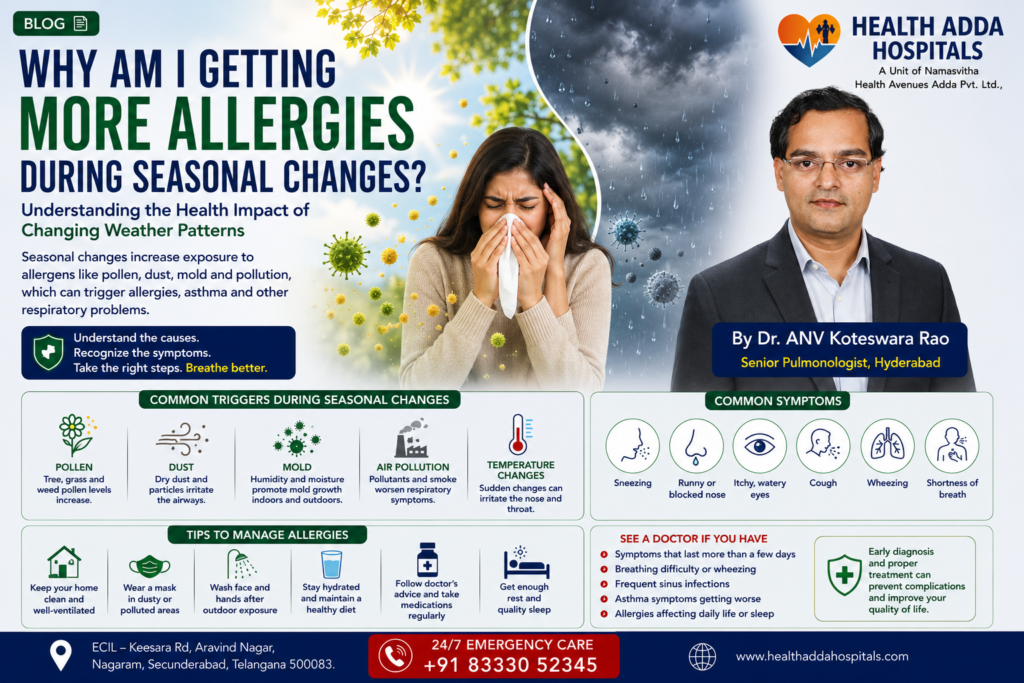
While changing weather itself does not directly cause allergies, it creates environmental conditions that increase exposure to allergens such as pollen, dust mites, mold spores, and air pollutants.
Understanding why seasonal allergies occur can help you take preventive measures and seek timely medical care when needed.
Why Do Seasonal Changes Trigger Allergies?
Seasonal transitions affect the air we breathe.
Common changes include:
- Increased pollen levels
- Higher humidity
- Mold growth
- Dust accumulation
- Air pollution
- Sudden temperature fluctuations
These environmental factors can irritate the nose, throat, eyes, and lungs, especially in people with sensitive immune systems.
Common Seasonal Allergens
Pollen
Trees, grasses, and weeds release pollen into the air.
When inhaled, pollen can trigger:
- Sneezing
- Runny nose
- Itchy eyes
- Nasal congestion
Dust Mites
Humidity during the rainy season allows dust mites to multiply rapidly inside homes.
They commonly live in:
- Mattresses
- Pillows
- Carpets
- Curtains
- Upholstered furniture
Mold Spores
Moist environments encourage mold growth.
Bathrooms, kitchens, damp walls, and poorly ventilated rooms may contain airborne mold spores that trigger allergic reactions.
Air Pollution
Weather changes can trap pollutants in the atmosphere.
Vehicle emissions, construction dust, and industrial pollutants may worsen respiratory allergies and asthma symptoms.
Common Symptoms of Seasonal Allergies
Symptoms often include:
✔️ Frequent sneezing
✔️ Runny or blocked nose
✔️ Itchy or watery eyes
✔️ Persistent cough
✔️ Throat irritation
✔️ Wheezing
✔️ Shortness of breath
✔️ Fatigue due to disturbed sleep
Who Is at Higher Risk?
Seasonal allergies are more common in:
- Children
- Older adults
- People with asthma
- Individuals with allergic rhinitis
- Patients with chronic lung diseases
- Those with a family history of allergies
Can Seasonal Allergies Affect Asthma?
Yes.
Allergies are one of the most common triggers for asthma attacks.
Exposure to allergens may cause:
- Increased wheezing
- Chest tightness
- Persistent coughing
- Difficulty breathing
Patients with asthma should monitor symptoms carefully during seasonal transitions.
Simple Ways to Reduce Allergy Exposure
You can reduce exposure by:
✔️ Keeping windows closed during high pollen periods
✔️ Wearing a mask in dusty environments
✔️ Washing hands and face after returning home
✔️ Changing clothes after outdoor activities
✔️ Keeping indoor spaces clean and dry
✔️ Avoiding damp areas where mold can grow
✔️ Staying well hydrated
✔️ Following prescribed allergy or asthma medications
When Should You See a Doctor?
Seek medical advice if:
- Allergy symptoms last for several weeks
- Over-the-counter medicines are not helping
- Breathing becomes difficult
- Wheezing develops
- Symptoms disturb sleep or daily activities
- Children develop frequent cough or breathing problems
Early evaluation can help identify triggers and improve symptom control.
Common Myths About Seasonal Allergies
“It’s Just a Common Cold”
Colds usually improve within a week, while allergies may continue as long as exposure to allergens persists.
“Only Children Get Allergies”
Seasonal allergies can develop at any age.
“Ignoring Allergies Is Safe”
Untreated allergies may increase the risk of sinus infections, sleep problems, and asthma flare-ups.
How Health Adda Hospitals Supports Allergy Care
At Health Adda Hospitals, patients receive comprehensive evaluation for seasonal allergies and respiratory conditions.
According to Dr. ANV Koteswara Rao, identifying allergy triggers and managing symptoms early can improve quality of life and help prevent complications, particularly for patients with asthma and chronic respiratory illnesses.
Patient education, preventive strategies, and individualized treatment plans are essential components of effective allergy management.
Clinical Perspective
According to Dr. ANV Koteswara Rao, seasonal allergies are becoming increasingly common due to environmental changes, pollution, and climate variability.
Early diagnosis, trigger avoidance, and appropriate treatment can help patients manage symptoms effectively and reduce the risk of asthma exacerbations or recurrent respiratory problems.
Conclusion
Seasonal weather changes can significantly affect respiratory health.
If sneezing, coughing, wheezing, or breathing difficulties continue beyond a few days, do not assume it is “just the weather.”
Understanding the cause of your symptoms and seeking timely medical advice can help you stay healthier throughout the changing seasons.
Why Trust This Guidance?
This article is reviewed by Dr. ANV Koteswara Rao, Senior Physician & Pulmonologist at Health Adda Hospitals, Hyderabad.
Health Adda Hospitals is dedicated to providing evidence-based respiratory care, allergy management, preventive healthcare, and patient education to help families make informed health decisions.