
Introduction
Have you ever noticed feeling unusually tired, sleepy, weak, or generally unwell whenever the weather changes suddenly?
Many people experience low energy levels during the transition from summer to monsoon, after heavy rainfall, or when temperatures fluctuate rapidly.
While occasional fatigue may simply be your body’s response to environmental changes, persistent tiredness can sometimes indicate dehydration, allergies, viral infections, respiratory illnesses, or an underlying medical condition.
Understanding why weather changes affect your body can help you stay healthier throughout the year.
How Weather Changes Affect Your Body
Your body constantly works to maintain a stable internal temperature.
Rapid weather changes force your body to adapt to:
- Temperature fluctuations
- Increased humidity
- Changes in air pressure
- Higher pollen levels
- Mold growth
- Viral infections
- Air pollution
This adjustment requires energy and may leave you feeling more fatigued than usual.
Common Reasons You Feel Tired During Seasonal Changes
Your Immune System Is Working Harder
During seasonal transitions, viruses spread more easily.
Your immune system becomes more active fighting infections, even before obvious symptoms appear.
This immune response may contribute to:
- Fatigue
- Body aches
- Mild headaches
- General weakness
Dehydration
Many people drink less water during cloudy or rainy weather.
Even mild dehydration can cause:
- Low energy
- Dizziness
- Difficulty concentrating
- Headaches
Maintaining adequate hydration remains important throughout every season.
Seasonal Allergies
Allergies don’t just cause sneezing.
They may also lead to:
- Fatigue
- Poor sleep
- Nasal congestion
- Difficulty concentrating
Persistent allergies can significantly reduce daytime energy.
Poor Sleep Quality
Weather changes often disturb sleep due to:
- Humidity
- Nasal blockage
- Persistent coughing
- Breathing discomfort
Poor sleep quickly contributes to daytime tiredness.
Viral Infections
The transition into the rainy season often brings:
- Viral fever
- Common cold
- Influenza
- Respiratory infections
Fatigue is often one of the earliest symptoms.
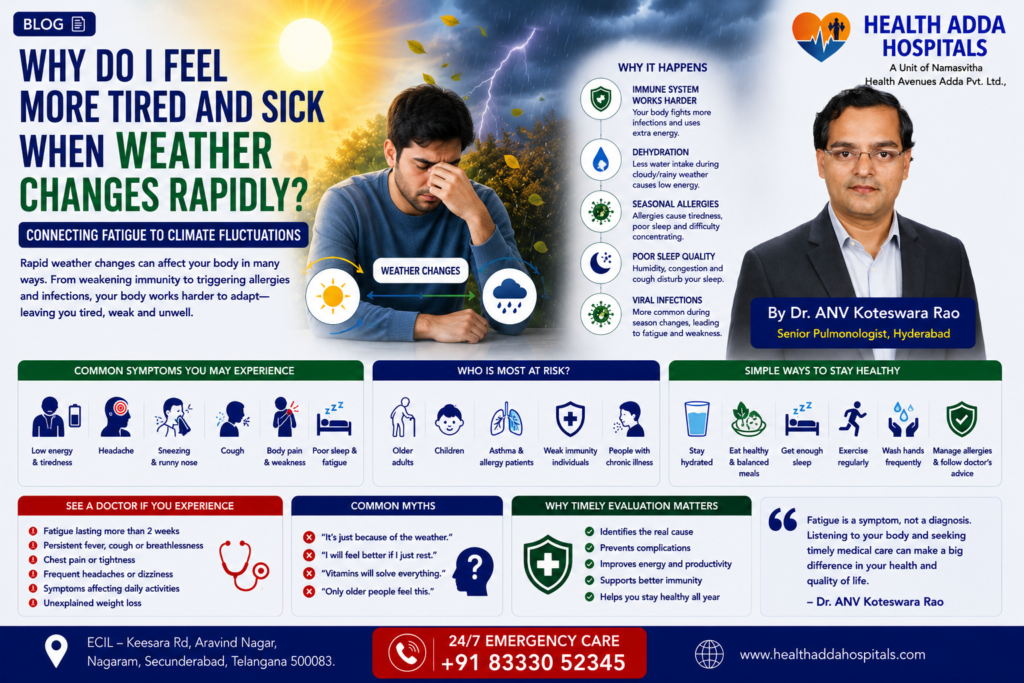
Symptoms That Often Accompany Weather-Related Fatigue
You may notice:
✔️ Low energy
✔️ Body pain
✔️ Headache
✔️ Sneezing
✔️ Runny nose
✔️ Cough
✔️ Mild fever
✔️ Difficulty concentrating
✔️ Reduced productivity
Who Is Most Likely to Be Affected?
Weather-related fatigue is more common in:
- Children
- Older adults
- Asthma patients
- Allergy sufferers
- Individuals with diabetes
- People with chronic lung disease
- Individuals with weakened immunity
Simple Ways to Stay Healthy During Weather Changes
You can reduce seasonal fatigue by:
✅ Drinking enough water
✅ Eating nutritious meals
✅ Getting adequate sleep
✅ Exercising regularly
✅ Avoiding unnecessary exposure to rain and damp environments
✅ Managing allergies promptly
✅ Washing hands frequently
✅ Following prescribed medications for chronic conditions
When Should You See a Doctor?
Consult a healthcare professional if:
🚨 Fatigue lasts longer than two weeks
🚨 You develop persistent fever
🚨 Shortness of breath occurs
🚨 Persistent cough develops
🚨 Chest pain occurs
🚨 You experience unexplained weight loss
🚨 Daily activities become difficult
Persistent fatigue should never be ignored, especially if accompanied by other symptoms.
Common Myths
“Feeling Tired During Weather Changes Is Always Normal”
Occasional tiredness is common, but persistent or severe fatigue should be evaluated.
“It’s Just Because I’m Getting Older”
Fatigue can have many causes besides age, including infections, nutritional deficiencies, respiratory conditions, thyroid disorders, or chronic diseases.
“Taking Vitamins Will Solve Everything”
Vitamins may help only if a deficiency exists. Identifying the underlying cause is more important than self-medicating.
How Health Adda Hospitals Supports Seasonal Health
At Health Adda Hospitals, patients receive comprehensive evaluation for fatigue, respiratory illnesses, allergies, and seasonal infections.
According to Dr. ANV Koteswara Rao, fatigue is a symptom—not a diagnosis. Identifying the underlying cause allows appropriate treatment and helps prevent more serious health problems.
Whether fatigue is related to seasonal illness, allergies, dehydration, or another medical condition, early evaluation can improve recovery and overall well-being.
Clinical Perspective
According to Dr. ANV Koteswara Rao, many patients ignore fatigue because they believe it is simply due to changing weather.
However, persistent fatigue may be an early warning sign of respiratory infections, asthma, anemia, thyroid disorders, uncontrolled diabetes, or other medical conditions.
Professional evaluation helps distinguish normal seasonal tiredness from conditions that require treatment.
Conclusion
Rapid weather changes affect the body in many ways.
Feeling tired occasionally is common, but ongoing fatigue should not be dismissed as “just the weather.”
Listening to your body, maintaining healthy habits, and seeking timely medical advice when symptoms persist can help you stay active and healthy throughout every season.
Why Trust This Guidance?
This article is reviewed by Dr. ANV Koteswara Rao, Senior Physician & Pulmonologist at Health Adda Hospitals, Hyderabad.
Health Adda Hospitals provides evidence-based medical care, preventive health services, respiratory care, and patient education to help families maintain better health throughout seasonal changes.