
Introduction
With the arrival of the monsoon season, dengue fever becomes a major public health concern across many parts of India, including Hyderabad.
Dengue is a viral infection transmitted by the bite of an infected Aedes mosquito. It is not spread directly from person to person.
Most people recover with timely medical care and adequate hydration. However, in some cases, dengue can progress to severe illness if warning signs are ignored.
Recognizing symptoms early and seeking appropriate medical evaluation can significantly improve outcomes.
What Is Dengue Fever?
Dengue is caused by the dengue virus (DENV) and is spread through the bite of infected Aedes aegypti mosquitoes.
These mosquitoes typically:
- Bite during the daytime
- Breed in stagnant clean water
- Are common during and after the rainy season
Preventing mosquito breeding is one of the most effective ways to reduce dengue transmission.
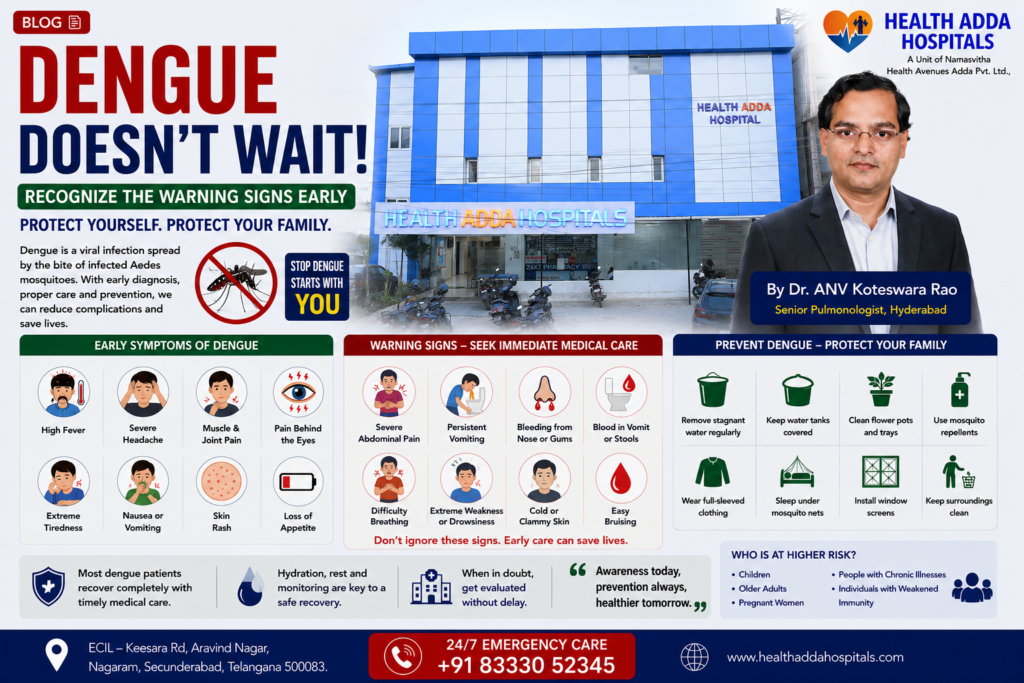
Early Symptoms of Dengue
Symptoms usually appear 4–10 days after a mosquito bite.
Common symptoms include:
✔️ High fever
✔️ Severe headache
✔️ Pain behind the eyes
✔️ Muscle pain
✔️ Joint pain
✔️ Extreme tiredness
✔️ Nausea or vomiting
✔️ Skin rash
Many patients initially mistake dengue for a common viral fever.
Warning Signs That Require Immediate Medical Attention
Seek urgent medical care if you experience:
🚨 Severe abdominal pain
🚨 Persistent vomiting
🚨 Difficulty breathing
🚨 Bleeding from gums or nose
🚨 Blood in vomit or stools
🚨 Extreme weakness or drowsiness
🚨 Cold or clammy skin
These warning signs may indicate severe dengue and require prompt medical evaluation.
Can Dengue Affect Platelet Count?
Yes.
Dengue can reduce platelet levels in some patients.
However, platelet count alone should not determine the severity of illness.
Doctors evaluate:
- Overall clinical condition
- Hydration status
- Blood pressure
- Laboratory investigations
- Signs of bleeding
Treatment decisions are based on the complete clinical picture.
How Is Dengue Diagnosed?
Doctors may recommend:
- Physical examination
- Complete blood count (CBC)
- Dengue NS1 Antigen test
- Dengue IgM/IgG antibody tests (depending on illness duration)
- Other laboratory investigations when necessary
Early diagnosis helps guide appropriate monitoring and treatment.
How Is Dengue Managed?
There is no specific antiviral treatment for dengue.
Management focuses on:
✅ Adequate hydration
✅ Rest
✅ Fever management as advised by a doctor
✅ Monitoring for warning signs
✅ Regular medical follow-up when required
Patients should avoid taking medicines without medical advice, especially painkillers that may increase bleeding risk.
How to Prevent Dengue
Simple preventive measures include:
✔️ Remove stagnant water from around your home
✔️ Empty water containers regularly
✔️ Use mosquito repellents
✔️ Wear full-sleeved clothing
✔️ Install window screens where possible
✔️ Sleep under mosquito nets if necessary
✔️ Keep surroundings clean
Community participation is essential to reduce mosquito breeding.
Who Is at Greater Risk?
Dengue can affect anyone.
Extra care should be taken for:
- Children
- Older adults
- Pregnant women
- Individuals with chronic illnesses
- People with weakened immunity
These groups may require closer medical monitoring.
Common Myths About Dengue
“Every Fever During the Monsoon Is Dengue”
No.
Many viral and bacterial infections can cause fever.
Proper medical evaluation is necessary.
“Low Platelets Always Mean Severe Dengue”
Not necessarily.
Doctors assess the patient’s overall condition rather than platelet count alone.
“Antibiotics Cure Dengue”
No.
Dengue is caused by a virus, and antibiotics do not treat viral infections unless there is a separate bacterial infection diagnosed by a doctor.
How Health Adda Hospitals Supports Dengue Care
At Health Adda Hospitals, patients with suspected dengue receive timely clinical evaluation, appropriate laboratory investigations, supportive medical care, and close monitoring based on individual needs.
According to Dr. ANV Koteswara Rao, early recognition of warning signs and proper hydration are among the most important factors in reducing dengue-related complications.
The hospital also emphasizes community awareness and preventive measures during the monsoon season.
Clinical Perspective
According to Dr. ANV Koteswara Rao, most dengue patients recover completely with early diagnosis, supportive treatment, adequate hydration, and careful monitoring.
Patients should never ignore persistent high fever, bleeding symptoms, severe abdominal pain, or increasing weakness during the illness.
Timely medical evaluation can make a significant difference.
Conclusion
Dengue is a preventable mosquito-borne illness that requires awareness and timely medical care.
Recognizing early symptoms, watching for warning signs, preventing mosquito breeding, and seeking professional medical advice can help protect you and your family during the monsoon season.
Stay informed, stay protected, and don’t ignore persistent fever.
Why Trust This Guidance?
This article is reviewed by Dr. ANV Koteswara Rao, Senior Physician & Pulmonologist at Health Adda Hospitals, Hyderabad.
Health Adda Hospitals is committed to evidence-based medical care, preventive health education, timely diagnosis, and patient-centered treatment for seasonal illnesses, including dengue fever.
Instagram Content
🦟 Dengue Cases Rise During the Monsoon—Know the Warning Signs!
Common symptoms include:
🌡️ High fever
🤕 Severe headache
💪 Muscle & joint pain
😴 Extreme tiredness
🤢 Nausea or vomiting
⚠️ Seek immediate medical care if you experience:
🚨 Severe abdominal pain
🚨 Bleeding gums or nose
🚨 Persistent vomiting
🚨 Difficulty breathing
👨⚕️ Dr. ANV Koteswara Rao reminds everyone that early diagnosis and proper hydration are key to recovery.
🏥 Health Adda Hospitals
📍 ECIL – Nagaram, Secunderabad
#Dengue #DengueAwareness #MonsoonHealth #SeasonalDiseases #HealthAddaHospitals #DrANVKoteswaraRao #HyderabadHealthcare #PreventiveHealthcare #MosquitoControl #StaySafe