
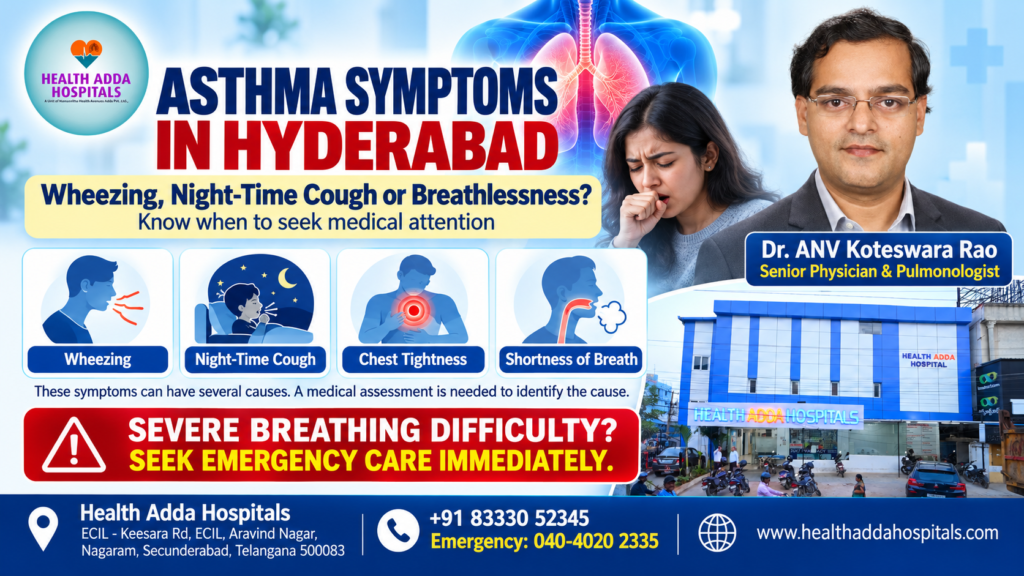
Asthma is a long-term respiratory condition in which inflammation and narrowing of the airways can make breathing difficult. Common asthma symptoms include wheezing, recurrent coughing—particularly at night or early in the morning—shortness of breath and chest tightness. Symptoms may come and go and can worsen during respiratory infections, exercise or exposure to particular triggers. Asthma affects both children and adults, but not every person with a cough or wheeze has asthma. A qualified healthcare professional can evaluate the symptoms and determine whether breathing tests, such as spirometry, are appropriate. If breathing difficulty is severe or rapidly worsening, seek emergency medical care immediately.
Key takeaways
- Wheezing, night-time cough, chest tightness and breathlessness are common asthma symptoms.
- Symptoms can vary from person to person and may become worse at night, during exercise or after exposure to triggers.
- A recurring cough does not automatically mean asthma; respiratory infections and other conditions can cause similar symptoms.
- A medical assessment may include a symptom history, physical examination and lung-function testing.
- People with diagnosed asthma should follow their prescribed treatment and clinician-provided asthma action plan.
- Severe breathing difficulty, inability to speak because of breathlessness, confusion or blue/grey lips requires immediate emergency assessment.
- Residents of ECIL, Nagaram, Kapra and nearby East Hyderabad areas can seek appropriate medical evaluation for recurring respiratory symptoms.
Introduction: Are recurring breathing symptoms affecting your daily life?
Do you experience a cough that keeps returning at night? Have you noticed a whistling sound when breathing, tightness in your chest or breathlessness during routine activities?
These symptoms can be associated with asthma, a common chronic condition affecting the airways. They may be mild and intermittent in some people, while others experience episodes that interfere with sleep, exercise, school, work or everyday activities.
However, symptoms alone cannot confirm asthma. Allergies, respiratory infections and other lung or heart conditions may cause similar problems. Understanding when to seek medical attention is therefore an important part of respiratory health.
For residents of Hyderabad, particularly ECIL, Nagaram, Kapra, Kushaiguda, AS Rao Nagar and surrounding East Hyderabad neighbourhoods, recognising recurring symptoms can help them decide when to arrange a consultation and when emergency care is necessary.
1. What is asthma?
Asthma is a chronic condition affecting the airways that carry air into and out of the lungs. In people with asthma, the airways can become inflamed and narrow. The muscles surrounding the airways may tighten, and mucus can contribute to restricted airflow.
This can lead to coughing, wheezing, chest tightness and difficulty breathing.
Asthma may affect children and adults. Symptoms can vary over time: a person may feel relatively well between episodes but experience problems after encountering a trigger.
Although asthma is a long-term condition, appropriate medical care can help many people control symptoms and maintain their everyday activities. Assessment, treatment and follow-up should be tailored to the individual.
2. Seven common asthma symptoms to recognise
1. Wheezing while breathing
Wheezing is a whistling sound that may occur when breathing, often while breathing out. Repeated wheezing should be evaluated by a healthcare professional.
Wheezing can occur with asthma, but it is not exclusive to asthma. The person’s medical history, examination and other findings help determine the likely cause.
2. Coughing at night or early in the morning
A cough that repeatedly interrupts sleep or occurs in the early morning can be associated with asthma.
However, post-infectious cough, allergies, acid reflux and other conditions can also cause persistent coughing. If the cough continues, recurs frequently or affects sleep, consider seeking medical advice rather than repeatedly treating it without knowing the cause.
3. Shortness of breath
Shortness of breath may feel like difficulty drawing enough air into the lungs or needing more effort to breathe during routine activities.
New, persistent or worsening breathlessness deserves medical assessment. Sudden or severe breathlessness should be treated as an emergency.
4. Chest tightness
Some people describe chest tightness as pressure, heaviness or a sensation that the chest is being squeezed.
Chest tightness can occur with asthma, but it may also have other causes, including heart-related conditions. Do not automatically assume that chest discomfort is asthma, particularly if it is severe, new or accompanied by sweating, faintness or significant breathlessness.
5. Symptoms that keep returning
Repeated episodes of coughing, wheezing or breathlessness may indicate an underlying respiratory problem that needs evaluation.
Even if symptoms settle on their own, recurring episodes should not be dismissed when they interfere with sleep, exercise, work or daily life.
6. Breathing symptoms during or after exercise
Some people notice coughing, wheezing or breathlessness during physical activity or shortly afterwards. Exercise can trigger asthma symptoms in some individuals, but reduced fitness and other medical conditions can also affect breathing during activity.
A clinician can help establish the cause and advise on appropriate next steps.
7. Symptoms that worsen after particular exposures
Smoke, dust, air pollution, mould, respiratory infections, strong fragrances and certain allergens can trigger symptoms in susceptible people.
Triggers differ from person to person. Keeping a record of when symptoms occur, what the person was doing and whether a particular exposure preceded the episode can help during a medical consultation.
Important: These symptoms can suggest a respiratory problem, but they do not confirm an asthma diagnosis on their own.
3. What can trigger asthma symptoms?
Asthma symptoms can worsen when a person encounters a trigger. Common triggers include:
- Tobacco smoke and second-hand smoke.
- Dust mites, mould and certain allergens.
- Outdoor air pollution and indoor airborne irritants.
- Respiratory infections, including colds and influenza.
- Cold air or weather changes for some people.
- Physical activity in individuals whose asthma is exercise-triggered.
- Strong fragrances, fumes or certain workplace exposures.
Not every trigger affects every person, and the presence of a trigger does not prove that someone has asthma.
For people living in urban areas such as Hyderabad, reducing exposure to tobacco smoke and avoidable irritants may be helpful. If symptoms repeatedly occur in a particular environment, discuss the pattern with a healthcare professional.
Do not make major changes to prescribed treatment or stop medication because symptoms temporarily improve. People with diagnosed asthma should follow their individual treatment instructions and asthma action plan.
4. When should you see a doctor for possible asthma?
Arrange a medical consultation if you or your child experiences:
- Repeated wheezing.
- A cough that regularly interrupts sleep.
- Recurring chest tightness or breathlessness.
- Breathing symptoms during routine activity.
- Symptoms that repeatedly return after respiratory infections.
- Increasingly frequent symptoms or difficulty carrying out normal activities.
- Respiratory symptoms that do not improve as expected.
- Previously diagnosed asthma that seems harder to control.
Seek assessment sooner when symptoms are new, persistent or worsening, particularly if the person has an existing lung or heart condition.
Parents should seek medical advice when a child experiences recurring cough, wheezing or difficulty breathing. Asthma can be challenging to identify in very young children, so assessment should take the child’s age, history and clinical findings into account.
You do not need to wait for symptoms to become severe before arranging a routine consultation.
5. Asthma warning signs: when is it an emergency?
Severe breathing difficulty is a medical emergency. Do not wait for a routine appointment if someone’s breathing is seriously impaired or deteriorating rapidly.
Seek emergency care immediately if the person:
- Is struggling to breathe or gasping for air.
- Cannot speak in full sentences because of breathlessness.
- Develops blue or grey lips or skin.
- Becomes confused, unusually drowsy or collapses.
- Experiences severe chest pain with breathing difficulty.
- Has a suspected asthma attack and prescribed reliever treatment is not helping as directed in their asthma action plan.
If the person has a prescribed asthma action plan, follow its emergency instructions while obtaining medical help. Do not delay emergency assessment to try home remedies.
For serious symptoms, contact local emergency services or proceed to the nearest emergency department.
6. How is asthma diagnosed?
Asthma diagnosis involves more than identifying a cough or hearing wheezing. A healthcare professional considers the person’s symptoms, their pattern over time, medical history and examination findings.
Depending on the patient’s age and presentation, assessment may include:
Medical history
The clinician may ask when symptoms occur, whether they disturb sleep, whether exercise or particular exposures make them worse, and whether there is a history of allergies or respiratory problems.
Physical examination
The clinician assesses breathing and other relevant clinical signs. A normal examination at one moment does not necessarily exclude an intermittent respiratory condition.
Lung-function testing
Spirometry is a breathing test that measures how much air a person can exhale and how quickly. It may help assess airflow and whether the findings support an asthma diagnosis.
Additional evaluation
Further testing may be considered when the diagnosis is uncertain or another condition needs to be investigated.
Not everyone needs the same tests. The clinician decides which investigations are appropriate for the individual.
7. Is it asthma, an allergy or a respiratory infection?
Several conditions can cause overlapping respiratory symptoms.
Asthma: May cause recurring wheezing, cough, chest tightness and breathlessness. Symptoms may vary over time and can be worse at night or after particular triggers.
Allergies: May cause sneezing, a runny or blocked nose, itchy eyes and other symptoms. Allergies can coexist with asthma in some people.
Respiratory infections: Can cause cough, fever, sore throat, congestion and sometimes wheezing or breathlessness. An infection may also worsen symptoms in someone who already has asthma.
Other lung or heart conditions: Can cause coughing, chest discomfort or difficulty breathing and may require different assessment and treatment.
These patterns can provide clues, but they are not a reliable basis for self-diagnosis. A clinician can assess the full picture and determine the appropriate next steps.
Avoid taking another person’s inhaler or starting prescription medication without medical advice.
8. Can asthma affect children and adults differently?
Asthma can affect people at any age, and symptoms do not always look identical in every person.
In children, recurring night-time cough, wheezing or breathing difficulty may affect sleep, play and school attendance. Parents should seek professional assessment when symptoms recur or interfere with normal activities.
Adults may notice symptoms during exercise, at work, at night or after exposure to smoke and other irritants. Adults can also develop respiratory symptoms later in life that require investigation rather than automatically being attributed to asthma.
Older adults and people with existing lung or heart disease may need particular care when new respiratory symptoms develop.
The important point is to assess the individual rather than relying on age or a single symptom to determine the cause.
9. How is asthma managed?
Asthma management is individualised. A clinician considers symptom patterns, the person’s medical history, risk factors and response to treatment.
Depending on the diagnosis, management may involve:
- Prescribed inhaled medicines to control airway inflammation and/or relieve symptoms.
- Education on correct inhaler technique.
- Identifying and reducing exposure to relevant triggers where practical.
- Monitoring symptoms and recognising signs of worsening control.
- A written asthma action plan where appropriate.
- Regular follow-up to review symptom control and treatment.
Inhalers are not all the same. Some medicines are used for ongoing control, while others may be prescribed for symptom relief. The appropriate medication and instructions depend on the person’s clinical needs.
Do not start, stop or change prescribed treatment without medical advice. If symptoms are becoming more frequent or treatment is not working as expected, arrange a review. If symptoms are severe, seek emergency care.
10. Practical steps before a respiratory consultation
A few simple preparations can help make a medical consultation more informative:
- Record the symptoms: Note whether the main concern is coughing, wheezing, chest tightness or breathlessness.
- Track the timing: Mention whether symptoms occur at night, during exercise or after a respiratory infection.
- Identify possible triggers: Record relevant exposure to smoke, dust, fragrances or other suspected triggers.
- Bring a medicine list: Include prescribed medicines and inhalers currently being used.
- Mention medical history: Tell the clinician about allergies, previous respiratory diagnoses and other significant health conditions.
- Explain the impact: Describe whether symptoms disturb sleep, affect work or school, or restrict everyday activities.
These steps can help communicate the problem clearly, but they do not replace medical assessment.
11. Finding respiratory care near ECIL and Nagaram
People experiencing recurring wheezing, night-time cough, breathlessness or other respiratory symptoms may need assessment by a general physician or a pulmonologist, depending on the symptoms and clinical situation.
A pulmonologist specialises in respiratory and lung conditions. A specialist consultation may be appropriate for recurring respiratory symptoms, suspected asthma, persistent cough, COPD or breathing difficulties that require further evaluation.
For residents of ECIL, Nagaram, Kapra, Kushaiguda, AS Rao Nagar, Sainikpuri and surrounding East Hyderabad areas, Health Adda Hospitals provides pulmonology services.
Dr. ANV Koteswara Rao is listed by Health Adda Hospitals as a Senior Physician, Pulmonologist and Critical Care Specialist, with experience in asthma, COPD, respiratory infections and other lung conditions.
Health Adda Hospitals
Address: ECIL – Keesara Rd, ECIL, Aravind Nagar, Nagaram, Secunderabad, Telangana 500083
Phone: +91 83330 52345
Emergency contact: 040-4020 2335
Website: https://healthaddahospitals.com/
Patients can contact the hospital to enquire about consultation availability and appropriate services. For severe breathing difficulty or another medical emergency, seek immediate emergency care rather than waiting for a scheduled appointment.
Frequently asked questions about asthma symptoms
1. What are the first signs of asthma?
Common symptoms include recurring cough, wheezing, chest tightness and shortness of breath. Some people notice symptoms mainly at night or early in the morning. A healthcare professional must assess the symptoms to determine their cause.
2. Can asthma cause a cough at night?
Yes. Night-time or early-morning coughing can be associated with asthma. Other conditions, including post-infectious cough, allergies and reflux, can also cause night-time coughing. Recurring symptoms should be assessed.
3. Does wheezing always mean asthma?
No. Wheezing can occur with asthma and other respiratory conditions. New or recurring wheezing deserves medical evaluation. Severe breathing difficulty requires emergency care.
4. Can adults develop asthma?
Yes. Asthma can affect both children and adults. New or recurring respiratory symptoms in adults should be assessed rather than automatically attributed to asthma.
5. Which doctor should I consult for recurring wheezing near ECIL?
A general physician may be an appropriate starting point. A pulmonologist may be suitable for recurring wheezing, persistent cough, breathlessness or suspected asthma, depending on the clinical situation.
6. Can air pollution trigger asthma symptoms?
Air pollution and airborne irritants can worsen symptoms in some people with asthma. Reducing avoidable exposure may help, but persistent or worsening symptoms still require appropriate medical advice.
7. How is asthma diagnosed?
Diagnosis may involve a medical history, physical examination and lung-function testing such as spirometry. The tests used depend on the person’s age, symptoms and clinical findings.
8. When is breathing difficulty an emergency?
Severe or rapidly worsening breathlessness, difficulty speaking because of breathing problems, blue or grey lips or skin, confusion or collapse require immediate emergency assessment.
9. Where can I seek respiratory care near ECIL?
Health Adda Hospitals is located on ECIL–Keesara Road in Aravind Nagar, Nagaram, Secunderabad. The hospital lists pulmonology among its services. Contact the hospital to enquire about consultations; severe breathing difficulty requires immediate emergency care.
Final takeaway
Recurring wheezing, night-time coughing, chest tightness and breathlessness deserve attention, particularly when they affect sleep or everyday activities. These symptoms can be associated with asthma, but other conditions can cause similar problems.
Recognising the symptoms is the first step. A professional assessment can help establish the cause and identify appropriate next steps. Severe breathing difficulty is an emergency and should never be delayed for a routine consultation.
Health Adda Hospitals — Respiratory and Pulmonology Care Near ECIL, Nagaram and East Hyderabad.
Medical disclaimer: This article is intended for general educational purposes. It does not provide an individual diagnosis or replace advice from a qualified healthcare professional.
About the author
Dr. ANV Koteswara Rao — Senior Physician and Pulmonologist
Dr. ANV Koteswara Rao is listed by Health Adda Hospitals as a Senior Physician, Pulmonologist and Critical Care Specialist. His clinical areas include asthma, COPD, respiratory infections and other lung conditions.