
Asthma Doctor Near ECIL: Finding Respiratory Care in East Hyderabad
Are you looking for an asthma doctor near ECIL? Recurring wheezing, night-time coughing, chest tightness and shortness of breath should not be ignored, particularly when these symptoms interfere with sleep, work, exercise or everyday activities.
For residents of ECIL, Nagaram, Kapra, AS Rao Nagar, Kushaiguda and surrounding parts of East Hyderabad, finding an accessible respiratory specialist can make it easier to seek medical evaluation when symptoms persist or return.
Asthma is a long-term respiratory condition that affects the airways. However, asthma is not the only cause of breathing difficulties. Respiratory infections, allergies, chronic lung conditions and other medical problems can produce similar symptoms. A proper assessment is therefore important before deciding on treatment.
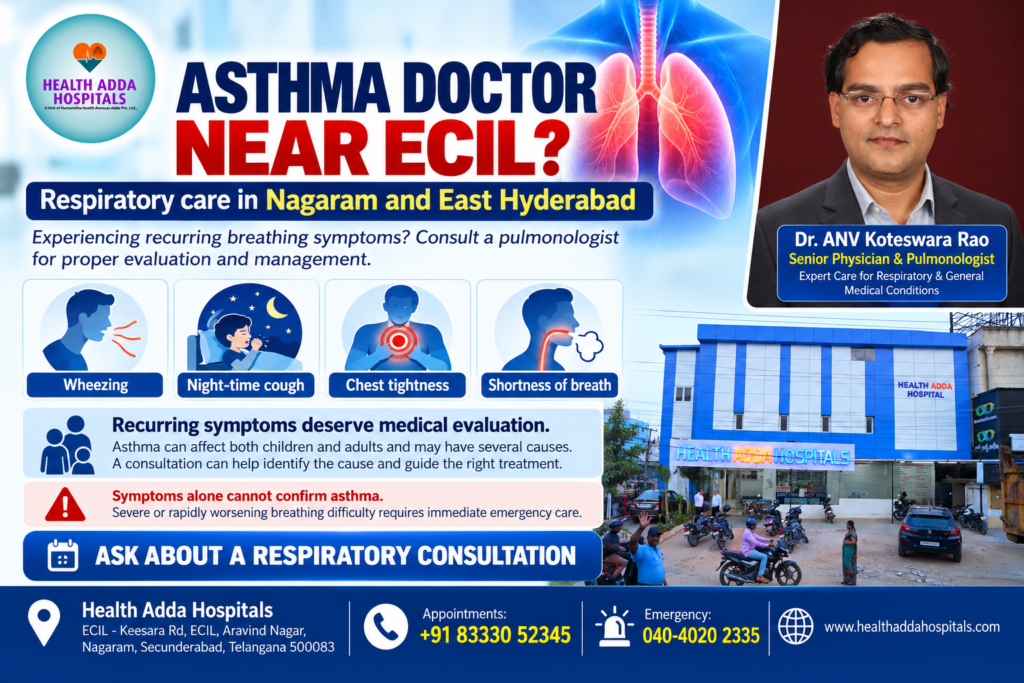
At Health Adda Hospitals, located on ECIL–Keesara Road in Aravind Nagar, Nagaram, Dr. ANV Koteswara Rao is a Senior Physician and Pulmonologist who provides respiratory and pulmonary care.
This guide explains when to consult an asthma doctor, what to expect during an assessment, how asthma may be investigated and how residents of East Hyderabad can find appropriate respiratory care.
Where Can You Find an Asthma Doctor Near ECIL?
Residents looking for an asthma doctor near ECIL can contact Health Adda Hospitals in Aravind Nagar, Nagaram, Secunderabad, to enquire about a respiratory consultation with Dr. ANV Koteswara Rao, Senior Physician and Pulmonologist.
Hospital details
- Hospital: Health Adda Hospitals
- Doctor: Dr. ANV Koteswara Rao
- Specialty: Pulmonology and respiratory care
- Address: ECIL–Keesara Road, ECIL, Aravind Nagar, Nagaram, Secunderabad, Telangana 500083
- Appointments and enquiries: +91 83330 52345
- Emergency contact: 040-4020 2335
- Website: https://healthaddahospitals.com/
Contact the hospital to confirm consultation timings, doctor availability and the suitability of any required investigations.
What Is Asthma?
Asthma is a chronic condition affecting the airways that carry air into and out of the lungs. In people with asthma, the airways can become inflamed and narrow, making breathing difficult during episodes of worsening symptoms.
Symptoms may vary over time. Some people experience occasional symptoms, while others may have recurrent episodes that affect sleep, exercise or daily activities.
Common asthma symptoms include:
- Wheezing, often heard as a whistling sound during breathing.
- Coughing, particularly at night or early in the morning.
- Chest tightness or discomfort.
- Shortness of breath.
- Respiratory symptoms that fluctuate or recur.
Asthma can affect children and adults. Some people are diagnosed during childhood, while others develop symptoms later in life.
Importantly, symptoms alone cannot confirm asthma. A doctor may recommend an examination and lung-function testing, depending on the person’s age, symptoms and medical history.
1. When Should You Consult an Asthma Doctor Near ECIL?
You do not need to wait for severe breathing difficulty before seeking medical advice. Consider arranging a consultation when respiratory symptoms repeatedly occur or interfere with normal activities.
Repeated wheezing
Wheezing may occur when airflow through the airways becomes restricted. It can be associated with asthma, but other respiratory conditions can also cause it.
If wheezing occurs repeatedly, during exercise or alongside coughing and chest tightness, a medical evaluation may help identify the underlying cause.
Night-time coughing
Repeated coughing during the night or early morning can occur in people with asthma. It may disturb sleep and affect concentration and energy levels during the day.
However, night-time cough can also be associated with allergies, respiratory infections, reflux and other conditions. A doctor can assess the pattern and decide whether further investigation is needed.
Breathlessness during everyday activities
Unusual breathlessness while walking, climbing stairs or performing familiar tasks deserves medical attention, particularly if it is new or becoming more frequent.
Do not automatically assume that breathlessness is caused by asthma. Other lung and heart conditions may produce similar symptoms.
Chest tightness that keeps returning
Recurring chest tightness accompanied by wheezing or coughing should be evaluated. Chest discomfort can have many causes, and sudden or severe chest pain requires urgent medical assessment.
Symptoms that return despite existing treatment
People already diagnosed with asthma should seek a treatment review if symptoms become more frequent, night-time waking increases or their prescribed reliever medication is needed more often than directed.
Continue following the treatment plan provided by your doctor. Do not independently stop medication or change prescribed doses.
2. Why Consult a Pulmonologist for Asthma Symptoms?
A pulmonologist specialises in conditions affecting the lungs and respiratory system.
If you are searching for a pulmonologist near ECIL, a specialist consultation may be appropriate when you experience recurring wheezing, persistent cough, suspected asthma or unexplained breathing difficulties.
Depending on your clinical needs, a pulmonologist may help with:
- Assessing recurrent respiratory symptoms.
- Investigating suspected asthma.
- Evaluating COPD and other chronic lung conditions.
- Assessing persistent cough and wheezing.
- Investigating respiratory infections and related complications.
- Reviewing prescribed inhalers and inhaler technique.
- Determining whether lung-function testing is appropriate.
- Developing an individualised management and follow-up plan.
Not every person with a cough needs a specialist consultation. A general physician may assess initial symptoms and refer the patient when appropriate. The right pathway depends on the symptoms, severity and clinical findings.
3. How Is Asthma Diagnosed?
Asthma diagnosis involves more than identifying a cough or hearing wheezing. A doctor considers the pattern of symptoms, medical history, examination findings and, when appropriate, objective testing.
Medical history
The doctor may ask questions such as:
- When did the symptoms begin?
- How frequently do they occur?
- Is coughing worse at night?
- Do symptoms occur during exercise?
- Do dust, smoke, pollution or particular exposures appear to trigger symptoms?
- Have similar episodes occurred previously?
- Is there a personal or family history of asthma or allergies?
- What medicines or inhalers are currently being used?
These details help the clinician understand whether the symptoms could be consistent with asthma or another condition.
Clinical examination
The doctor may listen to your breathing and assess other clinical findings relevant to your symptoms.
A normal examination at one point in time does not necessarily exclude asthma because symptoms can vary.
Spirometry and lung-function testing
Spirometry is a commonly used breathing test that measures how much air a person can breathe out and how quickly they can do so.
Depending on the clinical situation, testing may include measurements before and after using a prescribed bronchodilator. These results can help the doctor assess airflow obstruction and determine whether further evaluation is needed.
The appropriate test depends on factors such as age, symptoms and medical history. Not every patient requires the same investigations.
Considering other possible causes
Asthma symptoms can overlap with other respiratory problems, including allergies, bronchitis, respiratory infections and COPD. Heart conditions can also cause breathlessness.
A careful assessment helps reduce the risk of assuming that all breathing symptoms have the same cause.
4. What Can Trigger Asthma Symptoms?
Asthma triggers vary between individuals. Identifying a personal pattern can help patients and their doctors discuss ways to reduce exposure and improve symptom management.
Possible triggers include:
Dust and dust mites: Indoor dust and dust mites can trigger symptoms in susceptible individuals.
Smoke: Tobacco smoke, second-hand smoke and other airborne irritants may aggravate respiratory symptoms.
Air pollution: Pollution and traffic-related irritants may worsen symptoms in some people with asthma.
Allergens: Pollen, mould and other allergens may trigger symptoms in susceptible individuals.
Respiratory infections: Viral respiratory infections can worsen asthma symptoms.
Exercise: Physical activity can trigger symptoms in some people, although appropriate asthma management may allow many people to remain active.
Cold air and weather changes: Some individuals notice worsening symptoms during particular weather conditions.
Residents of ECIL, Nagaram, Kapra and surrounding urban areas may be concerned about dust and traffic pollution. However, living in a particular locality does not mean someone has asthma, and not everyone reacts to the same environmental exposures.
Consider keeping a symptom diary that records when symptoms occur, possible triggers, sleep disruption and medication use. This information can be useful during a consultation.
5. Asthma Symptoms in Children and Adults
Asthma can affect people of different ages, but assessment may vary depending on the patient’s age and ability to complete breathing tests.
Asthma-related symptoms in children
Parents may notice recurring night-time coughing, wheezing, breathlessness during play or respiratory symptoms that repeatedly disturb sleep.
These symptoms do not automatically confirm asthma. Children can experience similar symptoms because of respiratory infections and other conditions.
If symptoms recur or interfere with school, sleep or physical activity, arrange a medical evaluation. Seek urgent care if a child develops severe breathing difficulty.
Asthma-related symptoms in adults
Adults may experience wheezing, recurring cough, chest tightness or breathlessness during exercise and everyday activities.
New respiratory symptoms in adults should not automatically be attributed to asthma, allergies or age. A doctor can assess other potential causes and recommend appropriate investigations.
Older adults and people with existing health conditions
People with heart disease, COPD or other chronic conditions may experience symptoms similar to asthma. Their medical history is particularly important when evaluating new or worsening breathlessness.
The treatment approach should be tailored to the individual’s diagnosis and overall health.
6. Managing Asthma: Why Medical Follow-Up Matters
Asthma management is individualised. The appropriate treatment depends on symptom patterns, severity, test results, age and other clinical considerations.
If asthma is diagnosed, your doctor may discuss the following areas.
Following the prescribed treatment plan
Use medication as prescribed. Do not stop controller medication because symptoms have improved unless your doctor advises you to do so.
Learning correct inhaler technique
Incorrect inhaler technique can affect how much medicine reaches the lungs. Ask your healthcare professional to demonstrate the correct technique for your specific device and check that you can use it correctly.
Understanding your asthma action plan
Some patients benefit from a written asthma action plan prepared with their healthcare professional. It explains how to manage symptoms, when to adjust treatment according to the plan and when to seek urgent care.
Follow the plan provided specifically for you rather than relying on general online instructions.
Identifying relevant triggers
If particular exposures repeatedly worsen symptoms, discuss them with your doctor. Trigger management should be based on your circumstances rather than unnecessary restrictions.
Attending follow-up appointments
Follow-up helps the clinician review symptom control, treatment response, medication use and any new concerns.
Asthma can often be managed effectively with appropriate medical care, but it should not be self-diagnosed or treated solely through online advice.
7. When Is Breathing Difficulty an Emergency?
Some symptoms require immediate emergency assessment rather than a routine appointment with an asthma doctor.
Seek emergency medical help if a person experiences:
- Severe or rapidly worsening breathing difficulty.
- Difficulty speaking because of breathlessness.
- Blue or grey lips or skin.
- Confusion, collapse or reduced responsiveness.
- Severe symptoms that are not improving according to their prescribed asthma action plan.
Do not delay emergency care while searching for a specialist or waiting for a routine appointment. If the person has a clinician-provided asthma action plan, follow its emergency instructions while arranging help.
Health Adda Hospitals lists emergency and trauma care among its services. For urgent assistance, contact the hospital using the numbers below, while contacting local emergency services if the situation is critical.
Health Adda Hospitals emergency contact: 040-4020 2335
Hospital enquiries: +91 83330 52345
8. Finding an Asthma Doctor Near ECIL, Nagaram and Kapra
When searching for an asthma doctor near ECIL, consider the doctor’s qualifications, the relevance of their specialty, access to appropriate evaluation, location and follow-up arrangements.
For people living in East Hyderabad, nearby areas to consider include:
- ECIL: For residents around the ECIL junction and surrounding residential areas.
- Nagaram: For families living around Aravind Nagar and the ECIL–Keesara Road corridor.
- Kapra: For people looking for respiratory care within the surrounding neighbourhoods.
- AS Rao Nagar: For residents seeking specialist consultations in East Hyderabad.
- Kushaiguda: For patients comparing nearby medical services.
- Cherlapally: For residents looking for accessible healthcare in the surrounding area.
- Sainikpuri and Secunderabad: Additional areas from which patients may search for respiratory specialists.
Distance, traffic, appointment availability and the services required may influence your choice. Always verify the clinic or hospital location and consultation details before travelling.
What should you check before booking?
Before confirming a consultation, ask:
- Is a pulmonologist available on the intended date?
- Is an appointment required?
- Are lung-function tests available or arranged when clinically indicated?
- Should you bring previous prescriptions or test reports?
- What should you do if your symptoms worsen before the appointment?
These practical questions can help you prepare for your visit.
9. Respiratory Care at Health Adda Hospitals, Nagaram
Health Adda Hospitals is a multispecialty hospital located on ECIL–Keesara Road, Aravind Nagar, Nagaram, Secunderabad.
The hospital lists pulmonology and respiratory care among its services. Dr. ANV Koteswara Rao is identified on the hospital’s website as a Senior Pulmonologist and Critical Care Specialist, with experience in asthma, COPD, respiratory infections and other lung-related conditions.
Residents looking for an asthma doctor near ECIL or a pulmonologist near Nagaram can contact the hospital to enquire about an appropriate consultation.
Hospital contact details
Health Adda Hospitals
ECIL–Keesara Road, ECIL, Aravind Nagar, Nagaram, Secunderabad, Telangana 500083
- Appointments and enquiries: +91 83330 52345
- Emergency contact: 040-4020 2335
- Website: https://healthaddahospitals.com/
Please confirm appointment timings, doctor availability and the suitability of specific tests directly with the hospital.
10. How to Prepare for Your Asthma Consultation
A little preparation can help you explain your symptoms clearly.
Before your appointment:
- Record your symptoms: Note when they began, how often they occur and whether they are becoming more frequent.
- Describe night-time symptoms: Mention whether coughing or breathlessness interrupts sleep.
- List possible triggers: Note any patterns involving exercise, dust, smoke, pollution or seasonal exposures.
- Bring medical records: Carry relevant previous prescriptions, reports and investigation results.
- List your medicines: Include prescribed inhalers and other medication you currently use.
- Prepare questions: Ask about diagnosis, recommended tests, treatment, inhaler technique and follow-up.
- Bring your asthma action plan: If you already have one, share it with the treating doctor.
If you experience severe breathing difficulty, do not postpone emergency care to prepare records or attend a scheduled appointment.
Frequently Asked Questions
1. Where can I find an asthma doctor near ECIL?
Health Adda Hospitals is located on ECIL–Keesara Road, Aravind Nagar, Nagaram, Secunderabad. Contact +91 83330 52345 to enquire about a respiratory consultation with Dr. ANV Koteswara Rao, Senior Physician and Pulmonologist.
2. Which doctor should I consult for wheezing?
A pulmonologist may be appropriate for recurring wheezing, persistent cough or suspected asthma. A general physician can also assess initial symptoms and refer you for specialist evaluation when needed. Severe breathing difficulty requires emergency care.
3. Can night-time coughing be a sign of asthma?
Yes. Night-time or early-morning coughing can occur with asthma, but other conditions can also cause it. Medical evaluation is needed to establish the cause.
4. How is asthma diagnosed?
A doctor assesses the symptoms and medical history, performs a clinical examination and may recommend lung-function tests such as spirometry. The appropriate assessment depends on the individual.
5. Can adults develop asthma?
Yes. Asthma can affect children and adults. New or recurring breathing symptoms in adults should be assessed because several medical conditions can produce similar symptoms.
6. Is wheezing always caused by asthma?
No. Wheezing can occur with asthma and other respiratory conditions. A medical assessment can help determine the likely cause.
7. When should breathing difficulty be treated as an emergency?
Severe or rapidly worsening breathlessness, difficulty speaking because of breathing problems, blue or grey lips, confusion or collapse require immediate emergency medical attention.
8. Does Health Adda Hospitals provide respiratory care near Nagaram?
Health Adda Hospitals lists pulmonology and respiratory care among its services at its Nagaram location. Contact the hospital directly to confirm doctor availability and the services appropriate for your needs.
9. How do I enquire about an asthma consultation near ECIL?
Call Health Adda Hospitals at +91 83330 52345 or visit https://healthaddahospitals.com/ to enquire about an appointment.
10. Should I wait for an appointment if my breathing is getting worse?
Do not wait for a routine appointment if breathing difficulty is severe or rapidly worsening. Seek emergency medical care immediately.
Conclusion: Find Respiratory Care Near ECIL
Recurring wheezing, night-time coughing, chest tightness and breathlessness deserve attention, particularly when they interfere with sleep or everyday activities. These symptoms can have several causes, so a qualified medical assessment is important before deciding on treatment.
For residents searching for an asthma doctor near ECIL, a pulmonologist near Nagaram or respiratory care in East Hyderabad, Health Adda Hospitals provides a local point of contact to enquire about respiratory consultation with Dr. ANV Koteswara Rao.
Health Adda Hospitals
ECIL–Keesara Road, ECIL, Aravind Nagar, Nagaram, Secunderabad, Telangana 500083
Appointments and enquiries: +91 83330 52345
Emergency contact: 040-4020 2335
Website: https://healthaddahospitals.com/
Medical disclaimer: This article is for general educational purposes and does not replace professional medical advice, diagnosis or treatment. Symptoms alone cannot confirm asthma. Seek immediate emergency care for severe or rapidly worsening breathing difficulty.