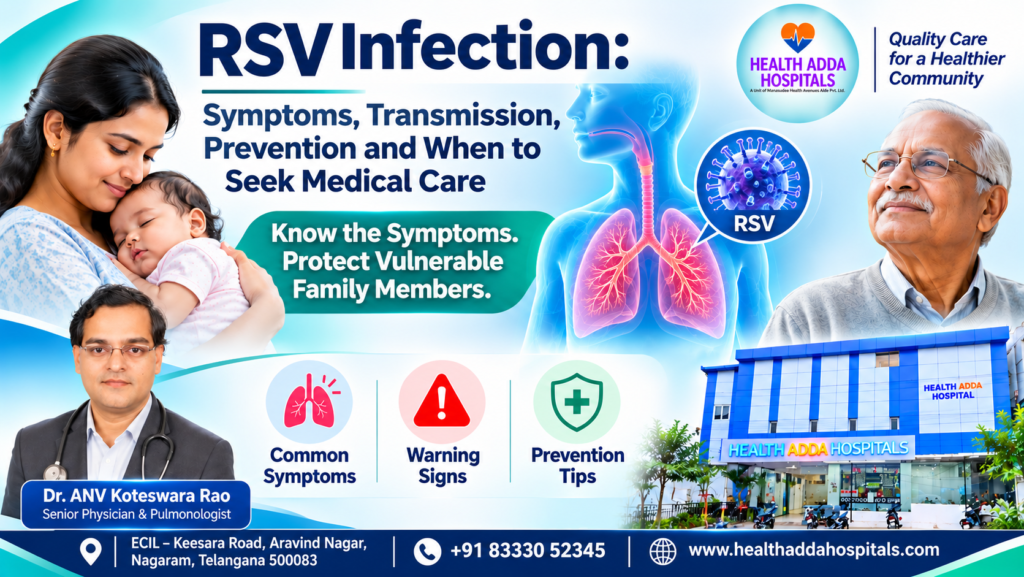
What Is RSV Infection?
Respiratory Syncytial Virus (RSV) is a common respiratory virus that infects the nose, throat and lungs. It usually causes mild, cold-like symptoms such as a runny nose, cough, sneezing, fever and reduced appetite. However, RSV can sometimes cause lower respiratory tract infections, including bronchiolitis and pneumonia. Infants, particularly very young babies, older adults and people with certain underlying health conditions are at greater risk of severe illness. RSV spreads through respiratory particles, direct contact with an infected person and contaminated surfaces. Most infections improve with supportive care, but breathing difficulty, poor feeding, dehydration, unusual drowsiness or worsening symptoms require medical assessment. Severe breathing difficulty, pauses in breathing or bluish lips require immediate emergency care.
What Are the Common Symptoms of RSV?
Common symptoms of Respiratory Syncytial Virus infection include:
- Runny or blocked nose.
- Cough and sneezing.
- Fever.
- Reduced appetite or feeding.
- Wheezing.
- Faster or difficult breathing in more serious cases.
- Unusual irritability or reduced activity in young infants.
Symptoms may appear gradually rather than all at once. RSV symptoms can resemble those of other respiratory infections, so symptoms alone cannot confirm the diagnosis.
Key Takeaways
- RSV is a common respiratory virus that can affect people of all ages.
- Most infections cause mild, cold-like symptoms.
- Infants, older adults and people with certain underlying medical conditions may develop severe illness.
- RSV can cause bronchiolitis and pneumonia.
- The virus spreads through respiratory particles, direct contact and contaminated surfaces.
- There is no routinely recommended specific antiviral treatment for uncomplicated RSV infection; care is generally supportive.
- Breathing difficulty, reduced feeding, dehydration and worsening symptoms require medical assessment.
- Hand hygiene, respiratory etiquette and cleaning frequently touched surfaces help reduce transmission.
1. Introduction: Understanding Respiratory Syncytial Virus
Respiratory infections are common among children and adults. While many respiratory illnesses cause symptoms similar to an ordinary cold, some viruses can affect the lower respiratory tract and lead to breathing complications.
One such virus is Respiratory Syncytial Virus, commonly known as RSV.
RSV is a widespread respiratory virus that can infect the nose, throat, airways and lungs. It is a recognised cause of respiratory illness in young children and can also cause significant illness among older adults and people with underlying medical conditions.
In many individuals, RSV causes symptoms such as a runny nose, cough, sneezing and mild fever. However, some infections progress to bronchiolitis or pneumonia, conditions that may require hospital-based medical care.
Parents and caregivers should be particularly attentive to changes in an infant’s breathing, feeding and activity levels. Older adults and people with chronic lung or heart conditions should also pay attention to worsening respiratory symptoms.
Understanding how RSV spreads, recognising its symptoms and knowing when to seek medical care can help families respond appropriately.
2. What Is Respiratory Syncytial Virus (RSV)?
Respiratory Syncytial Virus is an infectious virus that affects the respiratory tract.
It belongs to the Pneumoviridae family and is recognised as an important cause of respiratory infections, particularly in infants and young children.
The infection can involve different parts of the respiratory system.
Upper respiratory tract infection
When the infection mainly affects the nose and throat, symptoms may include:
- Runny nose.
- Nasal congestion.
- Sneezing.
- Cough.
- Sore throat.
- Mild fever.
Lower respiratory tract infection
In some patients, RSV affects the smaller airways and lungs.
This may lead to:
- Bronchiolitis.
- Pneumonia.
- Wheezing.
- Rapid breathing.
- Increased breathing effort.
- Reduced oxygen levels in severe illness.
The severity varies between individuals. Many people recover without complications, while vulnerable patients may require closer medical monitoring or hospital care.
3. How Does RSV Spread?
RSV spreads relatively easily between people through respiratory particles and direct contact.
Understanding the routes of transmission is important for protecting infants, older adults and other vulnerable family members.
3.1 Through coughing and sneezing
An infected person may release respiratory particles while coughing or sneezing.
These particles can reach another person’s nose, mouth or eyes, allowing infection to spread.
3.2 Through direct contact
Close contact with someone who has RSV can transmit the virus.
Examples include:
- Kissing the face of an infected child.
- Holding an infant without appropriate hand hygiene.
- Sharing close contact during an active respiratory infection.
3.3 Through contaminated surfaces
RSV may remain on frequently touched surfaces for a period of time.
A person may touch a contaminated object and then touch their eyes, nose or mouth without washing their hands.
Frequently touched surfaces may include:
- Door handles.
- Tables.
- Toys.
- Mobile phones.
- Handrails.
- Frequently used household objects.
3.4 Spread within households
Children may acquire respiratory infections through contact with other children at school, childcare centres or social gatherings.
The infection can subsequently spread to parents, siblings, grandparents and other household members.
People can experience RSV infections more than once during their lifetime. Previous infection does not guarantee complete protection against future infection.
4. What Are the Common Symptoms of RSV?
RSV symptoms can vary according to age, general health and the severity of infection.
The incubation period is commonly around four to six days, although timing can vary.
Symptoms may develop gradually rather than appearing together.
4.1 Runny or blocked nose
A runny nose and nasal congestion are among the common early symptoms.
In infants, nasal blockage can interfere with feeding because babies may find it difficult to coordinate sucking and breathing comfortably.
4.2 Cough
Coughing may develop as the respiratory infection progresses.
Some patients experience a mild cough, while others develop a more persistent cough associated with lower respiratory tract involvement.
4.3 Fever
Some people develop fever during RSV infection.
However, the absence of fever does not rule out RSV, particularly in very young infants.
4.4 Sneezing and congestion
Sneezing and nasal congestion can occur along with other cold-like symptoms.
These symptoms may make RSV difficult to distinguish from influenza, COVID-19 and other respiratory infections based on symptoms alone.
4.5 Reduced appetite
Children and adults may experience reduced appetite during respiratory infections.
In infants, reduced breastfeeding or formula intake deserves particular attention because inadequate fluid intake can contribute to dehydration.
4.6 Wheezing
Wheezing is a whistling sound that may occur when air passes through narrowed airways.
It can be associated with bronchiolitis and other respiratory conditions.
New or worsening wheezing, particularly in an infant or someone with an existing lung condition, should be medically assessed.
5. RSV Symptoms in Babies and Young Children
Infants and young children deserve special attention because their smaller airways make certain respiratory illnesses more concerning.
RSV may initially resemble an ordinary cold. However, symptoms can become more significant over the following days.
Early symptoms in babies
Parents may notice:
- Runny nose.
- Nasal congestion.
- Cough.
- Sneezing.
- Reduced feeding.
- Irritability.
- Unusual tiredness.
Signs that may indicate worsening illness
Watch for:
- Faster breathing than usual.
- Difficulty feeding because of breathing problems.
- Chest or ribs pulling inward during breathing.
- Worsening cough or wheezing.
- Reduced urine output.
- Unusual sleepiness or reduced responsiveness.
Important warning signs in very young infants
Some very young babies may show less obvious symptoms.
These can include:
- Reduced activity.
- Irritability.
- Poor feeding.
- Pauses in breathing, known as apnoea.
- Breathing difficulty.
A young infant may not always develop a noticeable fever.
Parents should not wait for fever before seeking medical advice if breathing or feeding is affected.
Medical advice: If a baby is breathing with difficulty, feeding poorly or becoming unusually drowsy, seek prompt medical assessment. Pauses in breathing, bluish lips or severe breathing difficulty require emergency care.
6. RSV in Older Adults
RSV is not limited to children. Older adults can also develop respiratory illness due to this virus.
The risk of severe illness may be higher in people with:
- Chronic obstructive pulmonary disease (COPD).
- Asthma.
- Chronic heart disease.
- Weakened immune systems.
- Other significant underlying health conditions.
Common symptoms in older adults
Symptoms may include:
- Runny or blocked nose.
- Cough.
- Fever.
- Wheezing.
- Breathlessness.
- Fatigue.
- Reduced appetite.
Why should older adults take RSV seriously?
RSV may worsen an existing respiratory condition.
For example, someone with COPD or asthma may experience worsening breathlessness or an exacerbation of their underlying condition.
Older adults may also develop complications such as pneumonia.
Medical assessment is important when symptoms worsen, breathing becomes difficult or usual chronic respiratory symptoms change significantly.
7. What Is the Difference Between RSV, Common Cold and Influenza?
RSV, the common cold and influenza can produce overlapping symptoms.
This makes it difficult to identify the specific infection based on symptoms alone.
| Feature | RSV | Common cold | Influenza |
|---|---|---|---|
| Runny nose | Common | Common | Sometimes |
| Cough | Common | Common | Common |
| Fever | May occur | Less common in adults | Often occurs |
| Sneezing | May occur | Common | Sometimes |
| Wheezing | Can occur, especially in lower respiratory illness | Less typical | May occur with complications |
| Severe lower respiratory illness | Possible, particularly in vulnerable people | Less common | Possible |
This comparison is general. Individual symptoms vary, and none of these features confirms a specific virus.
A healthcare professional may recommend testing when the result could influence clinical decisions or infection-control measures.
8. What Is Bronchiolitis and How Is It Related to RSV?
Bronchiolitis is an infection or inflammation of the small airways in the lungs, called bronchioles.
RSV is an important cause of bronchiolitis, particularly among infants and young children.
When the small airways become inflamed and produce additional mucus, airflow may become restricted.
This can cause:
- Cough.
- Wheezing.
- Rapid breathing.
- Difficulty feeding.
- Increased breathing effort.
Signs of increased breathing effort
Parents should watch for:
- Nostrils widening during breathing.
- Skin pulling inward between or below the ribs.
- Grunting sounds during breathing.
- Very rapid breathing.
- Difficulty feeding because the child is struggling to breathe.
These signs require urgent medical assessment.
Severe breathing difficulty, pauses in breathing or bluish lips require immediate emergency care.
9. Can RSV Cause Pneumonia?
Yes. RSV can cause pneumonia, an infection involving the lung tissue.
Pneumonia may develop as a complication of RSV, particularly among vulnerable patients.
Symptoms may include:
- Fever.
- Cough.
- Breathlessness.
- Faster breathing.
- Chest discomfort.
- Reduced appetite.
- Fatigue.
The severity varies between patients.
A person with suspected pneumonia may require clinical assessment and investigations such as chest imaging, depending on the findings.
Severe breathing difficulty or rapidly worsening symptoms require emergency evaluation.
10. How Is RSV Diagnosed?
RSV cannot always be distinguished from other respiratory infections through symptoms alone.
The diagnostic approach depends on the patient’s age, symptoms, severity and clinical condition.
10.1 Medical history
The doctor may ask about:
- When symptoms began.
- Whether the patient has fever or cough.
- Presence of wheezing.
- Breathing difficulty.
- Feeding and fluid intake.
- Previous respiratory illnesses.
- Existing medical conditions.
- Recent contact with someone experiencing respiratory symptoms.
10.2 Physical examination
The doctor may assess:
- Breathing rate.
- Heart rate.
- Temperature.
- Oxygen saturation, when appropriate.
- Chest sounds.
- Signs of dehydration.
- General activity and alertness.
In infants, feeding ability and breathing effort are particularly important.
10.3 RSV laboratory testing
Depending on the clinical situation, a healthcare professional may recommend a respiratory sample test.
Testing methods can include:
- Molecular tests such as RT-PCR.
- Other nucleic acid amplification tests.
- Rapid antigen tests in selected settings.
A nasal or nasopharyngeal sample may be collected.
Testing is not necessary for every patient. A doctor determines whether identifying RSV will change clinical management, infection-control decisions or further assessment.
10.4 Chest imaging
A chest X-ray is not routinely required for every uncomplicated RSV infection.
It may be considered when the clinical examination suggests pneumonia, complications or another diagnosis requiring further investigation.
11. What Is the Treatment for RSV Infection?
There is no routinely recommended specific antiviral medicine for uncomplicated RSV infection.
Most people with mild illness recover with supportive care.
The treatment approach depends on the patient’s symptoms, age, underlying health conditions and severity of illness.
11.1 Maintaining hydration
Adequate fluid intake is important during respiratory infections.
For infants, parents should continue appropriate breastfeeding or formula feeding as advised.
If an infant is feeding poorly or showing signs of dehydration, medical assessment is important.
11.2 Managing fever and discomfort
A healthcare professional may recommend an appropriate fever-reducing medicine based on the patient’s age and medical condition.
Medication selection and dosing, particularly in infants and young children, must be guided by a qualified healthcare professional.
Do not give aspirin to children.
11.3 Nasal saline and gentle nasal care
For infants with nasal congestion, healthcare professionals may advise saline drops and gentle suction to help clear nasal secretions, particularly before feeding.
Avoid aggressive suctioning or inserting objects into the baby’s nose.
11.4 Oxygen support
Patients with severe respiratory illness and low oxygen levels may require supplemental oxygen under medical supervision.
11.5 Hospital-based supportive care
Some patients may require hospital care when they develop:
- Significant breathing difficulty.
- Low oxygen levels.
- Inability to maintain adequate fluid intake.
- Dehydration.
- Severe bronchiolitis or pneumonia.
- Worsening underlying medical conditions.
Treatment may include oxygen, fluid support and respiratory monitoring.
Important note about antibiotics
Antibiotics do not treat RSV because RSV is a virus.
They may be considered only when a doctor identifies a separate bacterial infection or another appropriate indication.
Parents should not start antibiotics or cough medicines for children without medical advice.
12. How Can RSV Infection Be Prevented?
Although complete prevention may not always be possible, several practical steps can help reduce the spread of RSV.
12.1 Wash hands regularly
Wash hands with soap and water, particularly:
- Before handling a baby.
- Before preparing food.
- After coughing or sneezing.
- After returning home.
- After contact with someone who is unwell.
12.2 Cover coughs and sneezes
Use a tissue or the inside of the elbow when coughing or sneezing.
Dispose of used tissues appropriately and wash your hands afterwards.
12.3 Clean frequently touched surfaces
Clean frequently used objects and surfaces such as:
- Door handles.
- Tables.
- Toys.
- Mobile phones.
- Handrails.
- Household equipment.
12.4 Avoid close contact when unwell
People experiencing respiratory symptoms should reduce close contact with infants, older adults and people with underlying medical conditions.
Avoid kissing an infant’s face when you have a respiratory infection.
12.5 Maintain cleaner indoor air
Where possible:
- Improve ventilation.
- Allow fresh air into indoor spaces.
- Avoid indoor tobacco smoke.
- Reduce exposure to unnecessary respiratory irritants.
12.6 Keep sick children away from vulnerable people
If a child has an active respiratory infection, take sensible precautions to reduce exposure to newborn babies, older adults and medically vulnerable family members.
Follow healthcare advice regarding returning to school, childcare or group activities.
13. Is There an RSV Vaccine or Preventive Immunisation?
RSV prevention has advanced in recent years, with immunisation products available in some countries for selected groups.
These include maternal RSV vaccination and long-acting monoclonal antibodies for eligible infants, as well as RSV vaccines for certain adult populations.
However, recommendations, approvals, availability and eligibility vary by country.
For pregnant women and newborn babies
Some national immunisation programmes use maternal vaccination during pregnancy or long-acting RSV antibodies for infants to reduce the risk of severe RSV disease.
These products are not interchangeable in every clinical situation. Eligibility and timing depend on the applicable national recommendations.
For older adults
Certain countries recommend RSV vaccination for older adults and selected adults with underlying health conditions.
Important guidance for patients in India
Do not assume that an RSV vaccine or preventive antibody is routinely available or recommended for every patient in India.
Parents, pregnant women and older adults should discuss current local availability, regulatory approval, eligibility, benefits and suitability with a qualified healthcare professional.
For updated international information, refer to the World Health Organization’s RSV immunisation guidance.
14. When Should You Seek Medical Care for RSV?
Early medical assessment is particularly important when symptoms involve breathing, feeding, hydration or a person’s general level of alertness.
Seek medical advice when:
- Cough or fever persists or worsens.
- Wheezing develops.
- Breathing becomes faster than usual.
- An infant feeds less than normal.
- Fluid intake becomes inadequate.
- Urination decreases.
- The patient becomes unusually tired or inactive.
- An older adult with asthma, COPD or heart disease experiences worsening symptoms.
Emergency warning signs
Seek immediate emergency medical care if a patient develops:
- Severe difficulty breathing.
- Pauses in breathing.
- Blue or grey lips or face.
- Chest or ribs pulling inward significantly with each breath.
- Severe lethargy or difficulty waking.
- Collapse or reduced consciousness.
- Severe dehydration or inability to maintain fluid intake.
For babies, do not wait for all symptoms to appear before seeking care.
15. RSV Awareness for Families in Hyderabad
Families in Hyderabad should understand that RSV can affect people throughout the year. The timing and intensity of respiratory virus circulation can vary by region and year.
RSV should not be associated with a specific local outbreak unless supported by reliable surveillance information.
Practical precautions are useful for families with young children, newborn babies, older adults and people living with chronic respiratory conditions.
Households can reduce transmission risk by:
- Practising regular hand hygiene.
- Avoiding close contact with people who have active respiratory symptoms.
- Cleaning frequently touched surfaces.
- Maintaining suitable indoor ventilation.
- Seeking medical advice when breathing or feeding problems develop.
For families around ECIL, Nagaram, Keesara, Kapra, AS Rao Nagar and nearby areas, awareness of respiratory warning signs can help them make informed decisions about when to seek medical assessment.
16. Respiratory Medical Care at Health Adda Hospitals
Respiratory symptoms can have several causes. A proper medical assessment helps determine whether a patient needs supportive care, further investigation or specialist management.
At Health Adda Hospitals, Dr. ANV Koteswara Rao is a Senior Physician and Pulmonologist.
Patients experiencing persistent cough, wheezing, breathlessness or recurring respiratory symptoms can explore the hospital’s medical specialties and seek appropriate medical advice.
Health Adda Hospitals
Address: ECIL–Keesara Road, ECIL, Aravind Nagar, Nagaram, Secunderabad, Telangana 500083.
Website: https://healthaddahospitals.com/
Explore more:
- Medical specialties: https://healthaddahospitals.com/specialties/
- Doctor profile: https://healthaddahospitals.com/dr-anv-koteswara-rao-2/
- Persistent cough guidance: https://healthaddahospitals.com/persistent-cough-after-infection-causes-treatment/
- Emergency warning signs: https://healthaddahospitals.com/emergency-warning-signs-when-to-go-to-er-ecil/
For severe breathing difficulty or other emergency symptoms, seek immediate medical attention.
17. Frequently Asked Questions About RSV
1. What is RSV infection?
RSV stands for Respiratory Syncytial Virus. It is a common respiratory virus that can cause symptoms ranging from a mild cold to more serious infections such as bronchiolitis and pneumonia.
2. What are the first symptoms of RSV?
Early symptoms commonly include a runny nose, nasal congestion, sneezing, cough and reduced appetite. Fever may also occur.
3. Is RSV dangerous for babies?
RSV can cause serious illness in infants, particularly very young babies. Warning signs include difficulty breathing, poor feeding, reduced activity and pauses in breathing.
4. Can adults get RSV?
Yes. RSV affects people of all ages. Most healthy adults experience mild symptoms, but older adults and people with underlying lung, heart or immune conditions may develop severe illness.
5. Can RSV cause pneumonia?
Yes. RSV can cause pneumonia and bronchiolitis, particularly in vulnerable patients. Medical assessment is important when cough is associated with breathing difficulty or worsening symptoms.
6. How does RSV spread?
RSV spreads through respiratory particles from coughing and sneezing, direct contact with an infected person and contact with contaminated surfaces followed by touching the eyes, nose or mouth.
7. How long does RSV infection last?
Many uncomplicated RSV infections improve within one to two weeks, although cough and some respiratory symptoms may last longer. The duration varies depending on age, general health and severity.
8. Is there a specific medicine for RSV?
There is no routinely recommended specific antiviral treatment for uncomplicated RSV infection. Management generally focuses on supportive care, hydration and respiratory support when needed.
9. Can antibiotics treat RSV?
No. Antibiotics do not treat viruses. They are used only when a doctor identifies a separate bacterial infection or another appropriate indication.
10. Can RSV infection occur more than once?
Yes. Previous RSV infection does not provide complete lifelong protection. Reinfections can occur throughout life.
11. When should parents take a baby with RSV symptoms to a hospital?
Seek prompt medical assessment if the baby feeds poorly, breathes faster than usual, becomes unusually inactive or shows signs of dehydration. Pauses in breathing, bluish lips or severe breathing difficulty require immediate emergency care.
12. Can older adults develop severe RSV infection?
Yes. Older adults, particularly those with chronic lung disease, heart disease or weakened immunity, may develop serious respiratory complications.
13. Is RSV the same as influenza?
No. RSV and influenza are different viruses, although their symptoms can overlap. Clinical assessment and testing may be needed to identify the infection.
14. How can families reduce RSV transmission?
Handwashing, covering coughs and sneezes, cleaning frequently touched surfaces, maintaining cleaner indoor air and avoiding close contact when unwell can help reduce transmission.
15. Where can families seek respiratory medical advice near ECIL, Hyderabad?
Families can explore respiratory medical services at Health Adda Hospitals, located on ECIL–Keesara Road, Aravind Nagar, Nagaram, Secunderabad, Telangana 500083.
Conclusion
Respiratory Syncytial Virus is a common infection that can affect both children and adults. Although many people experience mild, cold-like symptoms, RSV can cause more serious respiratory illness in infants, older adults and people with underlying medical conditions.
Recognising symptoms such as persistent cough, wheezing, reduced feeding and breathing difficulty is important.
Parents and caregivers should pay close attention to changes in an infant’s breathing, feeding and activity. Older adults and people with chronic respiratory conditions should also seek medical advice when their usual symptoms worsen.
Good hand hygiene, respiratory etiquette, cleaning frequently touched surfaces and reducing close contact when unwell can help limit the spread of infection.
Understand RSV. Recognise the warning signs. Seek medical care when needed.
Health Adda Hospitals, ECIL, Hyderabad.
Why Trust This Guidance?
This article is prepared for general respiratory health education using published guidance from the World Health Organization, the US Centers for Disease Control and Prevention and other established public health resources.
It explains recognised RSV transmission routes, common symptoms, vulnerable groups, supportive care and warning signs. Individual diagnosis and treatment decisions must be made by a qualified healthcare professional after examining the patient.
About the Author
Dr. ANV Koteswara Rao
Senior Physician & Pulmonologist
Health Adda Hospitals, Hyderabad
Dr. ANV Koteswara Rao is associated with Health Adda Hospitals and provides medical care in general medicine and respiratory health.
Medical Disclaimer: This article is intended for general educational purposes only. It does not replace professional medical advice, diagnosis or treatment. The symptoms and severity of RSV vary between individuals. Parents and caregivers should seek prompt medical assessment for breathing difficulty, poor feeding or worsening symptoms. In an emergency, seek immediate medical attention.