
What Happens During a Pulmonology Consultation?
A pulmonology consultation is a medical assessment focused on conditions affecting the lungs, airways and respiratory system. During the consultation, a pulmonologist reviews the patient’s symptoms, medical history, medication use, smoking or occupational exposure and previous respiratory illnesses. The doctor may examine the chest, assess breathing and oxygen saturation where appropriate, and decide whether further investigations are required. Depending on the symptoms, tests may include spirometry, chest X-ray, sputum examination or other investigations. Not every patient requires every test. People experiencing persistent cough, wheezing, recurring respiratory infections or unexplained breathlessness may benefit from medical assessment. Patients from ECIL, Nagaram, Kapra, Kushaiguda, AS Rao Nagar and surrounding East Hyderabad areas can explore pulmonology consultation at Health Adda Hospitals, ECIL–Keesara Road, Nagaram, Secunderabad.
When Should You Consult a Pulmonologist?
Consider consulting a pulmonologist if you experience:
- Cough that persists or repeatedly returns.
- Wheezing or recurring chest tightness.
- Breathlessness during routine activities.
- Repeated respiratory infections.
- Persistent mucus or changes in sputum.
- Symptoms associated with asthma or COPD.
- Respiratory symptoms that disturb sleep or affect daily activities.
Severe breathing difficulty, blue or grey lips, collapse, confusion or severe chest pain require immediate emergency medical attention.
Key Takeaways
- A pulmonologist specialises in diseases affecting the lungs and respiratory system.
- Persistent cough, wheezing and breathlessness are common reasons for respiratory assessment.
- A consultation generally begins with a detailed medical history and physical examination.
- Spirometry and chest imaging may be recommended depending on the suspected condition.
- Not every patient requires the same investigations.
- Bringing previous reports and a current medication list can help make the consultation more useful.
- Severe breathing difficulty requires emergency assessment rather than waiting for a routine appointment.
1. Introduction: When Should You Consider a Pulmonology Consultation?
Coughing, wheezing and breathlessness are symptoms that can occur for several reasons.
Some people experience a cough following a seasonal respiratory infection. Others notice repeated episodes of wheezing, chest tightness or difficulty breathing during physical activity. Patients with asthma or chronic obstructive pulmonary disease (COPD) may also experience changes in their usual respiratory symptoms.
Although occasional coughing may settle without specific treatment, persistent, recurring or worsening respiratory symptoms deserve attention.
A pulmonologist is a medical specialist who evaluates conditions affecting the lungs, bronchial tubes and respiratory system.
For people living around ECIL, Nagaram, Kapra, Kushaiguda, AS Rao Nagar and nearby parts of East Hyderabad, understanding what happens during a pulmonology consultation can help them prepare for an appropriate medical assessment.
This guide explains the symptoms that may require evaluation, what information to bring, possible investigations and what patients can expect during the consultation.
2. What Does a Pulmonologist Treat?
Pulmonologists specialise in the assessment and management of respiratory and lung-related conditions.
Depending on the patient’s symptoms and clinical findings, conditions may include:
Asthma
Asthma is a chronic airway condition that can cause wheezing, coughing, chest tightness and breathlessness. Symptoms may vary over time and can be triggered by allergens, respiratory infections, exercise and environmental irritants.
Chronic Obstructive Pulmonary Disease (COPD)
COPD is a long-term lung condition associated with airflow limitation. Patients may experience persistent cough, mucus production, wheezing and breathlessness.
Bronchitis
Bronchitis involves inflammation of the bronchial tubes. Acute bronchitis commonly follows a respiratory infection and may cause cough and mucus production.
Pneumonia
Pneumonia is an infection involving the lungs. Symptoms may include cough, fever, chest discomfort, breathlessness and fatigue. Its severity varies between individuals.
Persistent or chronic cough
A cough that continues beyond the expected recovery period may have several possible causes, including post-infectious airway irritation, asthma, allergies, reflux and other respiratory conditions.
Respiratory infections
Pulmonologists may assess patients with recurring or complicated respiratory symptoms and determine whether further investigation or specialist management is required.
Sleep-related breathing disorders
Some respiratory specialists also assess sleep-related breathing problems, including obstructive sleep apnoea, depending on their clinical practice and available diagnostic services.
The appropriate specialist and investigation depend on the patient’s symptoms, medical history and clinical findings.
3. Symptoms That May Require a Pulmonology Consultation
Not every cough or episode of breathlessness indicates a serious lung condition. However, certain symptoms deserve medical evaluation, particularly when they persist or recur.
3.1 Persistent cough
A cough that continues after a respiratory infection may be related to temporary airway irritation. However, asthma, upper-airway conditions, reflux, medication effects and other illnesses can also cause persistent cough.
Consider medical assessment when:
- The cough continues for several weeks without clear improvement.
- It repeatedly returns.
- It becomes worse rather than gradually improving.
- It disturbs sleep.
- It occurs with wheezing or breathlessness.
- It is associated with blood in sputum or unexplained weight loss.
3.2 Wheezing
Wheezing is a whistling sound that may occur when air moves through narrowed airways.
It can be associated with asthma, COPD, respiratory infections and other airway conditions.
Recurring wheezing should be assessed, especially when accompanied by chest tightness or difficulty breathing.
3.3 Breathlessness
Breathlessness may develop during physical activity or, in more concerning situations, even at rest.
A person may notice difficulty while:
- Walking short distances.
- Climbing stairs.
- Performing household activities.
- Bathing or getting dressed.
- Sleeping comfortably.
New, unexplained or worsening breathlessness requires medical attention.
Severe breathing difficulty is an emergency.
3.4 Repeated respiratory infections
Some people experience repeated episodes of bronchitis, pneumonia or other respiratory infections.
The reasons can vary. Underlying lung disease, immune-related factors, environmental exposure and other medical conditions may need consideration.
3.5 Persistent mucus production
Regular mucus production, particularly when associated with a change in cough, breathlessness or wheezing, may require respiratory assessment.
Blood in sputum should not be ignored and requires prompt medical evaluation.
4. What Happens During Your First Pulmonology Consultation?
A pulmonology consultation generally involves several stages. The exact process depends on the patient’s symptoms and medical history.
Step 1: Discussion of symptoms
The doctor begins by understanding the patient’s main concern.
You may be asked:
- When did the cough or breathing problem begin?
- Did it start after a fever, cold or respiratory infection?
- Is the cough dry or associated with mucus?
- Does it become worse at night?
- Do you experience wheezing?
- Are you breathless during routine activities?
- Have the symptoms improved, remained the same or become worse?
- Have you experienced similar episodes previously?
Providing accurate information helps the doctor understand the pattern of the illness.
Step 2: Review of medical history
The doctor may ask about:
- Previous asthma or COPD diagnosis.
- History of pneumonia or tuberculosis.
- Allergies and sinus problems.
- Smoking or second-hand smoke exposure.
- Workplace dust or chemical exposure.
- Other medical conditions.
- Current and previous medications.
- Family history of relevant respiratory conditions.
This information may help identify possible contributing factors.
Step 3: Physical examination
The examination may include checking temperature, pulse, breathing rate and other relevant clinical parameters.
The doctor may listen to the chest using a stethoscope to identify wheezing, crackles or other abnormal breathing sounds.
Oxygen saturation may also be measured when clinically appropriate.
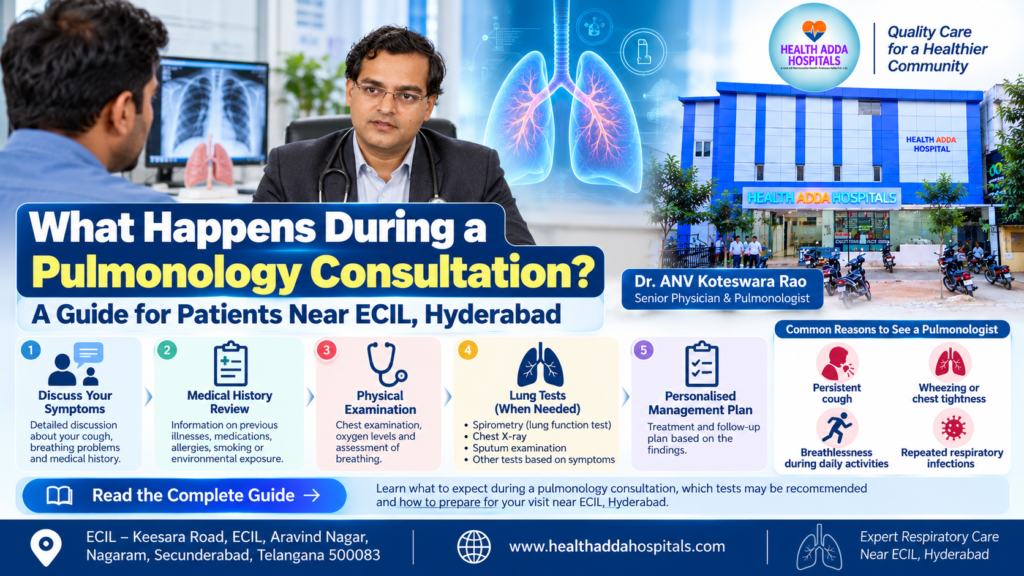
Step 4: Decision about investigations
After reviewing the symptoms and examination findings, the pulmonologist may recommend further tests.
The purpose is to investigate the suspected cause rather than order every available test.
5. What Tests May Be Recommended During a Respiratory Evaluation?
Investigations vary according to the patient’s symptoms and suspected diagnosis.
5.1 Spirometry
Spirometry is a lung function test used to measure how much air a person can breathe out and how quickly.
It is commonly used when evaluating conditions involving airflow obstruction, including asthma and COPD.
The test generally involves breathing into a mouthpiece connected to a measuring device while following the technician’s or clinician’s instructions.
Depending on the clinical question, spirometry may also be performed before and after using a bronchodilator.
5.2 Chest X-ray
A chest X-ray may be recommended to examine the lungs and surrounding structures.
It may help investigate certain infections, lung abnormalities and other causes of respiratory symptoms.
A chest X-ray does not identify every respiratory condition. Further assessment may be necessary when symptoms and initial imaging findings do not match.
5.3 Sputum examination
If a patient produces mucus, a sputum sample may be recommended for laboratory testing.
Depending on the suspected condition, testing may help investigate respiratory infections, including tuberculosis.
5.4 Oxygen saturation assessment
A pulse oximeter is a device that estimates blood oxygen saturation using a sensor, usually placed on a finger.
It may be used as part of the respiratory assessment, particularly when breathlessness or other concerning symptoms are present.
An oxygen reading must be interpreted alongside the patient’s clinical condition. A single reading should not replace medical assessment.
5.5 Additional investigations
Depending on the findings, a doctor may consider:
- Full pulmonary function testing.
- CT imaging of the chest.
- Allergy-related investigations.
- Tuberculosis testing.
- Blood investigations.
- Sleep studies for suspected sleep-related breathing disorders.
Not all these tests are required for every patient. The pulmonologist determines the appropriate investigations based on clinical need.
6. How Should You Prepare for a Pulmonology Consultation?
A little preparation can help make the consultation more productive.
Bring previous medical records
Carry available reports such as:
- Previous chest X-rays or CT scans.
- Spirometry and lung function reports.
- Sputum examination reports.
- Previous hospital discharge summaries.
- Relevant blood test results.
- Earlier respiratory prescriptions.
If you have digital reports, keep them accessible on your phone.
Prepare your medication list
Make a list of current medicines, including:
- Prescribed inhalers.
- Tablets and other respiratory medicines.
- Allergy medications.
- Medicines for other long-term conditions.
If possible, bring the inhalers you currently use so that the doctor can review the device and technique.
Do not stop prescribed medication before the consultation unless instructed by your healthcare professional.
Note your symptoms
Before visiting, make a note of:
- When symptoms started.
- How frequently they occur.
- Whether they worsen at night.
- Possible environmental triggers.
- Whether symptoms affect sleep or physical activity.
- Any recent fever or respiratory infection.
Mention relevant exposure
Tell the doctor if you have regular exposure to:
- Construction dust.
- Industrial fumes.
- Tobacco smoke.
- Household smoke.
- Chemical vapours.
- Dust or allergens at work.
These details may be important when evaluating respiratory symptoms.
7. What Should You Do If You Have Asthma or COPD?
Patients already diagnosed with asthma or COPD may need periodic medical review, particularly when their usual symptoms change.
For patients with asthma
Discuss:
- Frequency of coughing or wheezing.
- Night-time symptoms.
- Use of prescribed reliever medication.
- Any recent worsening of symptoms.
- Possible triggers.
- Inhaler technique and adherence to the prescribed plan.
Do not change inhaler doses independently.
For patients with COPD
Discuss:
- Changes in usual breathlessness.
- Increased cough or sputum.
- Changes in mucus amount or appearance.
- Reduced ability to perform routine activities.
- Recent respiratory infections.
- Changes in prescribed medication use.
A noticeable worsening of usual COPD symptoms may represent an exacerbation and should be assessed.
Severe breathlessness, confusion or blue/grey lips require emergency care.
8. Why Should You Avoid Self-Medicating for Persistent Respiratory Symptoms?
Different respiratory conditions can produce similar symptoms.
For example, a dry cough may be associated with post-infectious airway irritation, asthma, allergies, reflux or medication-related effects.
Treating every cough with the same medicine may not address the underlying cause.
Some important precautions include:
- Do not start antibiotics without medical advice.
- Do not use another person’s inhaler.
- Do not increase prescribed inhaler doses without guidance.
- Do not stop long-term respiratory medication independently.
- Do not repeatedly use cough medicines without understanding the cause of persistent symptoms.
A proper clinical assessment helps guide appropriate treatment.
9. When Is Respiratory Care an Emergency?
A routine consultation is not appropriate for every respiratory problem.
Seek immediate emergency medical care if you or someone around you experiences:
- Severe difficulty breathing.
- Blue or grey lips or face.
- Severe chest pain.
- Confusion or reduced alertness.
- Collapse or fainting.
- Rapid deterioration in breathing.
- Severe breathing difficulty that prevents normal speech.
Coughing up blood also requires prompt medical evaluation. If bleeding is significant or accompanied by breathing difficulty, seek emergency care.
Do not delay emergency treatment while trying to arrange a routine specialist appointment.
10. Finding Pulmonology Consultation Near ECIL, Hyderabad
People living in ECIL and nearby areas may look for a respiratory specialist when they experience persistent cough, wheezing, breathlessness or recurring lung-related symptoms.
Common local search needs include:
- Pulmonologist near ECIL.
- Lung specialist in Nagaram.
- Respiratory doctor near Keesara Road.
- Pulmonologist near Kapra.
- Doctor for persistent cough in East Hyderabad.
- Respiratory consultation near AS Rao Nagar.
- Lung specialist near Kushaiguda and Sainikpuri.
When choosing a healthcare facility, consider the doctor’s relevant qualifications, the nature of the medical services available, accessibility and whether the facility can support the assessment your symptoms require.
Health Adda Hospitals, ECIL–Nagaram
Health Adda Hospitals is located on ECIL–Keesara Road, Aravind Nagar, Nagaram, Secunderabad, Telangana 500083.
Dr. ANV Koteswara Rao is a Senior Physician and Pulmonologist associated with Health Adda Hospitals.
Patients can explore the hospital’s medical specialties and doctor information before seeking an appropriate consultation.
Hospital: Health Adda Hospitals
Address: ECIL–Keesara Road, ECIL, Aravind Nagar, Nagaram, Secunderabad, Telangana 500083.
Website: https://healthaddahospitals.com/
Explore:
- Medical specialties: https://healthaddahospitals.com/specialties/
- Doctor profile: https://healthaddahospitals.com/dr-anv-koteswara-rao-2/
- Existing pulmonology guidance: https://healthaddahospitals.com/when-should-you-visit-a-pulmonologist/
For severe or potentially life-threatening symptoms, seek immediate emergency medical care.
11. Frequently Asked Questions
1. What does a pulmonologist check during the first consultation?
A pulmonologist generally reviews symptoms, medical history, medication use and relevant exposure. The doctor may examine the chest and assess breathing. Further investigations are recommended when clinically necessary.
2. Should I consult a pulmonologist for a cough lasting three weeks?
A cough lasting more than three weeks without clear improvement deserves medical assessment. The cause may be post-infectious irritation, asthma, allergies or another condition.
3. Is spirometry necessary for every cough?
No. Spirometry is generally recommended when the doctor needs to assess lung function or investigate possible airflow obstruction. It is not required for every patient with cough.
4. Can a pulmonologist evaluate wheezing?
Yes. Wheezing can occur with asthma, COPD, respiratory infections and other airway conditions. A pulmonologist can evaluate the symptom and decide whether further testing is needed.
5. What should I bring to a pulmonology consultation?
Bring previous respiratory reports, chest imaging, medication prescriptions, a list of current medicines and details about when your symptoms started.
6. Can allergies cause persistent cough?
Yes. Allergic rhinitis and upper-airway conditions may contribute to coughing, particularly when associated with nasal congestion, sneezing or mucus drainage towards the throat.
7. Is a chest X-ray always required for a respiratory consultation?
No. The need for a chest X-ray depends on symptoms, examination findings, medical history and the suspected condition.
8. When should I seek emergency respiratory care?
Seek immediate care for severe breathing difficulty, blue or grey lips, collapse, confusion or severe chest pain. Do not wait for a routine pulmonology appointment in these situations.
9. Where can I find a pulmonologist near ECIL, Hyderabad?
Patients can explore pulmonology services at Health Adda Hospitals, located on ECIL–Keesara Road, Aravind Nagar, Nagaram, Secunderabad, Telangana 500083.
10. Can I consult a pulmonologist for recurring respiratory infections?
Yes. Recurring respiratory infections may require assessment to identify possible underlying factors, particularly when accompanied by persistent cough, wheezing or breathlessness.
Conclusion
A pulmonology consultation is not limited to patients with serious lung disease. It can also help evaluate persistent cough, recurring wheezing, unexplained breathlessness and other respiratory symptoms.
The consultation generally begins with a review of the patient’s history and a clinical examination. Further investigations, such as spirometry or chest imaging, are considered when appropriate.
For patients in ECIL, Nagaram, Kapra, Kushaiguda, AS Rao Nagar and surrounding East Hyderabad areas, understanding the consultation process can make it easier to seek the right medical assessment.
If respiratory symptoms persist, recur or worsen, consult a qualified healthcare professional rather than relying on repeated self-medication.
Health Adda Hospitals
ECIL–Keesara Road, ECIL, Aravind Nagar, Nagaram, Secunderabad, Telangana 500083.
Why Trust This Guidance?
This article is intended to help patients understand the general process of respiratory assessment, including symptom history, clinical examination and investigations that may be considered.
The information is based on established principles of respiratory medicine. The need for individual tests and treatment must be decided by a qualified healthcare professional after evaluating the patient.
About the Author
Dr. ANV Koteswara Rao
Senior Physician & Pulmonologist
Health Adda Hospitals, Hyderabad
Dr. ANV Koteswara Rao is associated with Health Adda Hospitals and provides medical care in general medicine and respiratory health.
Medical Disclaimer: This article is for general educational purposes only. It does not replace professional medical advice, diagnosis or treatment. Individual assessment and treatment decisions depend on the patient’s symptoms, medical history and clinical findings. Seek immediate medical attention for emergency symptoms.