
As Hyderabad experiences frequent rainfall and rising humidity, hospitals are seeing more patients with viral fevers and mosquito-borne illnesses, including chikungunya. The same Aedes mosquito that spreads dengue also spreads chikungunya, making mosquito control more important than ever during the monsoon. Recent reports indicate an increase in viral fever OPD visits, with chikungunya remaining an important seasonal concern.
Although chikungunya is rarely life-threatening, it can cause severe joint pain, prolonged weakness, and significantly affect daily life if not managed properly.
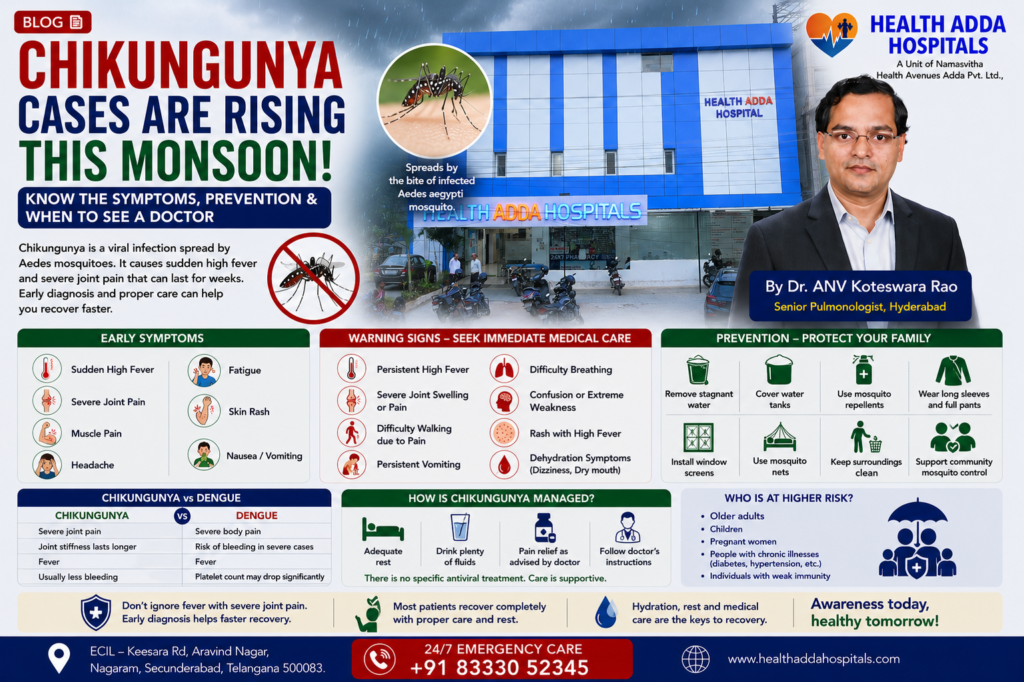
What Is Chikungunya?
Chikungunya is a viral infection spread through the bite of an infected Aedes aegypti mosquito.
Unlike common viral fever:
- It is not spread from person to person.
- Mosquitoes usually bite during daytime.
- Cases increase during and after the monsoon season.
Early Symptoms
Symptoms usually appear 3–7 days after an infected mosquito bite.
Common symptoms include:
✅ Sudden high fever
✅ Severe joint pain
✅ Muscle pain
✅ Headache
✅ Fatigue
✅ Skin rash
✅ Nausea
What Makes Chikungunya Different?
One of the hallmark features is severe joint pain, especially in:
- Wrists
- Fingers
- Ankles
- Knees
- Feet
In some patients, this pain may persist for weeks or even months, even after the fever has resolved.
Warning Signs
Seek prompt medical evaluation if you develop:
🚨 Persistent high fever
🚨 Severe joint swelling
🚨 Difficulty walking due to pain
🚨 Persistent vomiting
🚨 Difficulty breathing
🚨 Confusion or extreme weakness
These symptoms require medical assessment to rule out complications or other illnesses such as dengue.
Chikungunya vs Dengue
| Chikungunya | Dengue |
|---|---|
| Severe joint pain | Severe body pain |
| Fever | Fever |
| Joint stiffness | Platelet reduction may occur |
| Long-lasting joint discomfort | Greater risk of bleeding in severe cases |
| Usually less bleeding | Bleeding may occur in severe disease |
Because symptoms overlap, laboratory testing may be needed to confirm the diagnosis.
Prevention
Protect yourself by:
✔️ Removing stagnant water
✔️ Using mosquito repellents
✔️ Wearing long sleeves
✔️ Installing window screens
✔️ Keeping water containers covered
✔️ Participating in community mosquito-control efforts
How Health Adda Hospitals Helps
At Health Adda Hospitals, patients with suspected chikungunya receive timely clinical evaluation, supportive care, and monitoring for complications.
According to Dr. ANV Koteswara Rao, early medical evaluation is especially important because chikungunya symptoms can resemble dengue and other viral illnesses. Identifying the correct cause allows appropriate management and helps reduce complications.
Clinical Perspective
According to Dr. ANV Koteswara Rao:
“Not every fever during the monsoon is dengue. Chikungunya, influenza, typhoid, and other infections can present with similar symptoms. Early diagnosis and appropriate treatment are essential for faster recovery and to avoid unnecessary complications.”
Conclusion
During the monsoon, mosquito-borne diseases become more common.
If you develop high fever with severe joint pain, do not ignore it or rely solely on self-medication.
Early medical evaluation, hydration, mosquito prevention, and proper follow-up can help ensure a smoother recovery.