
With the arrival of the monsoon, hospitals across Hyderabad—including major government and private hospitals—are reporting a noticeable increase in Influenza-Like Illness (ILI) and seasonal viral fevers. Recent reports indicate that outpatient departments (OPDs) have seen a 25–30% rise in patient visits, with many people presenting with fever, cough, sore throat, body aches, fatigue, and breathing complaints.
Influenza-Like Illness is not a single disease but a group of respiratory infections that produce symptoms similar to influenza. While many people recover within a few days, vulnerable individuals—including children, older adults, pregnant women, and people with chronic diseases—may develop more serious complications.
What Is Influenza-Like Illness (ILI)?
Influenza-Like Illness (ILI) refers to a respiratory infection characterized by:
- Fever
- Cough
- Sore throat
It may be caused by:
- Seasonal influenza viruses
- Other respiratory viruses
- Certain bacterial infections (less commonly)
ILI spreads primarily through respiratory droplets released when an infected person coughs, sneezes, or talks.
Why Are Cases Increasing During the Monsoon?
The current weather conditions in Hyderabad create an environment where respiratory viruses spread more easily.
Factors contributing to the increase include:
🌧️ Frequent rainfall
💧 High humidity
🌡️ Sudden temperature fluctuations
👨👩👧👦 Crowded indoor environments
🛡️ Temporary reduction in immunity due to seasonal changes
Doctors across Hyderabad have reported increased numbers of patients with viral fever, cough, sore throat, body aches, and influenza-like symptoms during the current monsoon season.
Common Symptoms
Most patients experience:
✅ Fever
✅ Chills
✅ Dry cough
✅ Sore throat
✅ Runny or blocked nose
✅ Headache
✅ Body aches
✅ Fatigue
Some people may also develop:
- Mild breathlessness
- Loss of appetite
- General weakness
How Is Influenza Different from a Common Cold?
| Common Cold | Influenza-Like Illness |
|---|---|
| Mild symptoms | Sudden onset of symptoms |
| Mild fever or none | High fever |
| Mild body pain | Severe body aches |
| Mild tiredness | Significant fatigue |
| Usually resolves quickly | May require medical evaluation in high-risk individuals |
Who Is at Higher Risk?
Extra caution is needed for:
- Children below 5 years
- Adults above 65 years
- Pregnant women
- Asthma patients
- COPD patients
- Individuals with diabetes
- Heart disease patients
- People with weakened immunity
These groups are more likely to develop complications if influenza progresses.
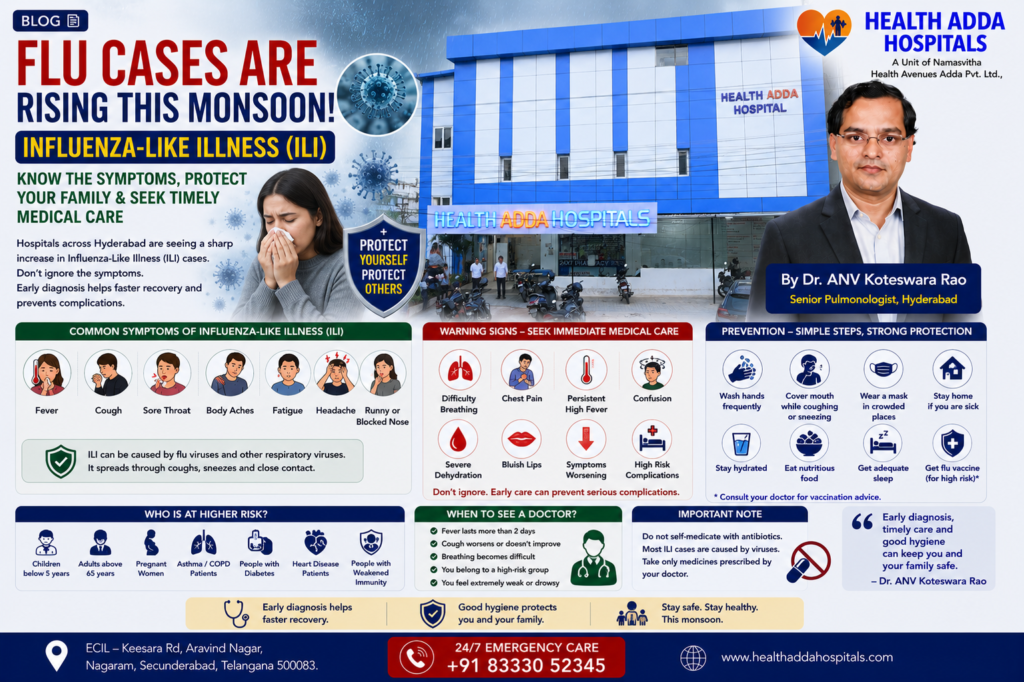
Warning Signs That Need Immediate Medical Attention
Consult a doctor immediately if you experience:
🚨 Difficulty breathing
🚨 Chest pain
🚨 Persistent high fever
🚨 Confusion
🚨 Severe dehydration
🚨 Bluish lips
🚨 Symptoms worsening after initial improvement
How Can You Protect Yourself?
Simple preventive measures include:
✔️ Wash hands frequently
✔️ Cover your mouth and nose while coughing or sneezing
✔️ Wear a mask if you are ill or in crowded places
✔️ Stay hydrated
✔️ Eat nutritious food
✔️ Get adequate sleep
✔️ Avoid close contact with sick individuals
✔️ Stay home if you develop fever
People at higher risk should discuss seasonal influenza vaccination with their healthcare provider, as it can reduce the risk of severe illness.
When Should You Visit a Doctor?
Seek medical evaluation if:
- Fever lasts more than two days
- Persistent cough worsens
- Breathing becomes difficult
- Symptoms are severe
- You belong to a high-risk group
Do not self-medicate with antibiotics unless prescribed, as most influenza-like illnesses are caused by viruses.
Common Myths
“Every Viral Fever Is Influenza”
No.
Many infections—including dengue, chikungunya, COVID-19, and other respiratory viruses—can present with similar symptoms.
“Antibiotics Cure Influenza”
No.
Influenza is usually caused by viruses, and antibiotics are ineffective unless there is a confirmed bacterial infection.
“If I Feel Better, I Can’t Spread the Infection”
People may still transmit respiratory viruses even as symptoms begin to improve. Practicing good hygiene remains important.
How Health Adda Hospitals Supports Patients
At Health Adda Hospitals, patients with fever, cough, sore throat, or breathing difficulties receive a comprehensive clinical assessment to determine the underlying cause.
According to Dr. ANV Koteswara Rao, early diagnosis helps distinguish influenza-like illness from dengue, chikungunya, COVID-19, bacterial infections, and other conditions requiring different management approaches.
Patients with chronic lung diseases such as asthma or COPD should seek early evaluation if respiratory symptoms worsen.
Clinical Perspective
According to Dr. ANV Koteswara Rao:
“Not every fever with cough is just a seasonal cold. During the monsoon, several viral and bacterial illnesses circulate simultaneously. Early medical evaluation helps identify the correct cause and ensures timely treatment, especially for vulnerable patients.”
Conclusion
Influenza-Like Illness is becoming increasingly common during Hyderabad’s current monsoon season.
Most people recover with supportive care, but recognizing warning signs and seeking timely medical advice can help prevent complications.
Simple preventive measures, good hygiene, and early consultation remain the best ways to protect yourself and your family.
Why Trust This Guidance?
This article is reviewed by Dr. ANV Koteswara Rao, Senior Physician & Pulmonologist at Health Adda Hospitals, Hyderabad.
Health Adda Hospitals provides evidence-based diagnosis and treatment for seasonal viral illnesses, respiratory infections, asthma, allergies, and other pulmonary conditions, helping families stay healthy throughout the year.