
Respiratory Syncytial Virus (RSV) is a common respiratory virus that infects the lungs and airways. While most healthy adults experience mild cold-like symptoms, RSV can cause severe illness in infants, older adults, and people with asthma, COPD, heart disease, or weakened immunity. Early medical evaluation is important if symptoms worsen or breathing becomes difficult.
Introduction
Respiratory illnesses increase during periods of seasonal weather change, and Respiratory Syncytial Virus (RSV) is one of the most common viral infections affecting both children and adults.
Although many people have never heard of RSV, it is one of the leading causes of bronchiolitis and pneumonia in infants and can also lead to serious complications in older adults and individuals with chronic lung diseases.
Many RSV infections are mistaken for a common cold, causing delays in diagnosis and treatment.
At Health Adda Hospitals, Dr. ANV Koteswara Rao frequently evaluates patients with persistent cough, wheezing, fever, and breathing difficulty during the seasonal increase in respiratory viral infections.
What is RSV?
Respiratory Syncytial Virus (RSV) is a contagious virus that infects the:
- Nose
- Throat
- Airways
- Lungs
It spreads easily from one person to another through:
✔ Coughing
✔ Sneezing
✔ Close contact
✔ Contaminated surfaces
✔ Touching the face after touching infected objects
Why Is RSV Important?
For most healthy adults:
Symptoms resemble a common cold.
However, in high-risk individuals RSV may cause:
- Bronchiolitis
- Viral pneumonia
- Severe breathing difficulty
- Hospitalization
- Worsening asthma
- COPD exacerbation
Common Symptoms
Symptoms usually begin 4–6 days after exposure.
Common symptoms include:
🤒 Fever
🤧 Runny nose
😷 Persistent cough
😮💨 Wheezing
😖 Sore throat
😴 Fatigue
🤕 Headache
Loss of appetite
RSV Symptoms in Babies
Infants may develop:
🍼 Poor feeding
😤 Fast breathing
😟 Irritability
😴 Excessive sleepiness
😨 Chest retractions
Bluish lips
Difficulty breathing
RSV Symptoms in Adults
Adults commonly experience:
✔ Mild fever
✔ Dry cough
✔ Sore throat
✔ Nasal congestion
✔ Body aches
✔ Fatigue
Older adults may develop pneumonia or worsening of existing lung conditions.
Who Is at Higher Risk?
The following groups require special attention:
👶 Babies under 2 years
👵 Adults above 65 years
🤰 Pregnant women
🫁 Asthma patients
🫁 COPD patients
❤️ Heart disease patients
💉 Cancer patients
🛡 Immunocompromised individuals
Premature babies
Warning Signs
Seek immediate medical care if you notice:
🚨 Difficulty breathing
🚨 Persistent wheezing
🚨 Chest retractions
🚨 Bluish lips
🚨 Oxygen levels dropping
🚨 Refusal to feed
🚨 Persistent high fever
🚨 Extreme tiredness
RSV vs Common Cold
| Common Cold | RSV |
|---|---|
| Mild cough | Persistent cough |
| Mild congestion | Wheezing |
| Mild fever | Higher fever possible |
| Rare breathing problems | Breathing difficulty may occur |
| Usually mild | Can become serious in vulnerable groups |
RSV vs Influenza
| RSV | Influenza |
|---|---|
| More wheezing | More body pain |
| Common in infants | Common across all age groups |
| Can cause bronchiolitis | More sudden onset |
| Breathing issues common | Muscle pain more common |
How Is RSV Diagnosed?
Doctors may recommend:
- Clinical examination
- Oxygen saturation measurement
- Chest examination
- Chest X-ray (if needed)
- RSV laboratory testing in selected patients
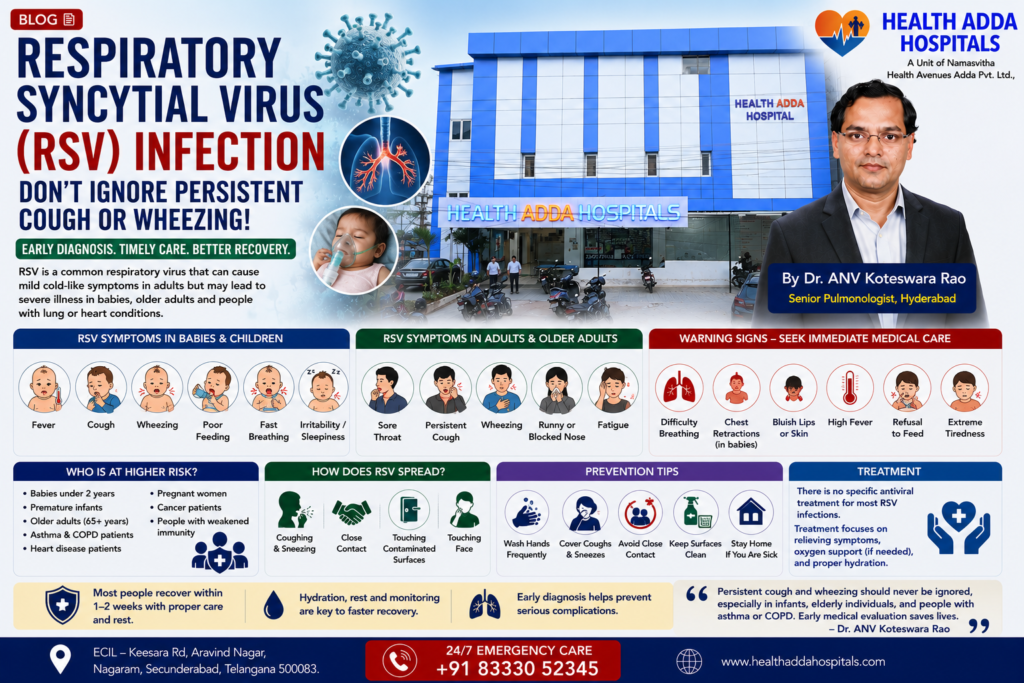
Treatment
There is no routine antiviral treatment for most RSV infections.
Treatment focuses on:
💧 Hydration
😴 Adequate rest
🌡 Fever management
💊 Symptom relief
🫁 Oxygen therapy when required
🏥 Hospital admission for severe cases
Antibiotics are not effective unless there is a bacterial infection.
Prevention
Protect yourself and your family by:
✔ Washing hands frequently
✔ Covering coughs and sneezes
✔ Avoiding close contact with sick individuals
✔ Cleaning frequently touched surfaces
✔ Keeping infants away from people with respiratory symptoms
✔ Staying home when sick
✔ Maintaining good nutrition and sleep
Can RSV Be Prevented?
New preventive options are becoming available for certain high-risk infants and vulnerable populations in some countries. However, everyday preventive measures such as hand hygiene, respiratory etiquette, and avoiding exposure remain the most effective strategies for most people.
When Should You Visit a Doctor?
Consult a doctor if:
- Fever lasts more than two days
- Cough becomes severe
- Wheezing develops
- Breathing becomes difficult
- Oxygen levels fall
- Symptoms worsen instead of improving
- A baby has feeding difficulty or unusual sleepiness
Expert Advice from Dr. ANV Koteswara Rao
“Persistent cough and wheezing should never be ignored, especially in infants, elderly individuals, and people with asthma or COPD. Early medical evaluation helps identify RSV and other respiratory infections before they progress to serious complications.”
Why Choose Health Adda Hospitals?
At Health Adda Hospitals, patients receive:
✔ Comprehensive respiratory evaluation
✔ Advanced pulmonary assessment
✔ Early diagnosis of viral respiratory infections
✔ Care for asthma, COPD, and pneumonia
✔ Personalized treatment plans
Key Takeaways
✅ RSV is a contagious respiratory virus.
✅ Babies and older adults are at highest risk.
✅ Wheezing and breathing difficulty should never be ignored.
✅ Good hygiene helps reduce transmission.
✅ Early medical evaluation prevents complications.
Frequently Asked Questions
1. Is RSV contagious?
Yes. RSV spreads easily through respiratory droplets and contaminated surfaces.
2. Can adults get RSV?
Yes. Adults usually have mild illness, but older adults and those with chronic diseases can become seriously ill.
3. Does RSV always require hospitalization?
No. Most healthy individuals recover at home, but severe cases may need hospital care.
4. Can RSV cause pneumonia?
Yes. RSV can progress to pneumonia, especially in infants and older adults.
5. Are antibiotics useful for RSV?
No. RSV is caused by a virus, so antibiotics are only used if there is a bacterial infection.
6. How long does RSV last?
Most people recover within 1–2 weeks, although cough may persist longer.
7. Can RSV be prevented?
Hand hygiene, avoiding close contact with sick individuals, and cleaning commonly touched surfaces help reduce the risk.
8. When should parents seek urgent care for a child?
If a child has difficulty breathing, poor feeding, bluish lips, or unusual sleepiness, seek medical care immediately.
9. Is RSV different from the flu?
Yes. RSV more commonly causes wheezing and bronchiolitis, while influenza often causes more prominent fever and body aches.
10. Where can I seek evaluation in Hyderabad?
Patients with persistent respiratory symptoms can consult Dr. ANV Koteswara Rao at Health Adda Hospitals, ECIL, Nagaram, Secunderabad.