
Heavy rainfall and localized flooding can affect water quality and increase the risk of certain waterborne infectious diseases. Drinking contaminated water or eating contaminated food may lead to illnesses such as gastroenteritis, typhoid, viral hepatitis A & E, amoebiasis, and food poisoning. Early medical evaluation is important if symptoms such as persistent diarrhea, high fever, vomiting, dehydration, or jaundice develop.
Introduction
The monsoon season brings welcome relief from the summer heat, but it also increases the risk of waterborne infectious diseases.
Heavy downpours, localized flooding, overflowing drains, and contamination of drinking water sources can expose communities to bacteria, viruses, and parasites that cause gastrointestinal and liver infections.
In areas such as ECIL, Nagaram, Kapra, AS Rao Nagar, Kushaiguda, and surrounding East Hyderabad, people should take extra care to ensure safe drinking water and hygienic food practices during the rainy season.
At Health Adda Hospitals, patients commonly seek medical care for diarrhea, vomiting, fever, dehydration, stomach pain, and jaundice during the monsoon.
How Do Waterborne Diseases Spread?
Waterborne diseases occur when harmful microorganisms enter the body through contaminated food or water.
Common causes include:
💧 Drinking contaminated water
🥗 Eating improperly cooked or contaminated food
🌊 Floodwater contaminating water supply lines
🚰 Poorly maintained storage tanks
🧼 Poor hand hygiene
🍽️ Cross-contamination during food preparation
Waterborne Diseases Common During the Monsoon
1. Gastroenteritis
Gastroenteritis is inflammation of the stomach and intestines caused by viruses, bacteria, or parasites.
Common Symptoms
✔️ Diarrhea
✔️ Vomiting
✔️ Stomach cramps
✔️ Fever
✔️ Nausea
✔️ Dehydration
Most patients recover with proper hydration and supportive care, but severe dehydration requires prompt medical attention.
2. Typhoid Fever
Typhoid is a bacterial infection caused by Salmonella Typhi, usually spread through contaminated food or water.
Symptoms
🌡️ Persistent high fever
🤕 Headache
😴 Weakness
🍽️ Loss of appetite
🤢 Nausea
💩 Constipation or diarrhea
Untreated typhoid can lead to serious complications, making early diagnosis and appropriate treatment important.
3. Viral Hepatitis A & E
Hepatitis A and Hepatitis E are viral infections that affect the liver and are commonly transmitted through contaminated food or water.
Symptoms
🟡 Yellowing of the eyes or skin (jaundice)
🌡️ Fever
🤢 Nausea
😴 Fatigue
🍽️ Loss of appetite
💛 Dark urine
Most patients recover completely, but medical supervision is important, especially for pregnant women and people with existing liver disease.
4. Amoebiasis
Amoebiasis is caused by the parasite Entamoeba histolytica, which spreads through contaminated food and water.
Symptoms
✔️ Loose stools
✔️ Stomach cramps
✔️ Blood or mucus in stool
✔️ Abdominal pain
✔️ Fever (in some cases)
Untreated amoebiasis may lead to complications involving the liver or intestines.
5. Food Poisoning
Food poisoning commonly occurs after consuming contaminated or improperly stored food.
Common Symptoms
🤢 Vomiting
💩 Diarrhea
🤕 Stomach pain
🌡️ Fever
😖 Weakness
💧 Dehydration
Symptoms may appear within hours after eating contaminated food.
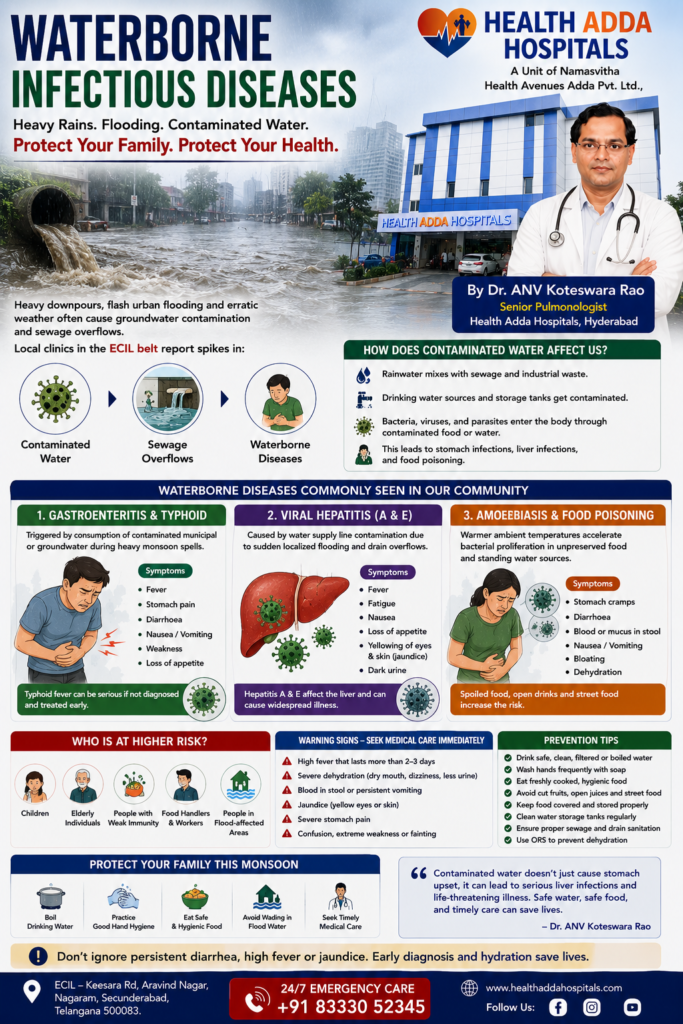
Who Is at Higher Risk?
The following groups are more vulnerable:
👶 Young children
👵 Older adults
🤰 Pregnant women
💉 People with weakened immunity
🫀 Patients with chronic diseases
👨🍳 Food handlers
🚰 People living in flood-affected areas
Warning Signs – Seek Medical Care Immediately
Do not ignore:
🚨 Persistent vomiting
🚨 Blood in stool
🚨 High fever lasting more than two days
🚨 Severe dehydration
🚨 Confusion
🚨 Severe abdominal pain
🚨 Yellow eyes or skin (jaundice)
🚨 Reduced urine output
How to Prevent Waterborne Diseases
Protect yourself and your family by:
✔️ Drink boiled, filtered, or purified water
✔️ Wash hands with soap before eating and after using the toilet
✔️ Eat freshly prepared, well-cooked food
✔️ Avoid uncovered street food during heavy rains
✔️ Wash fruits and vegetables thoroughly
✔️ Clean household water storage tanks regularly
✔️ Store drinking water in clean, covered containers
✔️ Maintain good kitchen hygiene
Common Myths
“Clear Water Is Always Safe”
Not necessarily. Water may appear clean but still contain harmful microorganisms.
“Food Poisoning Is Always Mild”
No. Severe dehydration and serious infections can develop, especially in children and older adults.
“Antibiotics Should Be Taken for Every Diarrhea”
No. The treatment depends on the cause. Self-medication can delay proper diagnosis and may not be appropriate.
When Should You Visit a Doctor?
Seek medical evaluation if:
- Diarrhea lasts more than two days
- Vomiting prevents drinking fluids
- High fever develops
- Blood appears in the stool
- Jaundice develops
- Symptoms occur in infants, elderly individuals, or pregnant women
Expert Advice from Dr. ANV Koteswara Rao
“Most waterborne diseases are preventable. Safe drinking water, hygienic food, proper handwashing, and early medical evaluation can prevent dehydration and reduce the risk of serious complications during the monsoon season.”
Why Choose Health Adda Hospitals?
At Health Adda Hospitals, patients receive:
✔ Comprehensive evaluation of fever, diarrhea, vomiting, and abdominal pain
✔ Dehydration assessment and management
✔ Laboratory investigations when indicated
✔ Liver function evaluation for suspected hepatitis
✔ Personalized treatment and follow-up care
✔ 24/7 Emergency Medical Services
Key Takeaways
✅ Heavy rains can increase the risk of contaminated water and food.
✅ Gastroenteritis, typhoid, hepatitis A & E, amoebiasis, and food poisoning are common monsoon illnesses.
✅ Safe drinking water and good food hygiene are essential.
✅ Persistent diarrhea, high fever, jaundice, or dehydration require medical evaluation.
✅ Early diagnosis and treatment help prevent complications.
Frequently Asked Questions
1. What are waterborne diseases?
They are infections caused by bacteria, viruses, or parasites transmitted through contaminated water or food.
2. Can boiling water prevent infection?
Boiling water can kill many harmful microorganisms and is an effective way to make drinking water safer.
3. How can I prevent food poisoning?
Eat freshly cooked food, avoid stale or uncovered food, and maintain good hand and kitchen hygiene.
4. Is every diarrhea caused by food poisoning?
No. Diarrhea may result from viral, bacterial, or parasitic infections and requires proper evaluation if severe or persistent.
5. When should I seek urgent medical care?
Seek immediate care for severe dehydration, persistent vomiting, blood in stool, jaundice, or high fever.
6. Can children become dehydrated quickly?
Yes. Infants and young children can become dehydrated rapidly and should be evaluated promptly.
7. Is hepatitis A spread through contaminated water?
Yes. Hepatitis A commonly spreads through contaminated food or water.
8. Can floodwater contaminate drinking water?
Yes. Flooding can affect water supply systems and increase contamination risk.
9. Should I take antibiotics without consulting a doctor?
No. Treatment depends on the underlying cause, and antibiotics are not appropriate for every infection.
10. Where can I seek treatment in East Hyderabad?
Patients with fever, diarrhea, vomiting, dehydration, jaundice, or suspected waterborne infections can consult Dr. ANV Koteswara Rao at Health Adda Hospitals, ECIL–Nagaram, Secunderabad.