
Occupational asthma is becoming an increasing health concern among working professionals and industrial workers in India. In Hyderabad, growing industrial activity, pollution exposure, construction work, manufacturing units, and chemical exposure are contributing to rising workplace respiratory complaints.
Many employees initially ignore symptoms such as coughing, wheezing, or breathing difficulty because they believe the problem is temporary. However, repeated exposure to workplace irritants can gradually affect lung health.
This article explains occupational asthma, common workplace triggers, symptoms, risk factors, and the importance of early respiratory health awareness.
What Is Occupational Asthma?
Occupational asthma refers to asthma or asthma-like symptoms triggered by exposure to workplace substances.
These substances may include:
- Dust particles
- Chemical fumes
- Industrial smoke
- Paint vapors
- Construction materials
- Textile dust
- Cleaning chemicals
According to healthcare experts, repeated exposure to such irritants may affect sensitive airways and respiratory health over time.
Why Occupational Asthma Is Increasing in Hyderabad
Hyderabad’s rapid industrial growth has increased exposure to environmental and workplace irritants.
Major Contributing Factors
- Construction industry growth
- Manufacturing units
- Chemical industries
- Textile and warehouse environments
- Urban pollution exposure
- Poor workplace ventilation
Because of these factors, respiratory complaints among workers are becoming more common.
Common Symptoms of Occupational Asthma
Symptoms may appear during work hours or after prolonged exposure.
Early Occupational Asthma Symptoms
- Persistent cough
- Wheezing sound
- Chest tightness
- Mild breathing difficulty
- Throat irritation
Advanced Symptoms
- Severe breathlessness
- Frequent respiratory discomfort
- Reduced work tolerance
- Night-time breathing problems
- Repeated respiratory irritation
Symptoms may improve temporarily during holidays or weekends and worsen again at workplaces.
Workplaces With Higher Occupational Asthma Risk
Certain industries carry higher exposure risks.
High-Risk Occupations
- Construction workers
- Factory employees
- Chemical industry workers
- Painters and spray workers
- Textile workers
- Welding professionals
- Cleaning and sanitation workers
Because these environments often involve dust, fumes, or chemical exposure, respiratory health awareness becomes important.
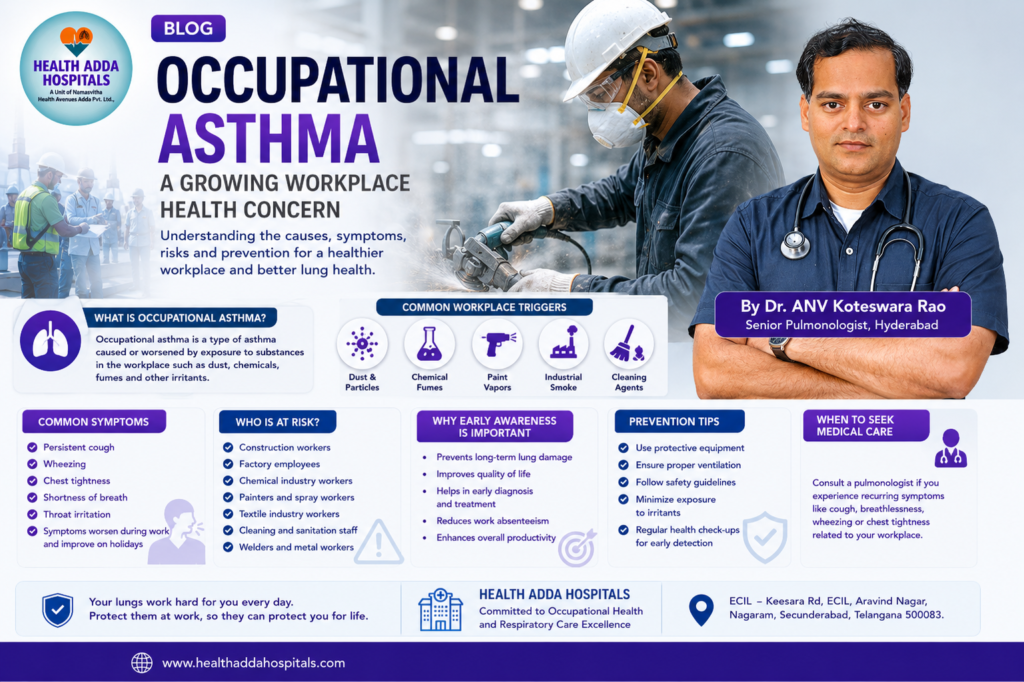
Common Workplace Triggers of Occupational Asthma
Dust Exposure
Industrial and construction dust can irritate airways.
Chemical Vapors
Strong chemicals may trigger respiratory sensitivity.
Smoke and Fumes
Industrial smoke exposure may affect lung function over time.
Poor Ventilation
Closed workplace environments can worsen respiratory irritation.
Why Early Awareness Is Important
Many workers delay medical evaluation because symptoms initially appear mild.
However, prolonged workplace exposure may gradually worsen respiratory discomfort.
According to pulmonologists including Dr. ANV Koteswara Rao, early awareness and respiratory health evaluation are important for individuals working in high-exposure environments.
How Occupational Asthma Affects Daily Life
Respiratory symptoms may affect:
- Physical activity
- Sleep quality
- Workplace productivity
- Overall comfort during work
Therefore, workplace respiratory health should not be ignored.
How Workplaces Can Improve Respiratory Safety
Organizations can support safer work environments through:
Important Workplace Safety Measures
- Proper ventilation systems
- Dust-control measures
- Respiratory protection equipment
- Workplace hygiene practices
- Health-awareness programs
Because prevention remains important, workplace safety systems play a major role.
Who Should Pay Extra Attention?
Certain individuals may be more vulnerable.
Higher-Risk Individuals
- Workers with allergies
- Smokers
- Individuals with previous asthma history
- Long-term industrial workers
- Individuals exposed to dust daily
Because respiratory sensitivity varies, regular awareness becomes essential.
Real-World References (India Context)
- World Health Organization highlights occupational respiratory diseases as an important workplace health concern.
- Indian Council of Medical Research supports occupational health awareness and respiratory disease prevention.
- National Institute for Occupational Safety and Health emphasizes workplace respiratory protection and industrial health safety.
These references reinforce the importance of workplace respiratory awareness.
How Health Adda Hospitals Supports Respiratory Awareness
At Health Adda Hospitals, respiratory awareness and preventive healthcare education remain important priorities.
According to specialists including Dr. ANV Koteswara Rao, many industrial workers delay evaluation until symptoms worsen significantly.
Therefore, awareness about workplace respiratory health, industrial exposure risks, and early warning signs can help individuals make informed healthcare decisions.
Health Adda Hospitals continues to support evidence-based healthcare awareness and respiratory health education for patients and working professionals in Hyderabad.
When Should Medical Evaluation Be Considered?
Respiratory evaluation becomes important if:
- Breathing problems repeat frequently
- Symptoms worsen during work hours
- Persistent cough continues for several weeks
- Wheezing or chest tightness increases
In Hyderabad, consulting experienced pulmonologists including Dr. ANV Koteswara Rao at Health Adda Hospitals can support respiratory health awareness and workplace-related breathing concern evaluation.
Conclusion
Occupational asthma is becoming an important workplace health concern due to increasing industrial exposure, pollution, and environmental irritants.
Therefore, workers and organizations should prioritize respiratory health awareness, workplace safety, and early recognition of symptoms.
As Hyderabad continues to grow industrially, awareness about occupational respiratory diseases remains essential for long-term worker health and safety.