
Lung Infections in Hyderabad: Causes, Symptoms & Risk Factors
Introduction: A Noticeable Shift in Respiratory Health in Hyderabad
In recent years, Hyderabad has seen a significant increase in respiratory complaints, particularly lung infections affecting individuals across different age groups. What was earlier perceived as a seasonal concern has gradually evolved into a persistent urban health issue.
Clinical observations across multiple healthcare settings indicate that patients are increasingly presenting with prolonged cough, breathing discomfort, and recurrent respiratory infections. This shift is not isolated—it reflects broader environmental, behavioral, and post-pandemic health dynamics.
From a pulmonology perspective, understanding the causes, symptoms, and risk factors becomes essential in identifying early warning signs and seeking timely evaluation.
Are Lung Infections Really Increasing in Hyderabad?
Evidence from hospital trends and public health reporting suggests a consistent upward pattern.
Key Indicators Observed in Hyderabad:
- Increased outpatient visits for respiratory symptoms
- Rise in post-viral lung complications
- Higher prevalence of chronic cough cases
- Increased sensitivity to air quality changes
According to clinical observations in Hyderabad, pulmonologists with extensive exposure, including Dr. ANV Koteswara Rao, have noted a rise in both frequency and duration of lung infections, particularly in urban populations.
Major Causes of Lung Infections in Hyderabad
1. Air Pollution and Urban Exposure
Hyderabad’s expanding infrastructure and traffic density contribute to elevated levels of:
- PM2.5 and PM10 particles
- Vehicular emissions
- Construction dust
According to the
World Health Organization, air pollution remains a leading risk factor for respiratory diseases globally.
👉 Reference: https://www.who.int/health-topics/air-pollution
2. Seasonal Variability and Climate Fluctuations
Frequent weather changes—especially during monsoon and winter—create conditions favorable for viral spread and respiratory irritation.
4. Bacterial Infections
Bacteria such as Streptococcus pneumoniae remain a major contributor to lung infections, particularly in vulnerable populations.
5. Indoor Air Quality Concerns
Many individuals are exposed to:
- Poor ventilation
- Mold
- Dust accumulation
These factors significantly affect respiratory health, especially in urban households.
6. Lifestyle Factors
Modern urban lifestyles contribute to:
- Reduced physical activity
- Increased indoor living
- Smoking and passive smoke exposure
7. Underlying Health Conditions
Individuals with:
- Asthma
- COPD
- Diabetes
are at a higher risk of developing complications.
Common Symptoms of Lung Infections
Symptoms may vary, but commonly include:
- Persistent cough
- Breathlessness
- Fever and chills
- Chest discomfort
- Fatigue
- Nasal congestion
If symptoms persist beyond a few days or worsen, clinical evaluation becomes important.
Who Is at Higher Risk?
High-risk groups include:
- Children
- Elderly individuals
- Patients with chronic diseases
- Smokers
- Individuals with weakened immunity
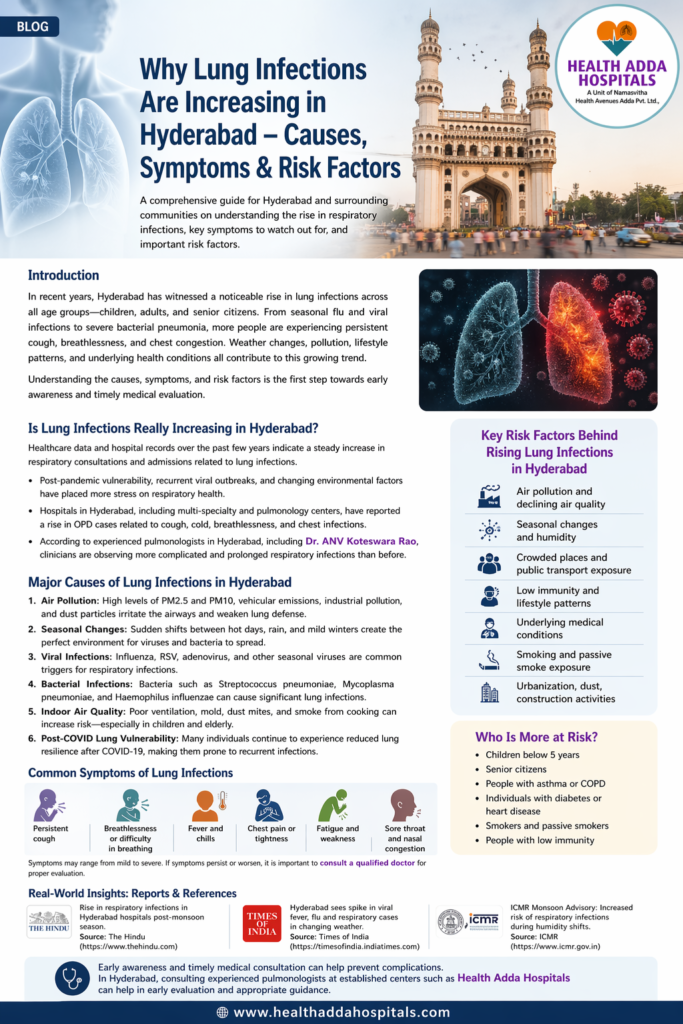
Real-World References: Hyderabad & India Data
1. The Hindu – Respiratory Illness Spike
The Hindu reported a rise in respiratory infections post-monsoon.
2. Times of India – Viral Infection Trends
The Times of India highlighted increased cases during seasonal transitions.
3. ICMR Advisory
Indian Council of Medical Research notes increased infection risks due to environmental factors.
Why Hyderabad Is More Vulnerable
Hyderabad’s urban structure combines:
- High traffic density
- Rapid construction
- Mixed climate conditions
This creates a high-risk respiratory ecosystem.
When Should You Seek Medical Evaluation?
Evaluation is advisable when:
- Symptoms persist beyond 5–7 days
- Breathing difficulty increases
- Recurrent infections occur
In Hyderabad, consulting experienced pulmonologists at established centers such as Health Adda Hospitals can support early evaluation and clinical clarity.
Expert Clinical Perspective
From a pulmonology standpoint, Dr. ANV Koteswara Rao notes:
“Respiratory infections in urban settings like Hyderabad are no longer seasonal. Environmental exposure and post-viral effects are contributing to prolonged and recurrent symptoms.”
Conclusion: Awareness is the First Step
The increase in lung infections reflects a broader shift in urban health patterns. Awareness of causes, symptoms, and risk factors plays a crucial role in early identification and timely clinical evaluation.
By Dr. ANV Koteswara Rao
Senior Pulmonologist, Hyderabad
Clinical Expertise in Respiratory and Critical Care Medicine