
Introduction
When people search for a hospital, they often focus on infrastructure, technology, specialist availability, or location. While these factors are important, another factor can significantly influence the overall healthcare experience: the doctor-patient relationship.
A strong doctor-patient relationship creates trust, improves communication, and helps patients feel more comfortable discussing their health concerns. In many cases, patients remember how they were treated and how well their concerns were understood long after a consultation is over.
In Hyderabad, where healthcare choices continue to expand, patients increasingly look for hospitals that prioritize communication, empathy, and patient-centered care alongside medical expertise.
This guide explains how to identify hospitals that foster strong doctor-patient relationships and why these relationships matter in modern healthcare.
Why Doctor-Patient Relationships Matter
Healthcare is not simply about diagnosing symptoms. It is also about understanding people.
A positive doctor-patient relationship helps:
- Improve communication
- Build patient confidence
- Encourage healthcare awareness
- Support informed decision-making
- Improve overall healthcare experience
Therefore, patients should consider relationship quality as an important factor when evaluating hospitals.
What Makes a Good Doctor-Patient Relationship?
Several characteristics contribute to a strong relationship between healthcare professionals and patients.
Trust
Trust forms the foundation of effective healthcare communication.
Patients should feel comfortable:
- Discussing symptoms openly
- Asking questions
- Sharing concerns
- Seeking clarification
Without trust, important health information may not be communicated effectively.
Respect
Patients deserve to be treated with dignity and respect regardless of age, background, or medical condition.
Respectful healthcare environments typically demonstrate:
- Professional communication
- Active listening
- Courtesy
- Privacy protection
Therefore, observing how staff interact with patients can reveal important insights about hospital culture.
Clear Communication
Medical information can often be complex.
Good doctors explain:
- Symptoms
- Possible causes
- Medical findings
- Recommended next steps
in language that patients can understand.
As a result, patients feel more informed and confident about their healthcare decisions.
Signs of a Hospital With Good Doctor-Patient Relationships
Several indicators can help patients identify hospitals that prioritize patient-centered care.
Doctors Listen Carefully
One of the most important signs is active listening.
During consultations, doctors should:
- Allow patients to explain concerns
- Ask relevant questions
- Avoid rushing conversations
- Clarify important details
Patients often feel more valued when healthcare professionals genuinely listen.
Sufficient Consultation Time
While healthcare facilities may be busy, quality consultations should not feel rushed.
Hospitals that value patient relationships often encourage:
- Thorough assessments
- Detailed discussions
- Adequate consultation time
Therefore, patients should observe whether doctors take time to understand their concerns.
Transparent Communication
Transparency is an important indicator of healthcare quality.
Hospitals that promote transparent communication often discuss:
- Medical findings
- Diagnostic recommendations
- Follow-up requirements
- Patient responsibilities
This helps create realistic expectations and stronger trust.
Patient Education Is Encouraged
Hospitals that prioritize doctor-patient relationships often focus on education.
Healthcare professionals may encourage patients to:
- Understand their health conditions
- Learn about preventive healthcare
- Ask questions
- Participate in healthcare decisions
Because informed patients often make better healthcare decisions, education plays an important role.
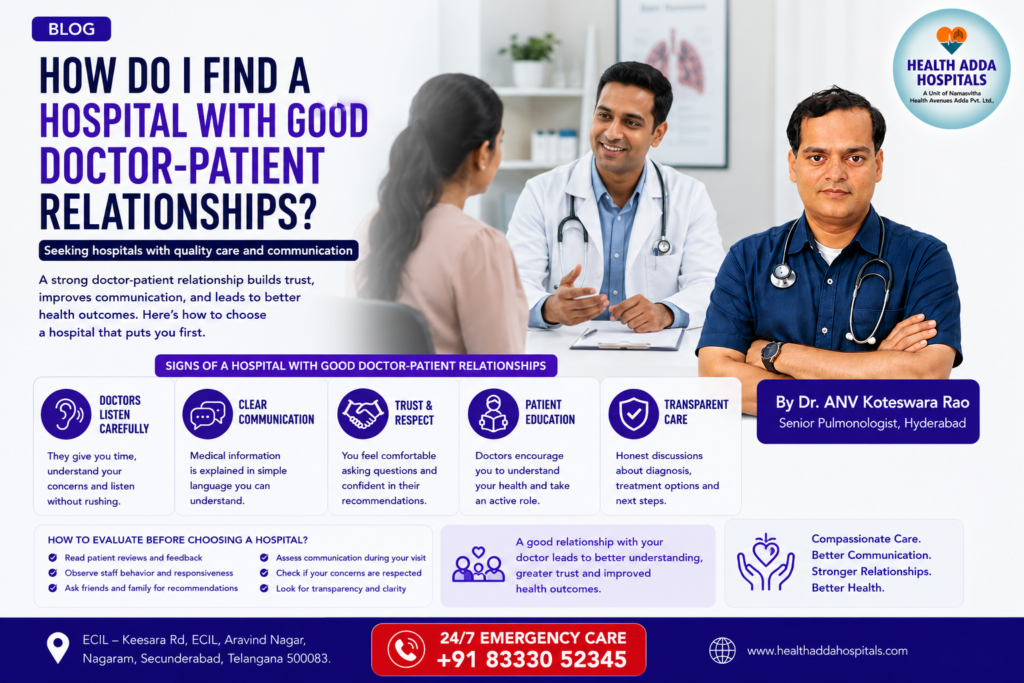
How to Evaluate Doctor-Patient Relationships Before Choosing a Hospital
Patients can evaluate relationship quality through several methods.
Review Patient Feedback Carefully
Hospital reviews can provide useful insights.
Look for comments about:
- Communication quality
- Doctor behavior
- Staff professionalism
- Patient support
However, reviews should be evaluated collectively rather than relying on individual comments.
Observe Staff Interactions
A hospital’s culture often becomes visible through everyday interactions.
Consider:
- Reception staff behavior
- Nursing communication
- Helpfulness of support teams
- Responsiveness to patient questions
Hospitals with patient-focused cultures often demonstrate professionalism at every level.
Ask Friends and Family
Personal recommendations can provide valuable insights.
Family members and friends may share experiences related to:
- Communication quality
- Patient care
- Doctor accessibility
- Overall hospital experience
Therefore, trusted referrals remain an important source of information.
Why Communication Matters During Serious Health Concerns
Good communication becomes even more important during:
- Chronic health conditions
- Respiratory illnesses
- Surgical evaluations
- Emergency situations
- Long-term treatment planning
Patients often experience anxiety during these situations. Clear communication can provide reassurance and understanding.
Common Warning Signs Patients Should Notice
Not all healthcare experiences reflect strong doctor-patient relationships.
Potential concerns may include:
- Feeling rushed
- Lack of explanation
- Limited opportunity to ask questions
- Poor communication
- Lack of empathy
If patients consistently experience these issues, they may wish to evaluate other healthcare options.
Why Hyderabad Patients Are Prioritizing Patient-Centered Care
Healthcare expectations are changing.
Today’s patients increasingly value:
- Compassionate communication
- Transparency
- Accessibility
- Respectful treatment
- Healthcare education
As a result, hospitals across Hyderabad are placing greater emphasis on patient experience and relationship-building.
The Role of Hospital Culture
Strong doctor-patient relationships are rarely the result of one individual alone.
They often reflect a broader hospital culture that prioritizes:
- Patient safety
- Ethical care
- Professionalism
- Communication
- Compassion
Therefore, patients should evaluate the overall healthcare environment, not only individual consultations.
How Health Adda Hospitals Supports Patient-Centered Care
At Health Adda Hospitals, patient education, communication, and healthcare awareness remain important priorities.
According to Dr. ANV Koteswara Rao, effective healthcare begins with understanding the patient, listening carefully, and building trust through transparent communication.
Healthcare should be a partnership where patients feel informed, respected, and involved in their healthcare journey.
Through patient-focused communication and evidence-based healthcare practices, Health Adda Hospitals continues to support quality healthcare experiences for families across Hyderabad.
Clinical Perspective
From a healthcare standpoint, strong doctor-patient relationships help create more meaningful healthcare interactions.
According to Dr. ANV Koteswara Rao, patients who feel comfortable communicating openly often gain a better understanding of their health concerns and become more engaged in their healthcare decisions.
Therefore, communication, trust, and empathy remain essential components of quality healthcare.
Conclusion
Finding a hospital with good doctor-patient relationships involves more than evaluating facilities or technology.
Patients should also assess communication quality, transparency, respect, trust, and overall patient experience.
As healthcare continues to evolve in Hyderabad, hospitals that prioritize patient-centered care and meaningful doctor-patient relationships will continue to play an important role in improving healthcare experiences and building patient confidence.