
When should you see a respiratory infection doctor?
If you have a persistent cough, recurrent wheezing, chest discomfort or breathing difficulty, a medical evaluation can help identify the cause. Respiratory symptoms may result from viral infections, influenza, RSV, bronchitis, pneumonia, asthma, COPD or other conditions. Symptoms alone cannot reliably distinguish these illnesses.
People living in ECIL, Nagaram, Kapra, Kushaiguda, AS Rao Nagar and surrounding areas of East Hyderabad can seek medical assessment when symptoms worsen, interfere with sleep or daily activities, or fail to improve as expected. A pulmonologist specialises in respiratory and lung conditions and may be appropriate for recurring or persistent symptoms. Severe breathing difficulty, bluish lips or face, confusion or collapse requires emergency medical care.
Introduction
A cough that begins with a cold may seem harmless at first. You may experience a runny nose, mild fever, throat irritation or tiredness and expect the symptoms to settle after a few days.
However, some respiratory illnesses can become more serious, particularly in young children, older adults and people with existing heart or lung conditions.
Wheezing, persistent coughing, increasing breathlessness and chest discomfort should not automatically be dismissed as seasonal changes or a routine viral infection.
For people searching online for a respiratory infection doctor near ECIL, understanding the warning signs is an important first step. The right medical assessment depends on the symptoms, their duration, the patient’s medical history and examination findings.
Health Adda Hospitals is located on ECIL–Keesara Road in Nagaram, Secunderabad, and provides pulmonology and general medical services. This guide explains when respiratory symptoms need evaluation, what a doctor may assess and how residents of East Hyderabad can approach respiratory care.
1. What is a respiratory infection?
A respiratory infection affects part of the respiratory system, which includes the nose, throat, airways and lungs.
Depending on the location and cause, respiratory infections may be described as upper or lower respiratory tract infections.
Upper respiratory tract infections
These affect areas such as the nose and throat. Common symptoms include:
- Runny or blocked nose
- Sneezing
- Sore throat
- Cough
- Mild fever
- General tiredness
Many uncomplicated upper respiratory infections improve with supportive care.
Lower respiratory tract infections
These affect the airways or lungs and may require closer medical assessment.
Possible symptoms include:
- Persistent or worsening cough
- Wheezing
- Breathlessness
- Fever with cough
- Chest discomfort
- Reduced ability to perform usual activities
Bronchitis and pneumonia are examples of lower respiratory tract illnesses, although they differ in their causes and clinical features.
Important: The severity of an illness cannot be determined by the cough alone. A clinician may need to examine the patient and assess breathing, oxygen saturation and other findings.
2. Five respiratory symptoms you should not ignore
1. A persistent or worsening cough
A cough is a protective reflex that helps clear the airways. It can occur with common viral infections, allergies, asthma, reflux and other conditions.
Some coughs continue for several weeks after an acute respiratory infection, but the pattern matters.
Seek medical advice if the cough is worsening, accompanied by significant fever or breathlessness, repeatedly returns, or interferes substantially with sleep and daily activities.
A cough lasting three weeks or longer generally warrants medical evaluation, particularly if there are other symptoms or risk factors. Do not wait three weeks if symptoms are severe or deteriorating.
2. Wheezing or a whistling sound while breathing
Wheezing is a high-pitched sound that can occur when air moves through narrowed airways.
It may be associated with asthma, COPD, respiratory infections or other airway problems.
A new episode of wheezing, recurrent wheezing or wheezing that is becoming worse should be medically assessed. A clinician can determine whether the cause is an infection, an underlying lung condition or another problem.
If wheezing occurs with severe breathing difficulty or inability to speak normally because of breathlessness, seek emergency care.
3. Shortness of breath
Breathlessness may develop during respiratory infections or when an existing heart or lung condition worsens.
Pay attention if you become unusually breathless during ordinary activities, find it difficult to lie down comfortably because of breathing symptoms, or notice a clear deterioration from your usual breathing pattern.
Severe or rapidly worsening breathlessness is an emergency. Do not delay care while waiting for a routine appointment or an online response.
4. Fever accompanied by respiratory symptoms
Fever can occur with many infections. When fever occurs alongside cough, chest discomfort, rapid breathing or marked weakness, the overall clinical picture deserves attention.
A high temperature alone does not identify whether an infection is viral or bacterial.
Medical evaluation may be particularly important when fever persists, returns after improvement, or affects someone who is very young, older or medically vulnerable.
5. Chest discomfort or pain
Chest discomfort can occur with coughing and respiratory infections, but it can also have causes unrelated to the lungs.
Do not assume that chest pain is simply due to coughing. Sudden or severe chest pain, chest pressure, or chest pain accompanied by breathlessness, sweating, faintness or other concerning symptoms requires urgent assessment.
3. Is it a common cold, RSV, bronchitis or pneumonia?
Respiratory symptoms often overlap, making self-diagnosis unreliable.
| Condition | Possible symptoms | Why evaluation may matter |
|---|---|---|
| Common cold | Runny nose, sneezing, congestion, cough | Assessment may be needed if symptoms worsen or complications are suspected |
| RSV infection | Cold-like symptoms, cough, reduced appetite, wheezing in some cases | Can cause serious illness in some infants, older adults and people with risk factors |
| Acute bronchitis | Cough, sometimes with mucus, chest irritation | A clinician may need to distinguish it from pneumonia or other conditions |
| Pneumonia | Cough, fever, breathlessness, chest discomfort or weakness | May require specific treatment and closer monitoring |
| Asthma exacerbation | Wheezing, chest tightness, cough, breathlessness | Requires assessment and management according to the patient’s clinical plan |
| COPD exacerbation | Worsening breathlessness, cough or mucus beyond the person’s usual symptoms | Can require prompt treatment, especially if symptoms are significant |
These patterns are general descriptions, not a diagnostic checklist. A patient can have overlapping conditions, and some people do not develop every typical symptom.
For more information about RSV, read the hospital’s existing guide to respiratory syncytial virus symptoms and care:
https://healthaddahospitals.com/respiratory-syncytial-virus-rsv-symptoms-treatment/
4. Who should seek medical assessment early?
Although respiratory infections can affect anyone, some people have a greater risk of complications.
Infants and young children
Young children may not be able to explain how they feel. Parents should watch for poor feeding, unusual sleepiness, worsening cough, rapid breathing or increased effort while breathing.
Seek prompt assessment if a baby is feeding poorly or has worsening respiratory symptoms.
Severe breathing difficulty, marked chest retractions, bluish lips or face, or reduced responsiveness requires emergency medical care.
Older adults
Respiratory illness in older adults may present with weakness, reduced appetite, confusion or a decline in usual activity rather than obvious fever.
People caring for older relatives should watch for changes in breathing, hydration, alertness and ability to perform normal activities.
People with asthma or COPD
Respiratory infections can aggravate asthma and COPD.
If you need your prescribed reliever medication more frequently than your action plan allows, experience worsening wheezing or become more breathless than usual, seek medical advice. Follow your clinician-provided action plan and do not change prescribed medication without appropriate guidance.
People with heart disease or weakened immunity
Certain heart conditions and weakened immunity can increase the risk of complications from respiratory infections.
Seek advice early if symptoms develop or worsen, particularly if breathing, fluid intake or general condition is affected.
5. What happens during a respiratory consultation?
When you consult a respiratory infection doctor or pulmonologist, the assessment is tailored to your symptoms and risk factors.
Step 1: Review of symptoms and medical history
The clinician may ask:
- When did the symptoms begin?
- Is the cough improving, persistent or worsening?
- Is there fever, wheezing, chest discomfort or breathlessness?
- Is there a history of asthma, COPD, heart disease or allergies?
- Have you recently had contact with someone who was unwell?
- What medicines are you currently taking?
These details help the clinician understand the likely causes and identify warning signs.
Step 2: Physical examination
Depending on the presentation, the clinician may assess temperature, pulse, breathing rate, oxygen saturation and chest findings.
The need for each assessment depends on the patient’s condition.
Step 3: Decide whether investigations are needed
Not every respiratory infection requires laboratory testing or imaging.
Depending on the symptoms and examination, a clinician may consider:
- Viral testing when the result could influence clinical decisions
- Blood tests in selected cases
- Chest X-ray when pneumonia or another chest condition is suspected
- Oxygen saturation monitoring
- Lung function testing for suspected or established chronic respiratory conditions
The appropriate investigation depends on clinical findings. Testing should not delay emergency treatment for a patient with severe breathing difficulty.
Step 4: Develop an appropriate management plan
Treatment depends on the underlying cause.
Many viral respiratory infections improve with supportive care. Some patients need specific treatment, additional monitoring or hospital care.
Antibiotics do not treat viruses and should only be used when clinically indicated. Do not start antibiotics, steroids or other prescription medicines without medical advice.
6. How can you reduce the risk of respiratory infections?
No measure can prevent every respiratory infection, but practical steps can reduce exposure and transmission.
- Wash your hands regularly.
- Cover coughs and sneezes and dispose of tissues safely.
- Improve indoor ventilation when practical.
- Avoid close contact with people who are currently unwell.
- Consider a well-fitting mask in crowded indoor settings when respiratory illness is circulating or when you are protecting someone at higher risk.
- Avoid smoking and exposure to tobacco smoke.
- Follow relevant vaccination advice from your healthcare professional.
- Keep prescribed asthma or COPD treatment plans up to date.
If you develop respiratory symptoms, rest, maintain adequate fluid intake where medically appropriate, and monitor for deterioration. People with fluid restrictions or certain medical conditions should follow their clinician’s advice about fluid intake.
Do not rely on home remedies to manage severe breathing difficulty or other emergency symptoms.
7. When is respiratory illness an emergency?
Recognising an emergency is more important than identifying the exact virus.
Seek emergency medical care immediately if someone develops:
- Severe or rapidly worsening breathing difficulty
- Bluish or grey lips or face
- Marked chest retractions in a child
- Collapse or reduced responsiveness
- New confusion associated with serious illness
- Severe chest pain or pressure
A person with significant breathing difficulty should not wait for an online consultation, routine appointment or test result.
If symptoms are worsening but not immediately life-threatening, arrange prompt medical assessment rather than continuing to self-treat.
8. Finding a respiratory infection doctor near ECIL
When searching for a respiratory infection doctor near ECIL, consider the nature of your symptoms and the type of care you may need.
A general physician can assess many common illnesses, including fever and uncomplicated respiratory symptoms. A pulmonologist specialises in lung and respiratory conditions and may be appropriate for recurrent wheezing, persistent cough, asthma, COPD or other complex respiratory concerns.
Consider these practical factors when choosing care:
- Whether the facility offers the relevant medical specialty
- Whether the clinician can assess your symptoms and medical history
- Whether appropriate investigations can be arranged when indicated
- Whether you can access follow-up care if symptoms persist
- Whether emergency services are needed instead of a routine consultation
Do not choose a provider based only on a search ranking or online advertisement. Seek emergency care for severe symptoms regardless of your preferred clinic.
Respiratory care for residents of East Hyderabad
Health Adda Hospitals is located at ECIL–Keesara Road, Aravind Nagar, Nagaram, Secunderabad.
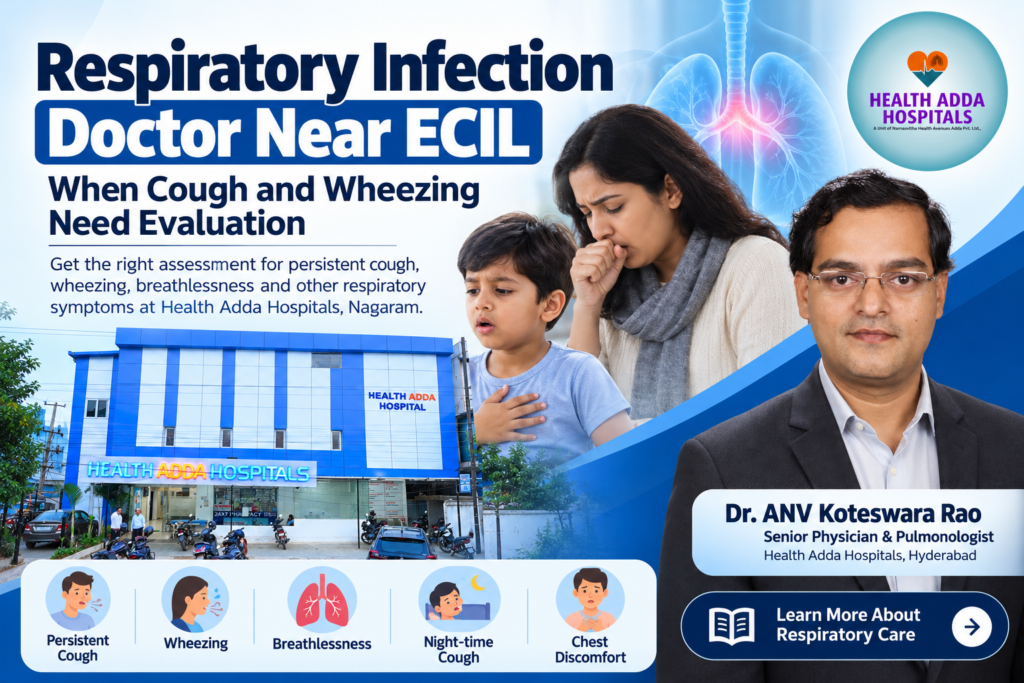
Its published specialties include pulmonology and general medicine. Dr. ANV Koteswara Rao is listed by the hospital as a Senior Physician and Pulmonologist.
Residents of ECIL, Nagaram, Kapra, Kushaiguda, AS Rao Nagar, Sainikpuri and nearby East Hyderabad areas can explore the hospital’s services to understand whether they are appropriate for their medical needs.
Health Adda Hospitals
Address: ECIL–Keesara Road, Aravind Nagar, Nagaram, Secunderabad, Telangana 500083
Website: https://healthaddahospitals.com/
Explore available services:
https://healthaddahospitals.com/specialties/
Learn more about Dr. ANV Koteswara Rao:
https://healthaddahospitals.com/dr-anv-koteswara-rao-2/
For severe breathing difficulty or another medical emergency, seek emergency care immediately.
Frequently asked questions
1. Which doctor should I see for a respiratory infection near ECIL?
A general physician can assess many common respiratory infections. A pulmonologist may be appropriate for persistent cough, recurrent wheezing, asthma, COPD or more complex respiratory symptoms. The choice depends on the patient’s condition and urgency.
2. When should I worry about a persistent cough?
Seek medical evaluation if the cough is worsening, accompanied by breathlessness or chest pain, repeatedly returns, or interferes with daily activities. A cough lasting three weeks or longer generally warrants assessment, but severe or worsening symptoms need earlier attention.
3. Does wheezing always mean asthma?
No. Wheezing can occur with asthma, COPD, respiratory infections and other conditions. A clinician can assess the likely cause and determine whether further investigation is needed.
4. Can RSV cause wheezing or breathing difficulty?
Yes. RSV can cause wheezing and lower respiratory tract illness in some people. Young infants, older adults and people with certain underlying conditions may be at higher risk of severe illness.
5. Do all respiratory infections need antibiotics?
No. Antibiotics do not treat viral infections. A clinician should determine whether antibiotics are indicated based on the likely diagnosis and clinical findings.
6. When should a child with a cough be taken to a hospital?
Seek prompt assessment if the child is feeding poorly, symptoms worsen or breathing becomes unusually fast or difficult. Severe breathing difficulty, bluish lips or face, marked chest retractions or reduced responsiveness requires emergency medical care.
7. Can asthma or COPD become worse during an infection?
Yes. Respiratory infections can trigger worsening symptoms in people with asthma or COPD. Follow the prescribed action plan and seek medical advice if symptoms deteriorate.
8. Where is Health Adda Hospitals located?
Health Adda Hospitals is located on ECIL–Keesara Road, Aravind Nagar, Nagaram, Secunderabad, Telangana 500083. Its official website provides information about its medical specialties and clinicians.
Key takeaways
- Respiratory infections can cause symptoms ranging from a mild cold to serious lung illness.
- Persistent cough, recurrent wheezing and worsening breathlessness deserve appropriate medical assessment.
- Symptoms alone cannot reliably identify RSV, bronchitis, pneumonia or another respiratory illness.
- Infants, older adults and people with underlying heart or lung conditions may require earlier assessment.
- Severe breathing difficulty, bluish lips or face, collapse or reduced responsiveness requires emergency medical care.
- People in ECIL, Nagaram, Kapra and surrounding East Hyderabad areas can explore local medical services based on their symptoms and care needs.
Medical disclaimer
This article is for general health education and does not replace an individual medical assessment, diagnosis or treatment plan. Seek advice from a qualified healthcare professional for concerning symptoms and emergency care for severe breathing difficulty or other emergency warning signs.
About the author
Dr. ANV Koteswara Rao is a Senior Physician and Pulmonologist at Health Adda Hospitals, Hyderabad. His published hospital profile describes his work in respiratory medicine, including asthma, COPD, pneumonia and other lung conditions. Readers can consult the hospital’s official website for further information about its services and clinicians.