
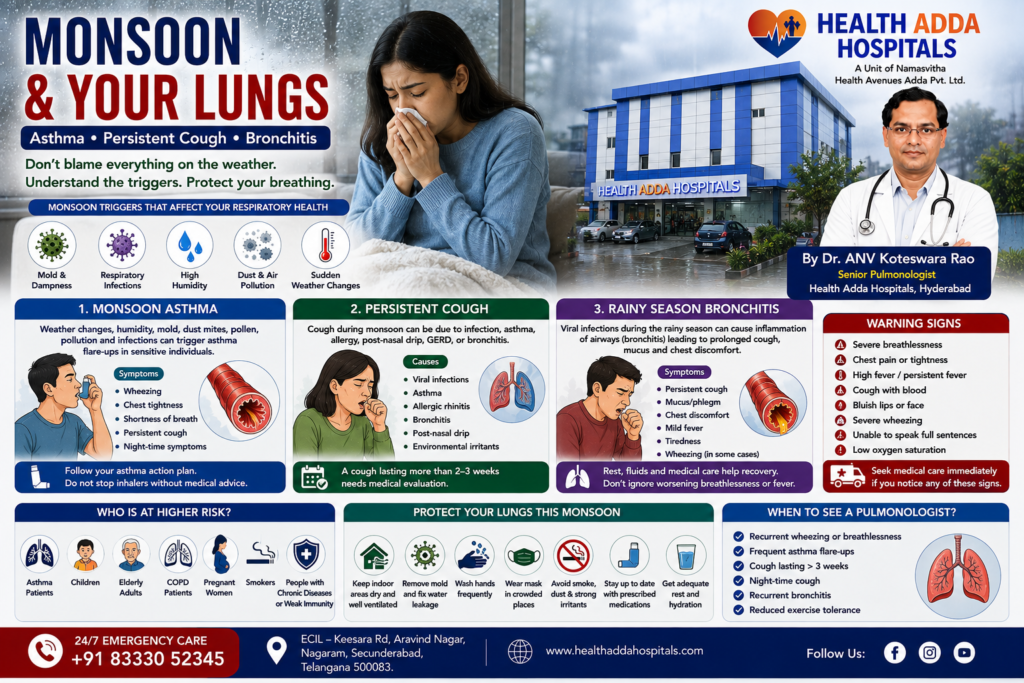
Monsoon weather can aggravate respiratory symptoms in susceptible people. Changes in temperature and humidity, indoor dampness, mold, dust mites, air pollution and respiratory infections may trigger coughing, wheezing or asthma flare-ups. Viral infections can also cause acute bronchitis, with cough sometimes continuing for several weeks. People with asthma or COPD should follow their prescribed treatment plan and seek medical evaluation if breathing difficulty, chest tightness, persistent fever or worsening symptoms develop.
Introduction
Rainy weather brings relief from Hyderabad’s summer heat, but for many people, particularly those with asthma, allergies, COPD or other respiratory conditions, the monsoon can bring a different problem: worsening breathing symptoms.
A patient may initially notice something that seems minor:
“I am coughing more after the rains.”
Or:
“My asthma is getting worse whenever the weather changes.”
Or:
“The fever is gone, but my cough hasn’t stopped.”
These symptoms should not automatically be dismissed as a normal effect of the weather.
The monsoon can create several overlapping respiratory triggers—including humidity, dampness, mold, dust mites, respiratory infections and changes in air quality. These factors can aggravate sensitive airways and make existing respiratory conditions more difficult to control.
The World Health Organization recognizes weather changes as a possible asthma trigger and identifies mould, dampness, indoor pollution and allergens among important respiratory risk factors.
Why Does the Monsoon Affect Respiratory Health?
There isn’t one single reason.
Instead, several environmental factors can occur simultaneously.
🌧️ Rain and humidity
🍄 Indoor mold and fungal spores
🦠 Respiratory viral infections
🌫️ Dust and air pollution
🏠 Poorly ventilated damp spaces
🌡️ Sudden temperature changes
For people with sensitive airways, this combination can result in cough, wheezing, nasal congestion, chest tightness and breathlessness.
1. Monsoon Asthma: Why Can Symptoms Become Worse?
Asthma is a chronic respiratory condition involving inflammation and narrowing of the airways.
Common symptoms include:
- Cough
- Wheezing
- Chest tightness
- Shortness of breath
Weather changes can worsen asthma symptoms in some people. Other triggers can include dust, smoke, pollen, mould, respiratory infections and strong irritants.
During the rainy season, several of these triggers may appear together.
How Humidity Can Affect Asthma
High humidity can make breathing feel uncomfortable and may contribute indirectly to asthma symptoms by encouraging the growth of mould and dust mites indoors.
Mould thrives where there is persistent moisture.
Potential problem areas include:
- Damp walls
- Bathrooms
- Wet carpets
- Curtains
- Wooden furniture
- Air-conditioning areas
- Leaking ceilings
- Poorly ventilated rooms
WHO guidance identifies persistent indoor dampness and microbial growth as important factors associated with respiratory symptoms, allergies and asthma.
2. Why Does Rainy Weather Trigger More Coughing?
A cough is a symptom—not a diagnosis.
During the monsoon, cough may result from:
- Viral respiratory infection
- Acute bronchitis
- Asthma
- Allergic rhinitis
- Post-nasal drip
- Pneumonia
- COPD exacerbation
- Environmental irritants
This is why persistent cough should not automatically be labelled as “seasonal cough.”
When Is a Cough Just a Cough?
A mild cough associated with a common viral infection may gradually improve.
However, medical evaluation becomes important when the cough:
🚨 Persists or keeps worsening
🚨 Is accompanied by breathing difficulty
🚨 Causes chest pain
🚨 Is associated with persistent fever
🚨 Produces blood
🚨 Causes significant wheezing
🚨 Continues for several weeks
3. What Is Rainy-Season Bronchitis?
Acute bronchitis is inflammation of the bronchial tubes, commonly caused by respiratory viruses.
It can develop following a cold or another respiratory infection.
Typical symptoms include:
- Persistent cough
- Mucus production
- Chest discomfort
- Fatigue
- Sore throat
- Mild fever
- Wheezing in some patients
A cough associated with acute bronchitis can sometimes persist even after the initial infection has improved.
Viral Bronchitis vs Asthma
These conditions can sometimes appear similar.
| Viral Bronchitis | Asthma |
|---|---|
| Often follows respiratory infection | Chronic airway condition |
| Cough is prominent | Cough and wheezing common |
| May produce mucus | Mucus may occur |
| Usually temporary | Can recur over time |
| Usually improves as infection resolves | Requires ongoing management |
| Fever may occur | Fever is not a typical asthma feature |
A patient can also have both asthma and a respiratory infection, which can make symptoms significantly worse.
Why Respiratory Infections Matter for Asthma Patients
Respiratory infections are recognized asthma triggers.
A viral infection may cause inflammation in the airways and make an already sensitive respiratory system more reactive.
This can result in:
- Increased coughing
- Wheezing
- Chest tightness
- Shortness of breath
- Increased use of prescribed reliever medication
WHO identifies respiratory infections and environmental exposures among factors associated with asthma risk and exacerbation.
The Hidden Monsoon Trigger: Mold
One of the most overlooked respiratory problems during the rainy season is indoor dampness.
Mould can grow behind:
- Cupboards
- Beds
- Wall panels
- Curtains
- Bathroom fixtures
- Air-conditioner units
You may notice:
- A musty smell
- Black or green patches
- Damp walls
- Peeling paint
- Persistent moisture
Mould exposure can aggravate allergies and asthma.
Could Your “Cold” Actually Be an Allergy?
Not every rainy-season respiratory symptom is an infection.
Allergic symptoms commonly include:
🤧 Repeated sneezing
👃 Runny or blocked nose
👁️ Itchy/watery eyes
😷 Throat irritation
🫁 Cough
💨 Wheezing in susceptible people
Fever is generally more suggestive of an infection than an uncomplicated allergy.
However, symptoms can overlap, so persistent or severe symptoms should be evaluated by a healthcare professional.
Who Should Be Especially Careful During the Monsoon?
Extra attention is important for:
🫁 People with asthma
🫁 COPD patients
👶 Young children
👴 Older adults
🤰 Pregnant women
❤️ People with heart disease
🛡️ People with weakened immunity
🚬 Smokers
For these groups, a respiratory infection or environmental trigger can potentially lead to more significant symptoms.
Warning Signs You Should Not Ignore
Seek prompt medical attention if you experience:
🚨 Severe breathlessness
🚨 Chest pain
🚨 Difficulty speaking because of breathlessness
🚨 Bluish lips or face
🚨 Persistent or high fever
🚨 Coughing up blood
🚨 Severe wheezing
🚨 Rapid worsening of asthma symptoms
🚨 Low oxygen saturation
These symptoms should not be attributed simply to “monsoon weather.”
How Can You Protect Your Lungs During the Monsoon?
1. Control Indoor Dampness
Repair:
- Water leaks
- Seepage
- Damp walls
- Roof leakage
- Plumbing problems
Don’t allow wet areas to remain damp for prolonged periods.
2. Watch for Mold
Inspect:
- Bathrooms
- Kitchens
- Bedrooms
- Cupboards
- Air-conditioning areas
Visible mould should be addressed safely, particularly if someone in the household has asthma or allergies.
3. Keep Your Asthma Plan Updated
If you have diagnosed asthma:
✔ Follow your prescribed treatment plan.
✔ Keep prescribed reliever medication available.
✔ Do not discontinue controller medication without medical advice.
✔ Know your warning signs.
✔ Seek review if symptoms become more frequent.
Inhaled medications can effectively control asthma, and appropriate treatment can reduce the risk of severe exacerbations.
4. Reduce Respiratory Infection Exposure
During periods of respiratory illness:
- Wash your hands regularly.
- Avoid close contact with people who are actively unwell.
- Cover coughs and sneezes.
- Improve ventilation where practical.
- Consider a mask in crowded settings when respiratory infections are circulating.
- Stay home when significantly unwell.
5. Avoid Smoke and Strong Irritants
Smoke can irritate already sensitive airways.
Avoid:
🚬 Tobacco smoke
🔥 Biomass smoke
🏭 Heavy pollution
🧴 Strong chemical fumes
🧹 Dust exposure
WHO identifies indoor and outdoor air pollution as important contributors to respiratory disease.
Should You Ignore a Cough After Fever?
No.
A cough can remain after a viral respiratory infection because airway inflammation may take time to settle.
However, a persistent cough should be evaluated when:
- It is worsening rather than improving
- Fever returns
- Breathlessness develops
- Wheezing increases
- Chest pain develops
- Blood appears in sputum
- The patient has asthma or COPD
The objective is not simply to suppress the cough—it is to determine why the cough is continuing.
Why Self-Medication Can Be a Problem
A persistent cough may have several possible causes.
Taking medication without identifying the cause can lead to inappropriate treatment.
For example:
Antibiotics do not treat viral infections.
Steroids should not be started without appropriate medical advice.
Cough suppressants may not be appropriate for every type of cough.
A physician may need to assess the lungs and determine whether the symptoms are related to infection, asthma, allergy, pneumonia or another condition.
When Should You See a Pulmonologist?
Consider pulmonary evaluation when you have:
- Recurrent wheezing
- Persistent cough
- Repeated bronchitis
- Breathlessness
- Frequent asthma flare-ups
- Night-time coughing
- Reduced exercise tolerance
- Recurrent chest infections
- Symptoms that worsen with weather changes
A pulmonologist can help determine whether the problem is related to asthma, allergy, infection, COPD or another respiratory condition.
Health Adda Hospitals: Pulmonology Care During the Monsoon
At Health Adda Hospitals, respiratory symptoms are evaluated according to the patient’s history, examination and clinical presentation.
Dr. ANV Koteswara Rao, Senior Physician & Pulmonologist, focuses on identifying the underlying cause rather than treating every cough or breathing problem as the same condition.
Evaluation may be appropriate for:
- Asthma
- Persistent cough
- Bronchitis
- Wheezing
- Respiratory infections
- COPD
- Allergic respiratory conditions
- Breathing difficulties
Expert Perspective
Dr. ANV Koteswara Rao
“During the monsoon, cough and breathing symptoms can have several causes. Asthma, allergies, viral infections and bronchitis can overlap, so persistent or worsening symptoms should not simply be attributed to the weather. Early evaluation can help identify the cause and prevent a manageable respiratory problem from becoming more serious.”
Key Takeaways
🌧️ Rainy weather can create multiple respiratory triggers.
🫁 Asthma symptoms may worsen with weather changes, infections, allergens and mould.
😷 Viral respiratory infections can cause persistent cough and acute bronchitis.
🍄 Indoor dampness and mould are important respiratory triggers.
🚫 Antibiotics should not be self-started for every cough.
⚠️ Breathlessness, chest pain, severe wheezing, persistent fever or low oxygen require medical attention.
👨⚕️ Persistent or recurrent respiratory symptoms deserve proper evaluation.
Frequently Asked Questions
1. Why does my asthma get worse during the monsoon?
Weather changes, respiratory infections, humidity, mould, dust mites and other allergens can trigger asthma symptoms in susceptible people.
2. Can rain cause bronchitis?
Rain itself does not cause bronchitis. Acute bronchitis is usually caused by respiratory infections, particularly viruses. Seasonal conditions may influence exposure and respiratory symptoms.
3. Why does my cough continue after a viral fever?
Airway inflammation can persist after the initial infection improves. However, persistent or worsening cough should be evaluated to exclude asthma, pneumonia or other conditions.
4. Can mould worsen asthma?
Yes. Dampness and mould are recognized respiratory triggers and are associated with increased respiratory symptoms, allergies and asthma.
5. Is every monsoon cough an infection?
No. Cough can also result from asthma, allergies, post-nasal drip, environmental irritants and other respiratory conditions.
6. Should I take antibiotics for bronchitis?
Many cases of acute bronchitis are viral, so antibiotics are generally not useful unless a bacterial infection is suspected or confirmed by a clinician.
7. Can children develop monsoon asthma symptoms?
Yes. Children with asthma or respiratory allergies may experience increased symptoms during weather changes and respiratory infections.
8. When is a cough considered concerning?
A cough accompanied by breathlessness, chest pain, persistent fever, blood in sputum, severe wheezing or worsening symptoms requires medical evaluation.
9. Can COPD patients be affected during the monsoon?
Yes. Respiratory infections, air pollution, dampness and other triggers can worsen symptoms in people with COPD.
10. Where can I get pulmonary evaluation in East Hyderabad?
Patients with persistent cough, wheezing, asthma symptoms or breathing difficulties can seek evaluation at Health Adda Hospitals, ECIL–Nagaram, Secunderabad.