
Rapid weather changes do not directly “create” viral infections. However, shifts between intense heat, humidity, rain, indoor crowding, dampness, mold exposure, and air pollution can influence how respiratory viruses spread and how strongly people with asthma or allergies react.
During changing weather, patients may experience fever, cough, sore throat, fatigue, sneezing, wheezing, nasal blockage, or shortness of breath. Persistent fever, worsening cough, chest pain, breathing difficulty, or reduced oxygen levels require timely medical evaluation.
Introduction
Hyderabad frequently experiences sharp transitions between intense summer heat, sudden rainfall, high humidity, and cooler evenings.
These changes can affect daily routines, indoor air quality, exposure to allergens, and patterns of respiratory infection. During periods of monsoon showers and humidity, Hyderabad hospitals have reported increased outpatient visits for viral fever, influenza-like illness, cough, sore throat, and other seasonal complaints.
However, it is important to understand the relationship correctly.
Weather changes do not directly cause influenza or viral fever. These illnesses are caused by viruses. Weather conditions may nevertheless influence:
- Indoor crowding and close contact
- Ventilation practices
- Mold and fungal growth
- Exposure to pollen, dust, and pollution
- Asthma and allergic-rhinitis triggers
- The seasonal circulation of respiratory viruses
The combined effect can lead to more people becoming symptomatic during periods of unstable weather.
What Are Climate-Sensitive Respiratory and Seasonal Illnesses?
Climate-sensitive illnesses are health conditions whose occurrence, severity, or transmission patterns may be influenced by environmental variables such as:
- Temperature
- Humidity
- Rainfall
- Air quality
- Indoor dampness
- Seasonal allergen levels
The World Health Organization notes that the transmission cycles of many diseases are shaped by heat, humidity, and rainfall patterns.
For respiratory health, the main concerns include:
- Seasonal viral fever and influenza-like illness
- Allergic rhinitis and sinus-related symptoms
- Asthma exacerbations
- Viral bronchitis and persistent cough
- Worsening COPD and other chronic lung conditions
Why Rapid Weather Changes Can Make People Feel Unwell
Changing Daily Behaviour
Sudden rain or heat often drives people indoors into closed environments with limited ventilation.
Respiratory viruses spread more easily through:
- Coughing
- Sneezing
- Close conversation
- Shared indoor spaces
- Contaminated hands and surfaces
The weather does not generate the virus, but changing behaviour may increase exposure.
Sleep and Hydration Disruption
Extreme heat, humidity, nasal congestion, cough, and uncomfortable indoor temperatures can disturb sleep.
People may also drink less water during cloudy or rainy conditions, contributing to:
- Headaches
- Fatigue
- Dizziness
- Reduced concentration
These symptoms may be confused with the early stages of infection.
Increased Indoor Dampness
Rainwater seepage, poorly ventilated bathrooms, damp walls, wet furnishings, and condensation can encourage indoor mold.
Damp buildings and mold exposure are associated with respiratory symptoms, allergic rhinitis, respiratory infections, and the development or worsening of asthma.
Seasonal Viral Fevers and Influenza-Like Illness
Why Cases May Rise During Weather Transitions
Influenza-like illness commonly presents with:
- Fever
- Cough
- Sore throat
- Body pain
- Headache
- Nasal congestion
- Fatigue
Hyderabad hospitals recently reported a 25–30% increase in outpatient visits for viral fever and flu-like illness during monsoon showers and humid conditions.
Several respiratory viruses may circulate at the same time, including:
- Influenza viruses
- Respiratory Syncytial Virus
- Rhinovirus
- Adenovirus
- Parainfluenza viruses
- Human metapneumovirus
Because their symptoms overlap, patients should avoid assuming every fever is “just viral.”
Common Viral-Fever Symptoms
Patients may experience:
✅ Fever or chills
✅ Dry or mucus-producing cough
✅ Sore throat
✅ Runny or blocked nose
✅ Headache
✅ Body aches
✅ Weakness and fatigue
✅ Reduced appetite
Most uncomplicated viral illnesses improve with supportive care. However, severe or persistent symptoms deserve medical assessment.
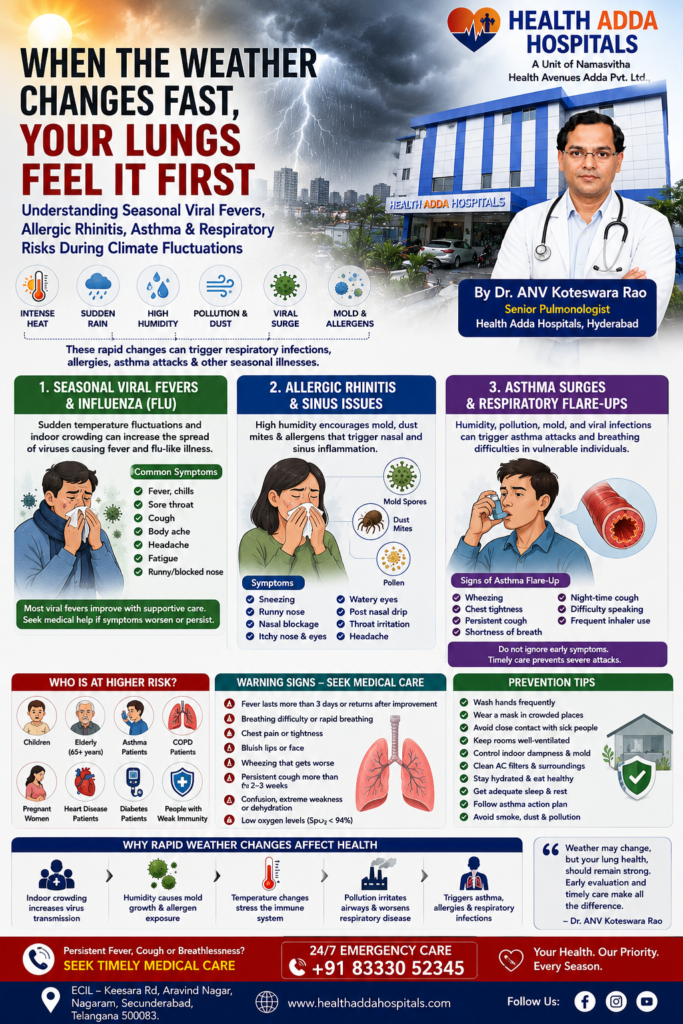
When Viral-Fever Symptoms Need Medical Attention
Consult a doctor if:
- Fever lasts longer than expected
- Fever returns after initially improving
- Cough is becoming worse
- Breathing becomes difficult
- Chest pain develops
- The patient appears dehydrated
- Symptoms affect an infant, older adult, pregnant woman, or person with chronic disease
Seek urgent care for confusion, severe breathlessness, bluish lips, fainting, persistent vomiting, or reduced oxygen levels.
Allergic Rhinitis During Humid and Unstable Weather
Allergic rhinitis is inflammation of the nasal passages caused by exposure to allergens.
Common symptoms include:
- Repeated sneezing
- Runny nose
- Nasal blockage
- Itchy nose
- Watery or itchy eyes
- Throat irritation
- Postnasal drip
- Cough
During humid weather, indoor dampness and mold spores can aggravate symptoms. Mold exposure can cause nasal blockage, coughing, wheezing, sore throat, eye irritation, and more severe reactions in people with asthma or mold allergy.
Why Mold Becomes a Major Seasonal Trigger
Mold commonly develops in:
- Damp walls
- Bathrooms
- Kitchens
- Air-conditioner ducts
- Wet carpets
- Curtains
- Mattresses
- Areas with water leakage
Mold may be visible as dark or green patches, but it can also be present when there is only a persistent damp or musty smell.
People living or working in damp buildings have a higher risk of respiratory symptoms and asthma.
Asthma Surges During Seasonal Changes
People with asthma have sensitive airways that can become inflamed and narrowed after exposure to triggers.
Seasonal asthma triggers may include:
- Mold spores
- Dust mites
- Pollen
- Viral respiratory infections
- Air pollution
- Smoke
- Sudden temperature changes
- Strong odours
The CDC specifically notes that mold exposure can trigger asthma attacks and irritate the eyes, nose, and skin.
Signs of an Asthma Flare-Up
Watch for:
🫁 Wheezing
🫁 Chest tightness
🫁 Persistent coughing
🫁 Night-time cough
🫁 Shortness of breath
🫁 Difficulty speaking full sentences
🫁 Increased need for a reliever inhaler
Patients should continue prescribed controller medicines and should not stop inhalers simply because symptoms temporarily improve.
Who Is More Vulnerable?
Climate-sensitive respiratory and seasonal illnesses can affect anyone, but the following groups require additional vigilance:
- Infants and young children
- Adults above 65 years
- Pregnant women
- Asthma patients
- COPD patients
- People with heart disease
- Individuals with diabetes
- People undergoing cancer treatment
- Individuals with weakened immunity
- People exposed to dust, smoke, chemicals, or pollution
How to Protect Your Family
Improve Indoor Air Quality
- Keep rooms ventilated when weather conditions permit
- Repair water leaks promptly
- Dry wet walls and furnishings
- Clean visible mold safely
- Avoid keeping wet clothes inside closed rooms
- Clean air-conditioner filters
- Reduce unnecessary carpets and heavy fabric in damp rooms
Reduce Viral Transmission
- Wash hands frequently
- Cover coughs and sneezes
- Avoid sharing towels and utensils
- Wear a mask when symptomatic or in crowded settings
- Stay home when feverish
- Clean frequently touched surfaces
- Avoid close contact with vulnerable family members while ill
Protect Asthma and Allergy Patients
- Follow the prescribed asthma action plan
- Keep the reliever inhaler accessible
- Avoid known triggers
- Monitor night-time symptoms
- Do not self-medicate with antibiotics or steroids
- Seek review if inhaler use increases
Support General Recovery
- Maintain hydration
- Eat balanced meals
- Get adequate sleep
- Avoid tobacco smoke
- Limit outdoor exposure during heavy pollution or dust
- Follow prescribed medication schedules
Common Misconceptions
“Weather Change Causes Viral Fever”
Weather itself does not infect a person. Viral fever occurs after exposure to a virus. Seasonal environmental and behavioural changes may influence transmission patterns.
“Humidity Is Good for Every Breathing Problem”
Moderate humidity may feel comfortable for some people, but excessive dampness encourages mold and dust-mite growth and can worsen asthma and allergies.
“All Seasonal Coughs Need Antibiotics”
Most seasonal coughs and influenza-like illnesses are viral. Antibiotics do not treat viral infections unless a doctor identifies a separate bacterial infection.
“Asthma Medicines Can Be Stopped When the Rain Ends”
Asthma treatment should be changed only after consultation with a qualified healthcare professional.
How Health Adda Hospitals Supports Seasonal Respiratory Care
At Health Adda Hospitals, patients with fever, persistent cough, allergy symptoms, wheezing, asthma flare-ups, and breathing difficulty receive structured clinical evaluation based on their symptoms and risk profile.
According to Dr. ANV Koteswara Rao, changing weather should not become a reason to dismiss persistent symptoms.
“Weather fluctuations may increase exposure to viruses, dampness, allergens, and pollution. The important clinical question is not merely whether the weather changed, but whether the patient has persistent fever, worsening cough, wheezing, breathlessness, or another sign requiring evaluation.”
Health Adda Hospitals supports patients through:
- Respiratory assessment
- Fever evaluation
- Asthma and COPD care
- Oxygen-saturation monitoring
- Diagnostic investigations where clinically indicated
- Patient education and preventive guidance
- 24/7 emergency support
Key Takeaways
✅ Weather changes do not directly cause viral infections.
✅ Heat, humidity, rainfall, dampness, and indoor crowding may affect exposure and symptom patterns.
✅ Mold can trigger allergic rhinitis, cough, wheezing, and asthma attacks.
✅ Seasonal viral fever and influenza-like illness may initially look similar.
✅ Persistent fever, chest pain, breathlessness, or worsening wheezing requires medical evaluation.
✅ Preventive action should include hygiene, ventilation, moisture control, and adherence to prescribed respiratory medicines.
Frequently Asked Questions
1. Can rapid weather change weaken immunity?
Weather variation can affect sleep, hydration, behaviour, and exposure patterns, but it is inaccurate to assume that weather alone automatically weakens immunity. Persistent symptoms should be medically evaluated.
2. Why do viral fevers rise during the rainy season?
People may spend more time in crowded indoor environments, while several respiratory viruses circulate seasonally. Rain and humidity can also affect living conditions and ventilation.
3. Can humidity worsen asthma?
Yes. High humidity may feel uncomfortable and can encourage mold and dust-mite growth, both of which can trigger asthma.
4. How do I know whether I have allergy or viral fever?
Allergy usually causes sneezing, itching, watery eyes, and nasal congestion without significant fever. Viral illness is more likely to cause fever, body pain, sore throat, and fatigue. A doctor should evaluate unclear or persistent symptoms.
5. Can mold cause coughing?
Yes. Mold exposure may cause coughing, wheezing, nasal blockage, throat irritation, and asthma symptoms.
6. Should I take antibiotics for seasonal fever?
Not without medical advice. Antibiotics do not work against viruses.
7. When should an asthma patient seek urgent care?
Urgent evaluation is needed for severe breathlessness, difficulty speaking, bluish lips, chest retractions, confusion, low oxygen levels, or poor response to prescribed reliever medication.
8. Can seasonal allergies affect sleep?
Yes. Nasal blockage, postnasal drip, itching, and cough can disrupt sleep and lead to daytime fatigue.
9. Who should be especially cautious?
Infants, older adults, pregnant women, asthma and COPD patients, and people with chronic or immune-compromising conditions should seek early advice if symptoms develop.
10. Where can patients seek respiratory evaluation in East Hyderabad?
Patients with persistent fever, cough, wheezing, allergies, or breathing problems may seek evaluation at Health Adda Hospitals, ECIL–Nagaram, Secunderabad.