
Viral Bronchitis is an infection that causes inflammation of the bronchial tubes (airways), leading to a persistent cough, mucus production, chest discomfort, and wheezing. Most cases are caused by viruses and improve with supportive care. However, people with asthma, COPD, heart disease, or weakened immunity should seek early medical evaluation if symptoms worsen.
Introduction
A persistent cough that continues after a viral fever or seasonal infection is often dismissed as “just a cold.” However, it may actually be viral bronchitis, one of the most common respiratory illnesses seen during seasonal weather changes and the monsoon.
Viral bronchitis occurs when viruses infect the bronchial tubes, causing inflammation and irritation. This results in coughing, chest congestion, mucus production, and breathing discomfort.
At Health Adda Hospitals, Dr. ANV Koteswara Rao, Senior Physician & Pulmonologist, frequently evaluates patients with prolonged cough, wheezing, and chest congestion, helping distinguish viral bronchitis from pneumonia, asthma, COPD exacerbations, and other lung conditions.
What Is Viral Bronchitis?
The bronchial tubes carry air between the windpipe (trachea) and the lungs.
When these airways become inflamed due to a viral infection, the condition is known as viral bronchitis.
The inflammation causes:
- Swelling of the airway lining
- Increased mucus production
- Persistent cough
- Temporary narrowing of the airways
Unlike bacterial bronchitis, viral bronchitis is not treated with antibiotics unless a bacterial infection develops.
Common Causes
Viruses that commonly cause bronchitis include:
- Influenza virus
- Respiratory Syncytial Virus (RSV)
- Rhinovirus
- Coronavirus (common seasonal strains)
- Parainfluenza virus
- Human metapneumovirus (hMPV)
These viruses spread through:
✔ Coughing
✔ Sneezing
✔ Close contact
✔ Contaminated surfaces
✔ Poor hand hygiene
Common Symptoms
Symptoms usually develop after a cold or viral fever.
Most common symptoms include:
🤧 Persistent cough
😷 Cough with mucus
🌡 Mild to moderate fever
😮💨 Wheezing
😣 Chest discomfort
💪 Fatigue
🤕 Headache
🤒 Sore throat
😤 Shortness of breath (especially during activity)
The cough may last 2–3 weeks, even after other symptoms improve.
What Does Bronchitis Feel Like?
Patients often describe:
- A heavy feeling in the chest
- Continuous coughing
- Thick mucus
- Difficulty taking a deep breath
- Tiredness after coughing
Who Is at Higher Risk?
Viral bronchitis is more likely to cause complications in:
👶 Young children
👴 Adults over 65 years
🫁 Asthma patients
🫁 COPD patients
🚬 Smokers
❤️ Heart disease patients
💉 People with weakened immunity
🏭 Individuals exposed to dust, smoke, or air pollution
Viral Bronchitis vs Pneumonia
| Viral Bronchitis | Pneumonia |
|---|---|
| Airway inflammation | Lung infection |
| Persistent cough | Severe cough with high fever |
| Mild to moderate fever | High fever is more common |
| Wheezing | Breathing difficulty may be more severe |
| Usually managed with supportive care | May require more intensive treatment depending on the cause |
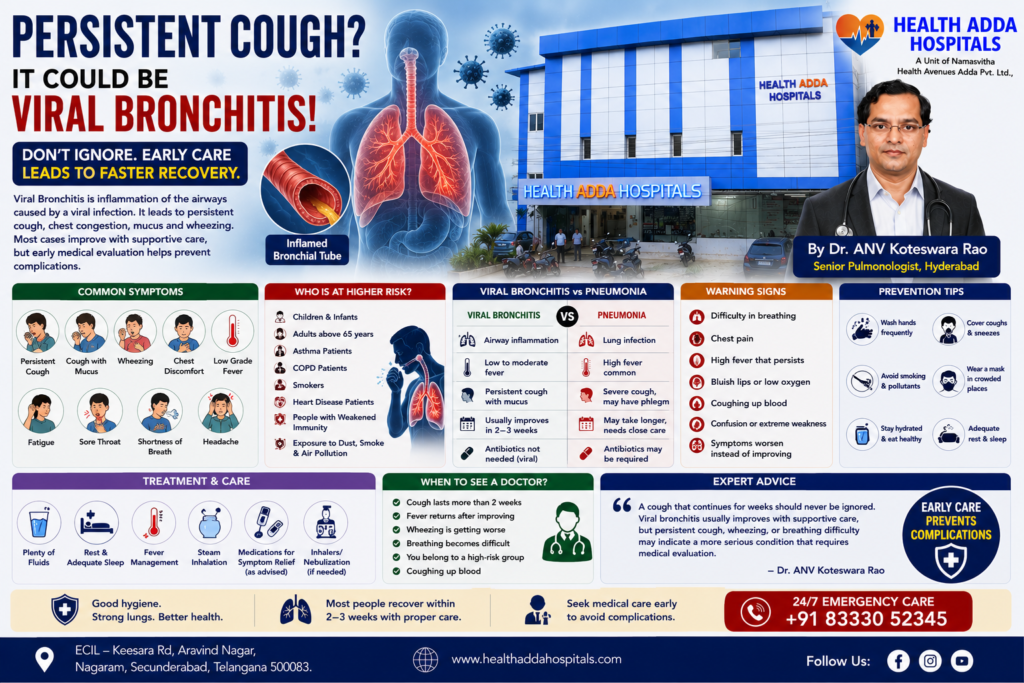
Viral Bronchitis vs Asthma
| Viral Bronchitis | Asthma |
|---|---|
| Usually temporary | Long-term condition |
| Caused by infection | Triggered by allergens, infections, exercise, etc. |
| Often improves in weeks | Requires ongoing management |
| Cough with mucus | Wheezing may occur without infection |
Warning Signs
Seek medical attention immediately if you experience:
🚨 Difficulty breathing
🚨 Chest pain
🚨 Bluish lips
🚨 High fever that persists
🚨 Cough lasting more than three weeks
🚨 Coughing up blood
🚨 Confusion or extreme weakness
🚨 Oxygen saturation dropping
How Is Viral Bronchitis Diagnosed?
Your doctor may recommend:
- Physical examination
- Lung auscultation
- Oxygen saturation measurement
- Chest X-ray (if pneumonia is suspected)
- Blood tests (when indicated)
- Viral testing in selected cases
Treatment
There is no specific treatment for most viral bronchitis infections.
Management usually includes:
💧 Plenty of fluids
🛌 Rest
🌡 Fever management
💨 Steam inhalation (if appropriate)
🫁 Inhalers or nebulization in selected patients with wheezing
💊 Medications for symptom relief as advised
Antibiotics should only be used when there is evidence of a bacterial infection.
Prevention
Reduce your risk by:
✔ Washing hands regularly
✔ Covering coughs and sneezes
✔ Avoiding smoking and secondhand smoke
✔ Wearing a mask when unwell or in crowded places
✔ Staying hydrated
✔ Getting adequate sleep
✔ Managing asthma or COPD effectively
When Should You Visit a Doctor?
Consult a doctor if:
- Cough lasts more than two weeks
- Fever returns after improving
- Wheezing becomes worse
- You have breathing difficulty
- You cough up blood
- You belong to a high-risk group
Expert Advice from Dr. ANV Koteswara Rao
“A cough that continues for weeks should never be ignored. Viral bronchitis usually improves with supportive care, but persistent cough, wheezing, or breathing difficulty may indicate a more serious condition that requires medical evaluation. Early diagnosis helps prevent complications and ensures appropriate treatment.”
Why Choose Health Adda Hospitals?
At Health Adda Hospitals, we provide:
✔ Comprehensive respiratory evaluation
✔ Expert pulmonary consultation
✔ Asthma and COPD management
✔ Chest infection assessment
✔ Advanced diagnostic support
✔ Personalized treatment plans
Key Takeaways
✅ Viral bronchitis causes inflammation of the airways.
✅ Persistent cough is the most common symptom.
✅ Antibiotics are not effective against viral infections.
✅ High-risk individuals should seek early medical care.
✅ Good hygiene and avoiding smoking help reduce risk.
Frequently Asked Questions
1. Is viral bronchitis contagious?
Yes. The viruses that cause bronchitis can spread through respiratory droplets and close contact.
2. How long does viral bronchitis last?
Most people recover within 2–3 weeks, although the cough may continue a little longer.
3. Do I need antibiotics?
Usually not. Viral bronchitis is caused by viruses, so antibiotics are not effective unless there is a bacterial infection.
4. Can viral bronchitis become pneumonia?
In some people—especially older adults, infants, and those with weakened immunity—it can progress to pneumonia if complications develop.
5. Is wheezing common?
Yes. Airway inflammation can lead to wheezing, particularly in people with asthma or COPD.
6. Can I go to work?
If you have fever or significant symptoms, it is best to stay home until you are improving to reduce the spread of infection.
7. Is steam inhalation helpful?
Some people find it soothing, but use it safely and follow your doctor’s advice.
8. When should I seek urgent medical care?
If you have difficulty breathing, chest pain, bluish lips, confusion, or coughing up blood, seek immediate medical attention.
9. Can children develop viral bronchitis?
Yes. Children can develop viral bronchitis and should be evaluated if they have persistent cough, wheezing, or breathing difficulty.
10. Where can I get evaluated in Hyderabad?
Consult Dr. ANV Koteswara Rao at Health Adda Hospitals, ECIL, Nagaram, Secunderabad, for expert assessment of persistent cough and respiratory symptoms.