
Introduction
When choosing a hospital, most patients look for experienced doctors, modern facilities, and positive patient reviews. However, another important factor is whether the hospital offers the specialist departments needed to diagnose and treat a wide range of medical conditions.
A hospital with multiple specialist departments provides comprehensive care under one roof. This allows patients to receive coordinated treatment without the inconvenience of visiting multiple healthcare facilities.
For families in Hyderabad, understanding the role of specialist departments can help them choose a hospital that is prepared to meet both routine and emergency healthcare needs.
Why Specialist Departments Matter
Modern healthcare often requires collaboration between multiple specialists.
For example:
- A patient with diabetes may need a physician, ophthalmologist, and nephrologist.
- A patient with chest pain may require emergency care, cardiology evaluation, diagnostic imaging, and laboratory support.
- A patient with breathing difficulties may benefit from pulmonology, emergency medicine, and intensive care.
Hospitals with multiple specialist departments can coordinate care more efficiently and improve the overall patient experience.
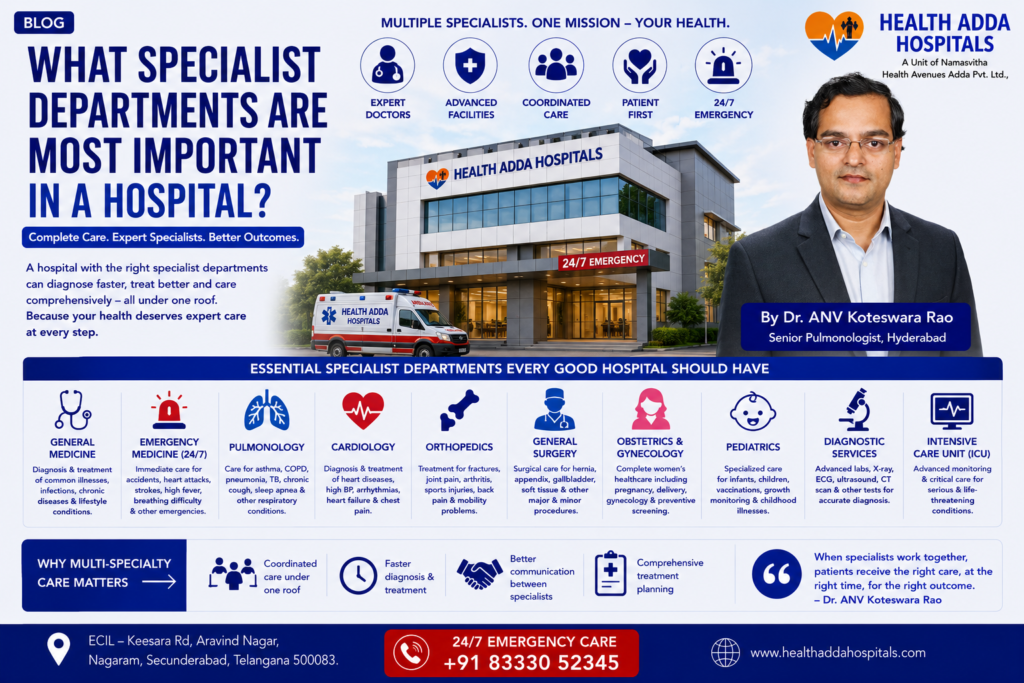
Essential Specialist Departments Every Good Hospital Should Have
General Medicine
General Medicine is often the first point of contact for adult patients.
Physicians diagnose and manage:
- Fever
- Diabetes
- Hypertension
- Thyroid disorders
- Infections
- Lifestyle diseases
They also coordinate referrals to other specialists when necessary.
Emergency Medicine (24/7)
A well-equipped Emergency Department is essential.
It should be capable of handling:
- Heart attacks
- Stroke
- Accidents
- Breathing emergencies
- High fever
- Severe infections
- Poisoning
Rapid emergency response can be life-saving.
Pulmonology (Respiratory Medicine)
Respiratory specialists diagnose and manage conditions such as:
- Asthma
- COPD
- Pneumonia
- Tuberculosis
- Chronic cough
- Sleep-related breathing disorders
- Occupational lung diseases
As air pollution and seasonal respiratory illnesses increase, pulmonology has become an increasingly important specialty.
Cardiology
Heart disease remains one of the leading causes of illness worldwide.
Cardiology services are essential for evaluating:
- Chest pain
- Heart rhythm disorders
- Hypertension
- Heart failure
- Coronary artery disease
Early cardiac evaluation can improve outcomes.
General Surgery
A hospital should provide access to experienced surgical care for conditions such as:
- Hernias
- Gallbladder disease
- Appendicitis
- Soft tissue procedures
- Minor and major surgeries
Comprehensive surgical services improve continuity of care.
Orthopedics
Orthopedic specialists help diagnose and manage:
- Fractures
- Joint pain
- Sports injuries
- Arthritis
- Back pain
- Mobility problems
This department is important for patients of all ages.
Obstetrics & Gynecology
Women’s healthcare services typically include:
- Pregnancy care
- Childbirth
- Gynecological conditions
- Preventive screening
- Menstrual disorders
Comprehensive maternity services are a valuable part of a multi-specialty hospital.
Pediatrics
Children require specialized medical care.
Pediatric services focus on:
- Childhood illnesses
- Growth monitoring
- Vaccinations
- Nutritional guidance
- Developmental assessment
Diagnostic Services
Accurate diagnosis depends on quality diagnostic support.
Essential services include:
- Laboratory testing
- X-ray
- ECG
- Ultrasound
- CT Scan (where available)
Timely diagnostics help clinicians make informed decisions.
Intensive Care Unit (ICU)
Critically ill patients require specialized monitoring.
A well-equipped ICU supports:
- Continuous patient observation
- Advanced life support
- Emergency interventions
- Complex medical care
Why Multi-Specialty Hospitals Benefit Patients
A hospital with multiple specialist departments offers several advantages.
Patients benefit from:
✔️ Coordinated care
✔️ Faster diagnosis
✔️ Better communication between specialists
✔️ Reduced need to visit multiple hospitals
✔️ Comprehensive treatment planning
This integrated approach often improves patient convenience and continuity of care.
Questions Patients Should Ask Before Choosing a Hospital
Before selecting a hospital, consider asking:
- Which specialist departments are available?
- Are emergency services available 24/7?
- Does the hospital provide advanced diagnostic services?
- Is intensive care available if needed?
- Can multiple specialists coordinate patient care?
These questions help ensure the hospital can meet current and future healthcare needs.
Common Misconceptions
“A Small Hospital Can Handle Every Condition”
Some medical conditions require specialist expertise and advanced facilities.
“Only Emergency Care Matters”
Long-term health also depends on access to specialist services for diagnosis, treatment, and follow-up care.
“Specialists Only Treat Serious Diseases”
Specialists also help diagnose early-stage conditions, prevent complications, and improve long-term health outcomes.
How Health Adda Hospitals Supports Comprehensive Healthcare
Health Adda Hospitals is committed to providing patient-centered, multi-specialty healthcare.
According to Dr. ANV Koteswara Rao, patients receive the greatest benefit when experienced specialists work together to provide coordinated, evidence-based medical care.
With modern facilities, emergency services, diagnostic support, and specialist consultations, Health Adda Hospitals aims to deliver comprehensive healthcare for individuals and families across Hyderabad.
Clinical Perspective
According to Dr. ANV Koteswara Rao, no single doctor can manage every medical condition alone.
Modern healthcare is collaborative. Specialist departments work together to diagnose complex conditions, develop personalized treatment plans, and provide comprehensive patient care.
Choosing a hospital with the right specialties can make a significant difference in treatment quality and recovery.
Conclusion
The best hospitals are more than buildings with beds—they are centers where multiple specialists work together to deliver high-quality healthcare.
When selecting a hospital, patients should evaluate the availability of specialist departments, emergency services, diagnostic capabilities, and coordinated care.
A hospital equipped with the right expertise provides patients with confidence, convenience, and better healthcare outcomes.