
Introduction
Many workers spend years exposed to dust, chemicals, smoke, industrial fumes, and workplace hazards. When symptoms such as coughing, breathing difficulty, fatigue, or chest discomfort appear, they are often dismissed as minor problems or part of daily work life.
Unfortunately, this assumption can sometimes delay the identification of serious occupational health conditions.
In many real-world cases, workers who sought a second medical opinion received a more accurate understanding of their condition, workplace risks, and long-term health concerns.
While a second opinion may not always change a diagnosis, it can provide additional insights that help patients make informed healthcare decisions.
What Is a Medical Second Opinion?
A second opinion involves consulting another qualified healthcare professional to review:
- Symptoms
- Medical history
- Previous reports
- Workplace exposure history
- Existing diagnosis
The purpose is not to challenge healthcare professionals but to obtain additional clinical perspectives.
Therefore, second opinions have become an important part of modern healthcare decision-making.
Why Occupational Health Conditions Are Sometimes Missed
Occupational diseases often develop gradually.
Unlike sudden injuries, workplace-related illnesses may take months or even years to become noticeable.
Common reasons include:
- Slow symptom progression
- Similarity to common illnesses
- Lack of awareness about workplace risks
- Incomplete exposure history
As a result, some workers continue their normal routines without realizing that their workplace may be affecting their health.
Occupational Health Conditions That Often Benefit From a Second Opinion
Occupational Asthma
Workers exposed to:
- Industrial dust
- Textile particles
- Construction materials
- Chemical fumes
may experience breathing difficulties that resemble ordinary allergies.
However, a second opinion may help identify workplace-related triggers that were previously overlooked.
Occupational Lung Diseases
Long-term exposure to industrial environments may contribute to respiratory concerns.
Symptoms may include:
- Chronic cough
- Breathlessness
- Wheezing
- Reduced exercise tolerance
Because these symptoms overlap with other respiratory conditions, additional evaluation may sometimes provide valuable insights.
Chemical Exposure-Related Illnesses
Workers in manufacturing, cleaning services, laboratories, and chemical industries may experience symptoms linked to workplace exposure.
A second opinion can help explore occupational factors that may not have been initially considered.
Real-Life Lessons From Occupational Health Cases
Across India and internationally, occupational illnesses have sometimes been mistaken for:
- Seasonal allergies
- Recurrent infections
- Smoking-related symptoms
- General fatigue
In several reported occupational health cases, further evaluation helped identify workplace exposure as a contributing factor.
These examples highlight why understanding occupational risks is important.
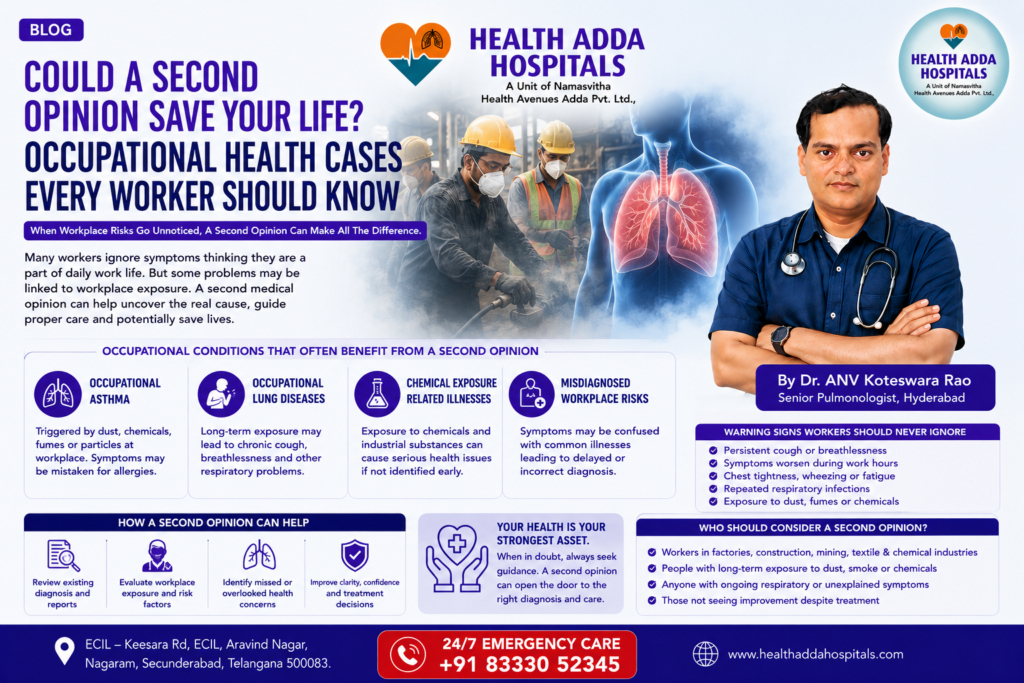
Warning Signs Workers Should Never Ignore
Seek medical evaluation if you experience:
Persistent Cough
A cough that continues for weeks deserves attention.
Breathing Difficulties
Breathlessness should never be ignored.
Symptoms That Worsen at Work
If symptoms improve during holidays but worsen during workdays, workplace exposure may require consideration.
Repeated Respiratory Complaints
Recurring symptoms should be discussed with healthcare professionals.
How a Second Opinion Can Support Better Healthcare Decisions
A second opinion may help:
- Review existing findings
- Evaluate workplace exposure history
- Identify overlooked factors
- Improve understanding of health concerns
- Increase patient confidence
Importantly, seeking a second opinion is a common and accepted healthcare practice worldwide.
Occupational Health Challenges in Hyderabad
Hyderabad’s expanding industrial, construction, logistics, and manufacturing sectors contribute significantly to economic growth.
However, workplace exposure risks may include:
- Dust
- Pollution
- Industrial fumes
- Chemical substances
Therefore, worker health awareness remains essential.
The Role of Workplace Health Awareness
Many occupational illnesses can be recognized earlier when workers understand:
- Common symptoms
- Workplace hazards
- Risk factors
- Importance of medical evaluation
As awareness improves, workers are more likely to seek timely guidance.
How Health Adda Hospitals Supports Occupational Health Awareness
At Health Adda Hospitals, healthcare awareness and respiratory health education remain important priorities.
According to Dr. ANV Koteswara Rao, many workers initially underestimate symptoms because they believe discomfort is a normal part of their job.
However, understanding workplace risks and seeking appropriate medical evaluation can support informed healthcare decisions.
Health Adda Hospitals continues to promote occupational health awareness and respiratory education for workers and families across Hyderabad.
Clinical Perspective
From a pulmonology standpoint, occupational health concerns often require careful evaluation of workplace exposure history.
According to Dr. ANV Koteswara Rao, understanding where a patient works, what substances they encounter, and how symptoms develop over time can provide important clinical insights.
Therefore, second opinions may sometimes help uncover factors that deserve further attention.
Conclusion
A second opinion is not about questioning medical expertise. It is about gaining additional perspective and ensuring important factors have been considered.
For workers exposed to dust, chemicals, smoke, or industrial environments, occupational health awareness remains crucial.
In some situations, seeking a second opinion can provide clarity, confidence, and potentially life-changing insights.