
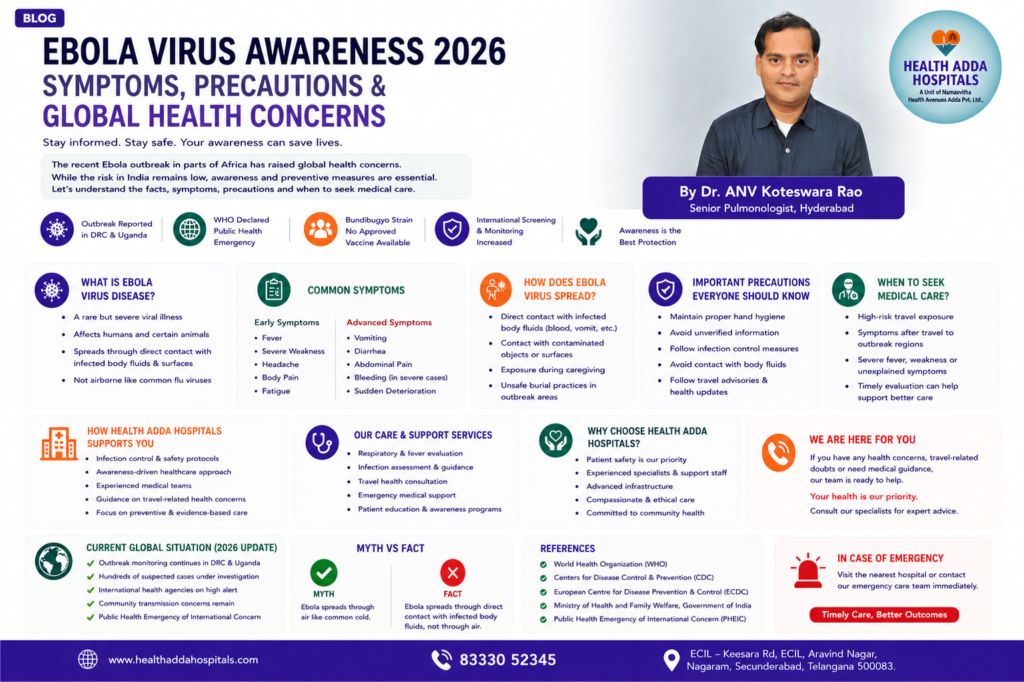
The recent Ebola outbreak reported in parts of Africa has once again raised global health concerns in 2026. International health agencies, including the World Health Organization (WHO), are closely monitoring outbreaks linked to the Bundibugyo strain of Ebola in the Democratic Republic of Congo (DRC) and Uganda.
Although the current risk to India remains low, awareness and preparedness are extremely important. Therefore, understanding Ebola symptoms, transmission methods, and preventive precautions can help people avoid misinformation and panic.
This article explains Ebola virus awareness in a medically responsible and educational manner while also highlighting the importance of timely medical guidance and infection control systems.
What Is Ebola Virus Disease?
Ebola virus disease is a severe viral infection that affects humans and certain animals.
According to WHO, Ebola spreads mainly through direct contact with infected bodily fluids, contaminated surfaces, or infected materials.
Unlike common respiratory infections, Ebola is not considered a routine airborne infection in normal public environments. However, close contact with infected individuals significantly increases risk.
Why Is the 2026 Ebola Outbreak Receiving Global Attention?
Global healthcare agencies are concerned because the current outbreak involves the rare Bundibugyo strain, for which there is no widely approved vaccine currently available.
Recent reports indicate:
- Cases have been reported in DRC and Uganda
- WHO declared the outbreak a Public Health Emergency of International Concern
- International screening and monitoring systems have increased
- Community transmission concerns remain active in affected regions
Common Symptoms of Ebola Virus Disease
Symptoms may initially appear similar to other viral infections. Therefore, awareness becomes important.
Early Ebola Symptoms
- Fever
- Severe weakness
- Headache
- Body pain
- Fatigue
Advanced Ebola Symptoms
- Vomiting
- Diarrhea
- Abdominal pain
- Internal or external bleeding in severe cases
- Sudden worsening health condition
According to the CDC, severe Ebola cases may deteriorate rapidly if supportive care is delayed.
How Does Ebola Virus Spread?
Understanding transmission is important because misinformation often creates unnecessary fear.
Common Transmission Sources
- Direct contact with infected bodily fluids
- Contact with contaminated objects or surfaces
- Exposure during caregiving
- Unsafe handling of infected individuals
WHO states that Ebola does not spread through casual everyday interaction in normal public settings.
Important Ebola Virus Precautions
Even though outbreaks remain concentrated in African regions, public awareness and infection prevention remain important globally.
Key Precautions Everyone Should Know
1. Maintain Proper Hand Hygiene
Frequent handwashing remains essential.
2. Follow Trusted Medical Information
Avoid panic-based misinformation circulating online.
3. Use Infection Control Measures
Healthcare environments should follow strict safety protocols.
4. Avoid Exposure to Bodily Fluids
Direct exposure significantly increases transmission risk.
5. Monitor International Travel Advisories
Travelers should follow WHO and CDC updates regularly.
Why Healthcare Preparedness Matters
Global outbreaks highlight the importance of hospital preparedness and infection-control systems.
Healthcare institutions with:
- Infection prevention protocols
- Isolation support systems
- Emergency preparedness
- Experienced medical teams
can help support safer healthcare environments during infectious disease concerns.
In Hyderabad, hospitals focusing on patient safety, infection control, and respiratory healthcare awareness continue to play an important role in public health education.
How Health Adda Hospitals Supports Healthcare Awareness
At Health Adda Hospitals, healthcare awareness and patient education are considered important parts of preventive healthcare communication.
According to specialists including Dr. ANV Koteswara Rao, responsible awareness helps people:
- Avoid misinformation
- Understand warning signs early
- Follow safer hygiene practices
- Seek timely medical guidance when necessary
Although Ebola cases are not reported locally in Hyderabad, awareness about global infectious diseases improves public preparedness and healthcare understanding.
When Should Medical Evaluation Be Considered?
Medical evaluation becomes important if:
- High-risk international travel exposure exists
- Symptoms develop after travel to outbreak regions
- Severe fever or unexplained weakness appears after exposure concerns
Healthcare decisions should always follow official public health guidance and qualified medical consultation.
For infection awareness, respiratory concerns, and preventive healthcare guidance, experienced medical teams including Dr. ANV Koteswara Rao at Health Adda Hospitals emphasize evidence-based healthcare communication and medically safe patient awareness.
Current Global Situation (2026 Update)
According to WHO, CDC, Reuters, and ECDC reports:
- Outbreak monitoring continues in DRC and Uganda
- Hundreds of suspected cases remain under investigation
- International health agencies have intensified surveillance
- Border screening and public health preparedness systems are expanding globally
WHO has warned that the outbreak response is facing challenges due to delayed detection, healthcare infrastructure limitations, and misinformation in affected areas.
Real-World References
- World Health Organization Ebola Updates
- CDC Ebola Disease Guidance
- ECDC Ebola Outbreak Monitoring
- Reuters Ebola Emergency Coverage
Clinical Perspective
From a pulmonology and healthcare standpoint, public awareness remains essential during infectious disease outbreaks.
According to specialists including Dr. ANV Koteswara Rao, responsible health communication helps reduce fear while improving awareness about:
- Infection prevention
- Early symptom recognition
- Public hygiene awareness
- Safe healthcare practices
Therefore, awareness campaigns should focus on medically accurate information rather than panic-driven communication.
Conclusion
The Ebola outbreak in parts of Africa has increased global healthcare monitoring in 2026. However, awareness, hygiene, and evidence-based healthcare information remain more important than panic.
Therefore, people should follow trusted public health updates, avoid misinformation, and understand the importance of preventive healthcare awareness.
As global healthcare systems continue evolving, responsible healthcare communication and patient education remain critical for public safety and preparedness.