
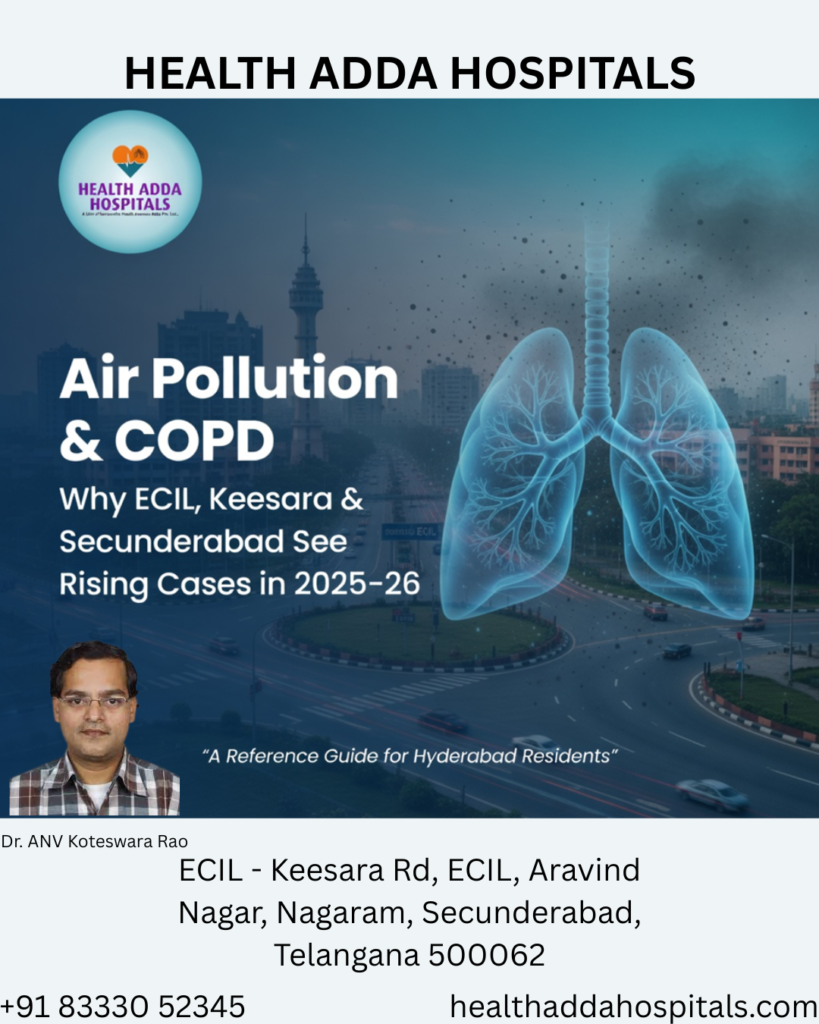
Air Pollution & COPD Emergency: Shocking Rise in ECIL, Keesara & Secunderabad (2025–26)
Hyderabad continues to grow rapidly as a major urban centre in India, bringing new opportunities along with environmental challenges. Among these, air pollution has emerged as a significant concern for respiratory health. Many families in areas like ECIL, Keesara, Secunderabad, and surrounding localities have started noticing more breathing difficulties among their members, particularly during certain seasons.
This article offers a detailed reference on the connection between air pollution and COPD, with specific focus on why cases appear to be rising in key Hyderabad neighbourhoods in 2025-26. It explains the mechanisms, local contributing factors, and typical symptom patterns observed in these areas, helping residents understand the situation better.
For individuals experiencing breathing issues linked to prolonged pollution exposure, experienced pulmonologists like Dr. ANV Koteswara Rao at Health Adda Hospitals in ECIL provide clinical insights drawn from years of managing respiratory conditions common in the Hyderabad region.
The Link Between Air Pollution and COPD
Chronic Obstructive Pulmonary Disease (COPD) develops when the lungs face long-term irritation from inhaled particles and gases. Air pollution is one of the major preventable contributors to this condition in urban India. Fine particulate matter (PM2.5 and PM10), nitrogen dioxide, ozone, and other pollutants can penetrate deep into the lungs, causing chronic inflammation, narrowing of airways, and damage to the air sacs.
National and global studies, including those from the Global Burden of Disease project, have shown that ambient air pollution accounts for a substantial share of COPD cases and related disability in India. In cities like Hyderabad, where pollution levels frequently exceed recommended limits, this exposure accumulates over years, silently affecting lung function.
In 2025-26, rapid urban expansion, increased vehicular traffic, ongoing construction activities, and industrial emissions continue to influence air quality across Hyderabad. Residents in specific pockets often report higher respiratory complaints, making it important to understand the local picture.
Why ECIL, Keesara & Secunderabad Are Particularly Affected
These areas represent a mix of residential, commercial, and industrial zones, which creates unique exposure patterns:
- Heavy Vehicular Traffic and Emissions Roads connecting ECIL to Secunderabad, Keesara, and the Outer Ring Road see dense traffic throughout the day. Two-wheelers, autos, cars, buses, and trucks release exhaust fumes containing harmful pollutants. Prolonged exposure for daily commuters, traffic police, and roadside residents adds to the cumulative burden on the lungs.
- Construction Dust and Particulate Matter Ongoing infrastructure development around ECIL, Uppal, and Keesara generates significant dust. Fine particles from construction sites become airborne and remain suspended, especially during dry months. Residents living nearby or working in these zones inhale this dust regularly, which irritates the respiratory tract and contributes to chronic inflammation.
- Industrial and Commercial Activities Areas near Nacharam, Mallapur, and parts of ECIL have industrial units and small-scale manufacturing that release pollutants. When combined with household activities, this creates a multi-source exposure environment that is particularly relevant for long-term COPD risk.
- Seasonal and Climatic Factors in Hyderabad In 2025-26, Hyderabad’s climate continues to play a role. Winter months often see temperature inversions that trap pollutants closer to the ground, leading to higher smog levels. Monsoon humidity can make breathing feel heavier, while post-monsoon dry spells increase dust suspension. Many families in Keesara and ECIL notice that breathing discomfort tends to worsen during these periods.
- Urban Growth and Population Density As more people move into these expanding neighbourhoods, the overall vehicle count and construction activity rise, further affecting local air quality. This creates a cycle where more residents face prolonged exposure to polluted air.
Studies conducted in urban Hyderabad and similar Indian cities have reported COPD prevalence rates around 11% among adults over 30 years in some community assessments using lung function testing. This figure is notably higher in areas with greater pollution exposure compared to cleaner zones.
How Air Pollution Contributes to COPD Development
Air pollution affects the lungs in several ways:
- Chronic Inflammation: Repeated inhalation of fine particles triggers ongoing inflammation in the bronchial tubes, leading to thickening and narrowing.
- Oxidative Stress: Pollutants generate free radicals that damage lung tissue and reduce its natural repair capacity.
- Impaired Lung Clearance: The lungs’ natural cleaning mechanisms become less effective, allowing more pollutants to stay longer.
- Interaction with Other Risks: Pollution worsens the effects of smoking, biomass smoke exposure, and occupational dust. In Hyderabad, many individuals face this combined burden – for example, a person who smokes or lives in a biomass-using household while commuting daily through polluted areas.
Over time, these changes result in the characteristic features of COPD: reduced airflow, persistent symptoms, and increased susceptibility to infections.
Typical Symptom Patterns Linked to Pollution in These Areas
Residents in ECIL, Keesara, and Secunderabad often describe symptoms that align with pollution-related COPD:
- Increasing breathlessness while walking on busy roads or climbing stairs in local apartments
- Persistent morning cough that produces mucus, often attributed initially to “city dust”
- Wheezing or noisy breathing that becomes more noticeable during evening traffic hours or winter mornings
- Chest tightness after spending time outdoors on high-pollution days
- Faster fatigue during routine activities, especially after long commutes
- More frequent chest infections that take longer to resolve during seasonal changes
These symptoms tend to develop gradually. A person might first notice them during physical effort and later even at rest if exposure continues unchecked. Families sometimes observe that elders or working members “slow down” unconsciously to avoid discomfort.
In local clinical observations, patients from these neighbourhoods frequently mention a history of living or working in high-traffic or dusty environments, aligning with the pollution-COPD connection.
Broader Context: National and Local Trends in 2025-26
Across India, air pollution remains a leading environmental risk factor for respiratory diseases. Hyderabad, as one of the major metropolitan cities in Telangana, shares this challenge with other urban centres. Reports on urban air quality in 2025-26 continue to highlight the need for awareness regarding long-term health impacts.
In Telangana, the combination of industrial growth, vehicular increase, and seasonal weather patterns creates conditions where pollution-related COPD cases are more visible in areas like ECIL, Keesara, and Secunderabad. Understanding this helps families contextualise the breathing issues they observe.
Raising Awareness Without Alarm
This reference aims to help Hyderabad residents connect daily environmental exposures with potential respiratory outcomes. Recognising that air pollution is a modifiable risk factor encourages informed discussions about lung health.
Health Adda Hospitals in ECIL has been a familiar healthcare destination for many families in these localities dealing with respiratory concerns. Dr. ANV Koteswara Rao, with his extensive hands-on experience in treating lung conditions influenced by local environmental factors, has seen how pollution contributes to the patterns of COPD observed in the region over the years.
This article is intended purely as an educational reference based on medical literature and observed trends in urban India. Individual situations vary, and professional medical consultation remains essential for anyone experiencing persistent breathing symptoms.
Conclusion: Staying Informed in a Growing City
Air pollution continues to be a notable factor in the rising visibility of COPD cases in Hyderabad neighbourhoods such as ECIL, Keesara, and Secunderabad in 2025-26. Through vehicular emissions, construction dust, industrial activities, and seasonal influences, prolonged exposure contributes to chronic lung changes that manifest as breathlessness, cough, and other symptoms.
By understanding this connection, families in these areas can stay more attentive to respiratory health signals in their daily lives. In a dynamic city like Hyderabad, awareness serves as an important tool for protecting long-term well-being.
For residents seeking expert guidance on pollution-related respiratory issues, Health Adda Hospitals in ECIL offers a trusted local point where Dr. ANV Koteswara Rao brings years of practical clinical experience with such cases.
Stay aware. Protect your lungs in Hyderabad’s changing environment.


