
Introduction: Why Water and Food Safety Matter
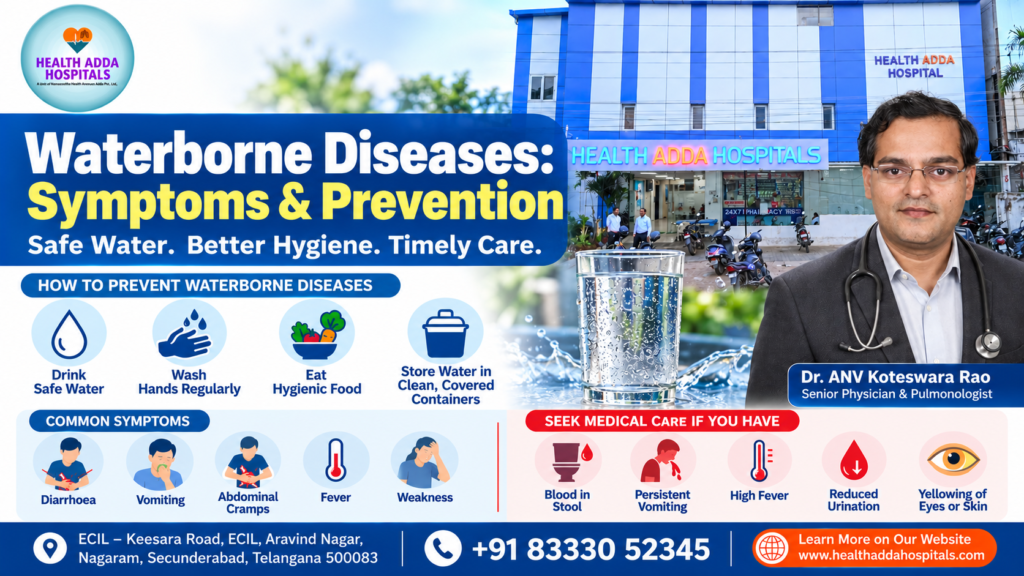
Waterborne diseases are illnesses caused by microorganisms that spread through contaminated water or, in many cases, contaminated food. Depending on the organism involved, these infections can affect the digestive system, cause diarrhoea and vomiting, produce fever, or lead to complications such as dehydration.
Safe drinking water, appropriate sanitation, regular handwashing and hygienic food preparation are essential measures for reducing the risk of these infections. Heavy rainfall, flooding and disruptions to water infrastructure can increase the possibility of contamination, although waterborne illnesses can occur throughout the year.
For families in ECIL, Nagaram, Kapra, AS Rao Nagar, Kushaiguda and surrounding parts of East Hyderabad, maintaining safe household water practices is an important part of everyday preventive healthcare.
The key message is simple: If diarrhoea or vomiting develops, focus on preventing dehydration and monitor for warning signs. Blood in the stool, inability to retain fluids, reduced urination, jaundice or severe weakness warrants medical assessment. Severe dehydration or altered consciousness requires emergency care.
What Are Waterborne Diseases?
Waterborne diseases are infections transmitted when people ingest water contaminated with harmful bacteria, viruses or parasites. Some related illnesses also spread through contaminated food, unwashed hands or contact with infected people.
The term describes a route of transmission rather than one specific disease.
Examples include:
- Acute gastroenteritis: Inflammation of the stomach and intestines that may cause diarrhoea, vomiting and abdominal cramps.
- Typhoid fever: A bacterial infection caused by Salmonella Typhi, commonly transmitted through contaminated food or water.
- Hepatitis A: A viral infection affecting the liver, transmitted primarily through the faecal–oral route.
- Hepatitis E: A viral liver infection that can spread through contaminated water and may be particularly dangerous during pregnancy.
- Cholera: A bacterial infection that can cause severe watery diarrhoea and rapid dehydration.
- Giardiasis and amoebiasis: Parasitic infections that can affect the intestines and cause gastrointestinal symptoms.
Not every episode of diarrhoea is waterborne. Viruses, foodborne infections, medicines and other gastrointestinal conditions can produce similar symptoms. Clinical assessment may be necessary to establish the likely cause.
How Do Waterborne Infections Spread?
1. Drinking contaminated water
Water can become contaminated with microorganisms from human or animal waste. A water source that appears clear is not necessarily microbiologically safe.
2. Contaminated household storage
Uncovered containers, dirty storage vessels, unclean dispensing utensils and unsafe handling can contaminate water after it has been treated.
3. Poor food hygiene
Food prepared with contaminated water, inadequately washed produce, undercooked food or unsafe storage conditions can transmit infections.
4. Inadequate hand hygiene
Microorganisms can spread from contaminated hands to food, drinking vessels and frequently touched surfaces. Handwashing with soap after using the toilet and before preparing or eating food helps interrupt transmission.
5. Flooding and damaged water infrastructure
Floodwater may contain sewage and other contaminants. Damage to pipelines, overflowing drains and interruptions to water supply can increase contamination risks. Water safety should be assessed rather than judged by appearance alone.
Common Symptoms of Waterborne Diseases
Symptoms vary according to the organism, the severity of infection and the person’s health.
Digestive symptoms
- Frequent loose or watery stools
- Nausea and vomiting
- Abdominal cramps or discomfort
- Loss of appetite
- Bloating in some infections
General symptoms
- Fever or chills
- Weakness and fatigue
- Headache or body aches
- Reduced ability to eat or drink
Signs that may indicate dehydration
Diarrhoea and vomiting cause the body to lose water and essential electrolytes. Watch for:
- Increased thirst
- Dry mouth
- Passing urine less frequently than usual
- Darker urine
- Dizziness, particularly on standing
- Unusual tiredness or weakness
More serious dehydration may cause sunken eyes, marked lethargy, inability to drink, confusion or collapse.
Do not wait for every symptom to appear. Infants, young children, older adults, pregnant women and people with significant underlying illnesses may require earlier medical evaluation.
When Should You Seek Medical Care?
The duration and severity of symptoms matter more than the suspected source of infection alone.
Seek prompt medical assessment if you have:
- Blood in the stool
- Persistent vomiting that prevents adequate fluid intake
- High or persistent fever
- Significant or worsening abdominal pain
- Reduced urination or other signs of dehydration
- Yellowing of the eyes or skin, or unusually dark urine
- Diarrhoea that persists or worsens rather than improving
Infants and young children can become dehydrated quickly. Older adults, pregnant women and people with chronic illnesses should also seek advice early when symptoms are significant.
Seek emergency care immediately for confusion, fainting, difficulty staying awake, inability to drink with severe weakness, collapse or other signs of severe dehydration.
These symptoms do not identify one specific infection. A clinician can assess hydration, review the history and decide whether tests or further treatment are needed.
How Are Waterborne Diseases Evaluated?
A medical assessment typically considers:
- Symptom history: When the illness started, stool frequency, vomiting, fever, abdominal pain and the ability to drink fluids.
- Exposure history: Recent travel, potentially unsafe water, food exposures, similar illness among household members and possible contact with contaminated water.
- Hydration assessment: Thirst, pulse, blood pressure where appropriate, urine output, alertness and other clinical signs.
- Examination: Assessment of abdominal symptoms, general condition and signs that may suggest complications.
- Investigations when indicated: Stool testing, blood tests or other investigations may be considered according to the clinical findings and suspected illness.
Not everyone with mild diarrhoea requires laboratory testing. The decision depends on the symptoms, duration, risk factors and examination.
Treatment Principles: What Helps and What to Avoid
Treatment depends on the cause and severity of the illness. Replacing lost fluids and electrolytes is a central priority in diarrhoeal disease.
1. Use oral rehydration solution appropriately
Oral rehydration solution (ORS) helps replace water and electrolytes lost through diarrhoea and vomiting.
- Use a recognised ORS sachet and prepare it with exactly the amount of safe water specified on the packet.
- Do not add extra sugar or salt.
- Do not mix the sachet with less or more water than directed.
- Offer small, frequent sips if nausea makes drinking difficult.
- If vomiting repeatedly prevents fluid intake, seek medical assessment.
Prepared ORS should be stored and discarded according to the packet instructions and local health guidance.
2. Continue appropriate nutrition
People with diarrhoea generally should not stop eating unnecessarily. Continue breastfeeding for infants and offer suitable, tolerated foods and fluids. A clinician can advise on feeding and hydration for young children or people with more severe symptoms.
3. Do not self-prescribe antibiotics
Antibiotics are not necessary for every diarrhoeal illness. The appropriate treatment depends on the suspected cause, clinical severity and, when relevant, test results.
Unnecessary antibiotic use can cause adverse effects and contribute to antimicrobial resistance. Do not use leftover antibiotics or someone else’s prescription.
4. Use medicines cautiously
Some medicines that reduce diarrhoea may be inappropriate in particular infections or when blood in the stool or fever is present. Seek professional advice before using them, especially for children.
For children with diarrhoea, clinicians may recommend zinc supplementation according to age and applicable treatment guidance. Parents should not guess the dose.
5. Recognise when hospital-level treatment may be necessary
Severe dehydration may require intravenous fluids and monitoring. Persistent symptoms, suspected complications or a serious underlying infection may also require further assessment and treatment.
Home hydration should not delay emergency care when severe warning signs are present.
How to Prevent Waterborne Diseases at Home
Make drinking water safer
- Use a reliable source of drinking water.
- Follow local public-health advisories when contamination is suspected.
- If water safety is uncertain, use an appropriate treatment method. Boiling can kill many disease-causing microorganisms when done correctly.
- Store treated water in clean, covered containers.
- Avoid dipping unwashed hands or used cups into stored drinking water.
- Clean and maintain household storage tanks appropriately.
A filter does not automatically remove every type of microorganism or chemical contaminant. The suitable treatment method depends on the source and nature of contamination.
Practise good hand hygiene
Wash hands thoroughly with soap and safe water:
- Before preparing or eating food
- After using the toilet
- After changing a child’s nappy
- After cleaning up vomit or diarrhoea
- After handling waste
Follow safe food practices
- Eat food that has been thoroughly cooked and served safely.
- Wash produce with safe water.
- Keep raw foods separate from cooked and ready-to-eat foods.
- Refrigerate perishable foods appropriately.
- Avoid food that has been exposed to unsafe water or unsanitary conditions.
- Use clean utensils and preparation surfaces.
Take precautions during flooding or water-supply disruption
- Avoid drinking untreated floodwater or water from questionable sources.
- Follow official instructions if local authorities issue a boil-water or other water-safety advisory.
- Avoid contact with potentially sewage-contaminated water where possible.
- Report suspected contamination to the relevant water-supply or public-health authority.
- Do not assume that clear-looking water is safe.
Who Needs Extra Attention?
Infants and young children
Children can lose fluids quickly. Monitor drinking, feeding, urine output, alertness and the frequency of diarrhoea. Seek prompt assessment if a child cannot drink or breastfeed, becomes unusually sleepy, passes blood in the stool or appears increasingly unwell.
Older adults
Older adults may be more vulnerable to dehydration, particularly when they have reduced fluid intake, take certain medicines or have chronic conditions.
Pregnant women
Pregnant women with significant diarrhoea, fever, vomiting or suspected hepatitis should obtain medical advice promptly. Hepatitis E can be particularly severe during pregnancy.
People with chronic illnesses or weakened immunity
Individuals with kidney disease, heart disease, diabetes or weakened immunity may need tailored fluid advice and earlier assessment. People with fluid restrictions should not automatically increase intake without appropriate clinical guidance.
Waterborne Disease Prevention in Hyderabad
For residents of ECIL, Nagaram, Kapra, AS Rao Nagar, Kushaiguda, Sainikpuri and nearby parts of Secunderabad, practical prevention starts with safe household water storage, hand hygiene and careful food preparation.
Local conditions can vary. Avoid assuming that every neighbourhood has the same water-quality risks or that a particular outbreak is occurring without an official public-health advisory.
If you develop persistent diarrhoea, repeated vomiting, fever, dehydration symptoms or jaundice, arrange appropriate medical assessment rather than relying solely on online symptom information.
Health Adda Hospitals is located on ECIL–Keesara Road, ECIL, Aravind Nagar, Nagaram, Secunderabad, Telangana 500083. Patients can review the hospital’s specialties and services and Dr. ANV Koteswara Rao’s profile when deciding on an appropriate consultation.
For information on specific infections, see the existing article on typhoid and gastroenteritis prevention during the monsoon.
Frequently Asked Questions
1. What are the common symptoms of waterborne diseases?
Symptoms depend on the infection but may include diarrhoea, vomiting, abdominal cramps, nausea and fever. Dehydration can develop when fluid losses are not replaced.
2. Can drinking clear water cause an infection?
Yes. Water can contain harmful microorganisms even when it looks clear. Water safety depends on its source, treatment and handling.
3. How can I prevent waterborne diseases at home?
Use safe drinking water, wash hands with soap, prepare food hygienically, store water in clean covered containers and follow public-health advisories during suspected contamination.
4. Does every case of diarrhoea require antibiotics?
No. Many diarrhoeal illnesses do not require antibiotics. Treatment depends on the cause and severity, and unnecessary antibiotics can be harmful.
5. What should I do if I develop diarrhoea?
Begin appropriate fluid replacement, including correctly prepared ORS when indicated, and continue suitable nutrition. Seek medical care for blood in stools, significant fever, persistent vomiting, worsening symptoms or signs of dehydration.
6. What are the warning signs of dehydration?
Thirst, dry mouth, reduced urination and dizziness may indicate dehydration. Confusion, collapse, marked lethargy or inability to drink can indicate a medical emergency.
7. Can children become dehydrated quickly?
Yes. Infants and young children can become dehydrated quickly. Seek prompt assessment if they cannot drink, become unusually sleepy, pass blood in the stool or show worsening signs of illness.
8. Is boiling water enough to make it safe?
Correct boiling can kill many disease-causing microorganisms. However, it does not remove all possible chemical contaminants. The appropriate method depends on the suspected contamination.
9. When should I consult a doctor for suspected waterborne illness?
Seek assessment for persistent or worsening diarrhoea, repeated vomiting, blood in stools, high fever, reduced urination or jaundice. Severe dehydration or altered consciousness requires emergency care.
10. Where can I seek medical advice near ECIL, Hyderabad?
Health Adda Hospitals is located on ECIL–Keesara Road, ECIL, Aravind Nagar, Nagaram, Secunderabad. Review the hospital’s verified specialties and clinician information to determine whether the appropriate service is available for your symptoms.
Medical Disclaimer
This article is intended for general educational purposes and does not replace individual medical advice, diagnosis or treatment. Symptoms of waterborne infections overlap with many other conditions. Consult a qualified healthcare professional for assessment and treatment recommendations. Seek emergency care for severe dehydration, confusion, collapse or other serious warning signs.
About the Author
Dr. ANV Koteswara Rao is identified by Health Adda Hospitals as a Senior Physician and Pulmonologist. This educational article should undergo the author’s clinical review and approval before publication.