
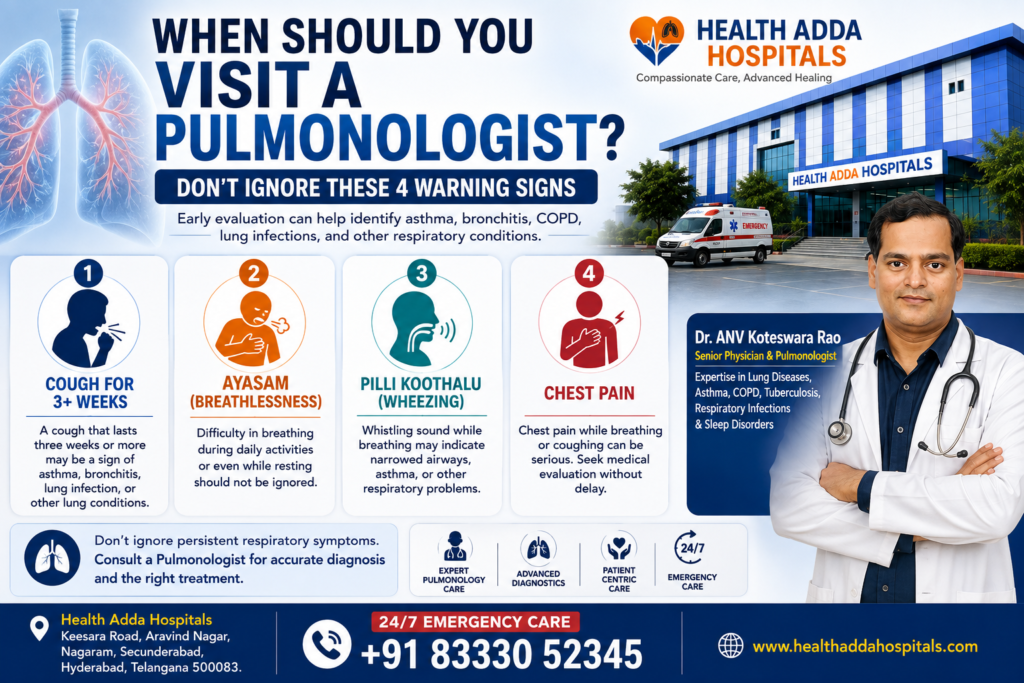
A persistent cough lasting three weeks or more, breathlessness (Ayasam), wheezing (Pilli Koothalu), or chest pain should not be ignored. These symptoms may be associated with asthma, bronchitis, lung infections, COPD, or other respiratory conditions. Early evaluation by a pulmonologist can help identify the underlying cause and guide appropriate treatment.
Introduction
Many people assume that a cough will disappear on its own or that breathing problems are simply part of changing weather. Unfortunately, waiting too long can delay the diagnosis of conditions such as asthma, bronchitis, COPD, lung infections, or other respiratory disorders.
One of the most common questions people ask is:
“When should I visit a pulmonologist?”
A pulmonologist is a doctor who specializes in diagnosing and treating diseases affecting the lungs and respiratory system.
At Health Adda Hospitals, Dr. ANV Koteswara Rao, Senior Physician & Pulmonologist, frequently sees patients from ECIL, Nagaram, Kapra, AS Rao Nagar, Kushaiguda, Sainikpuri, and East Hyderabad who initially ignored symptoms that later required medical attention.
Knowing the warning signs can help you seek timely care.
What Does a Pulmonologist Treat?
A pulmonologist diagnoses and manages conditions affecting the lungs and airways, including:
- Asthma
- COPD
- Bronchitis
- Pneumonia
- Lung infections
- Persistent cough
- Breathing difficulties
- Wheezing
- Allergic respiratory diseases
- Sleep-related breathing disorders
If breathing becomes difficult or a cough refuses to settle, a pulmonary evaluation may help identify the cause.
Four Warning Signs You Should Never Ignore
1. Persistent Cough for 3 Weeks or More
A cough that continues for three weeks or longer deserves medical evaluation.
While many viral coughs improve within a few weeks, a persistent cough may be linked to:
- Asthma
- Bronchitis
- Post-viral airway irritation
- COPD
- Allergies
- Lung infections
- Acid reflux
- Other respiratory conditions
When should you seek care?
- Cough lasting more than three weeks
- Cough that keeps getting worse
- Night-time coughing
- Cough affecting sleep
- Cough with blood (seek urgent medical care)
A persistent cough is a symptom—not a diagnosis—and identifying the underlying cause is important.
2. Breathlessness (Ayasam)
Ayasam, or breathlessness, is another important warning sign.
Many people notice that climbing stairs, walking short distances, or performing routine activities suddenly becomes more difficult.
Possible causes include:
- Asthma
- COPD
- Lung infections
- Heart-related conditions
- Other respiratory disorders
Seek prompt medical evaluation if you experience:
- Breathlessness during routine activities
- Difficulty speaking because of breathlessness
- Rapid worsening of symptoms
- Shortness of breath that wakes you at night
Severe breathlessness requires urgent medical attention.
3. Wheezing (Pilli Koothalu)
A whistling sound while breathing—commonly called Pilli Koothalu—should never be ignored.
Wheezing occurs when narrowed airways make it difficult for air to flow normally.
Common causes include:
- Asthma
- Allergic reactions
- Bronchitis
- COPD
- Respiratory infections
Some people only wheeze during weather changes, while others experience frequent episodes.
If wheezing becomes recurrent or is accompanied by breathlessness, medical evaluation is important.
4. Chest Pain During Breathing or Coughing
Chest pain can have many different causes.
Sometimes it may result from muscle strain after excessive coughing.
In other situations, chest pain may require immediate medical evaluation.
Never ignore chest pain that is:
- Severe
- Persistent
- Associated with breathlessness
- Accompanied by dizziness
- Associated with coughing up blood
A doctor can determine whether the pain is related to the lungs, chest muscles, or another medical condition.
Why Do People Delay Seeing a Pulmonologist?
Many patients believe:
“It’s just the weather.”
“It’s only an allergy.”
“I’ll wait another week.”
Unfortunately, delaying evaluation may allow manageable respiratory problems to become more severe.
Early diagnosis often helps improve symptom control and quality of life.
Could It Be Asthma or COPD?
Two commonly confused conditions are asthma and COPD.
| Asthma | COPD |
|---|---|
| Often triggered by allergies, dust, weather changes, or pollution | Can be associated with smoking, pollution, workplace dust, and biomass smoke |
| Symptoms are often reversible with treatment | Airflow limitation is generally not fully reversible |
| Can occur at any age | More commonly diagnosed after 40 years of age |
| Wheezing is common | Persistent breathlessness and cough are common |
Only a proper medical evaluation can determine the correct diagnosis.
When Is It an Emergency?
Seek immediate medical care if you experience:
🚨 Severe breathlessness
🚨 Bluish lips or face
🚨 Chest pain with breathing difficulty
🚨 Coughing up blood
🚨 Confusion
🚨 Low oxygen levels
🚨 Rapid worsening of symptoms
These warning signs should never be ignored.
How Does a Pulmonologist Evaluate Your Symptoms?
Depending on your symptoms, your doctor may recommend:
- Clinical examination
- Oxygen saturation measurement
- Chest examination
- Chest X-ray (when indicated)
- Pulmonary function testing (when appropriate)
- Additional investigations if needed
The goal is to identify the underlying cause rather than simply treating the cough.
Can Weather Changes Trigger Lung Problems?
Yes.
Seasonal weather changes in Hyderabad can contribute to respiratory symptoms in susceptible people.
Common triggers include:
- Dust
- Pollution
- Mold
- Humidity
- Respiratory viral infections
- Allergens
People with asthma or COPD should be especially cautious during seasonal transitions.
How to Protect Your Lungs
Simple preventive habits include:
✔ Avoid smoking and secondhand smoke
✔ Reduce exposure to dust and pollution
✔ Follow prescribed inhaler treatment
✔ Wash hands regularly during respiratory illness season
✔ Keep indoor spaces clean and well-ventilated
✔ Seek early medical advice if symptoms persist
Why Choose Health Adda Hospitals?
At Health Adda Hospitals, patients receive:
- Pulmonology consultation
- Persistent cough evaluation
- Asthma management
- COPD assessment
- Lung infection evaluation
- Personalized treatment plans
- 24/7 Emergency Care
Patients from ECIL, Nagaram, Kapra, AS Rao Nagar, Kushaiguda, Sainikpuri, and East Hyderabad can access timely respiratory care closer to home.
Expert Advice from Dr. ANV Koteswara Rao
“A persistent cough, breathlessness, wheezing, or chest pain should never be dismissed as ‘just the weather.’ Early pulmonary evaluation can help identify respiratory conditions before they become more serious and helps patients receive the right treatment at the right time.”
Key Takeaways
- A cough lasting 3 weeks or more deserves medical evaluation.
- Breathlessness (Ayasam) should not be ignored.
- Wheezing (Pilli Koothalu) may indicate airway narrowing.
- Chest pain with breathing symptoms requires prompt assessment.
- Early pulmonary evaluation can help diagnose asthma, COPD, bronchitis, and other respiratory conditions.
Frequently Asked Questions
1. What does a pulmonologist treat?
A pulmonologist specializes in diseases affecting the lungs and respiratory system, including asthma, COPD, bronchitis, pneumonia, and persistent cough.
2. Should I worry about a cough lasting three weeks?
Yes. A cough lasting three weeks or more should be medically evaluated.
3. What is Ayasam?
Ayasam refers to breathlessness or difficulty breathing during daily activities.
4. What causes wheezing (Pilli Koothalu)?
Wheezing commonly occurs when narrowed airways affect airflow and may be associated with asthma, bronchitis, COPD, or allergies.
5. Is chest pain always related to the lungs?
No. Chest pain can have many causes and should be properly evaluated, especially if it occurs with breathing difficulty.
6. Can allergies cause breathing problems?
Yes. Allergies can trigger asthma symptoms, coughing, and wheezing in susceptible individuals.
7. Is COPD only seen in smokers?
No. Long-term exposure to pollution, workplace dust, and biomass smoke can also increase the risk.
8. When should I seek emergency care?
Seek immediate medical attention for severe breathlessness, bluish lips, coughing up blood, or worsening chest pain.
9. Can weather changes worsen asthma?
Yes. Dust, humidity, mold, and seasonal respiratory infections can aggravate asthma symptoms.
10. Where can I consult a pulmonologist in East Hyderabad?
Patients can consult Dr. ANV Koteswara Rao at Health Adda Hospitals, ECIL–Nagaram, Secunderabad for respiratory evaluation.