
People with diabetes need extra care during the monsoon because humidity, wet footwear, skin irritation, infections and dehydration can make blood sugar management more challenging. Damp skin can encourage fungal infections, small cuts may heal more slowly, and illness itself can temporarily raise blood sugar levels. Good foot care, skin hygiene, regular glucose monitoring and timely medical evaluation can help prevent complications.
Introduction
For most people, the monsoon means cooler weather and welcome rain. For someone living with diabetes, however, the rainy season can introduce several hidden health risks.
Many patients notice:
- Itchy skin between the toes
- Fungal infections
- Slow-healing cuts
- Foot problems after walking in wet footwear
- Unexpected blood sugar fluctuations during illness
These problems should not be ignored.
At Health Adda Hospitals, patients from ECIL, Nagaram, Kapra, AS Rao Nagar, Kushaiguda and surrounding East Hyderabad are advised to pay special attention to skin care, foot care and blood sugar monitoring during the rainy season.
The good news is that most monsoon-related diabetes complications can often be reduced through simple preventive habits and early medical attention.
Why Does the Monsoon Affect Diabetes?
Rain itself does not raise blood sugar.
However, several monsoon conditions can indirectly affect diabetes management.
These include:
🌧️ High humidity
👟 Wet footwear
🍄 Fungal growth
🤒 Seasonal infections
💧 Dehydration
🏠 Reduced physical activity
🤧 Viral illnesses
Together, these factors can increase the risk of infections and make blood sugar control more difficult.
Why Are Diabetics More Prone to Skin Infections?
People with diabetes may have a higher risk of skin infections because elevated blood sugar can affect the body’s ability to fight infection and may delay wound healing.
During the monsoon, constant moisture creates an ideal environment for fungal organisms.
Common problem areas include:
- Between the toes
- Groin
- Underarms
- Skin folds
- Around nails
Common Monsoon Skin Problems in Diabetes
1. Fungal Infections
Symptoms may include:
✔️ Itching
✔️ Redness
✔️ White or peeling skin
✔️ Burning sensation
✔️ Cracks between the toes
These infections are common when feet remain wet for prolonged periods.
2. Bacterial Skin Infections
Small cuts or insect bites can sometimes become infected.
Watch for:
- Redness
- Swelling
- Warmth
- Pain
- Pus
Early treatment is important.
3. Diabetic Foot Problems
The rainy season deserves special attention for foot care.
Walking in wet shoes for hours can increase friction and skin breakdown.
People with reduced foot sensation may not notice injuries immediately.
Why Foot Care Becomes Critical
A small blister can become a larger problem if ignored.
Daily foot care should include:
👣 Inspect both feet every day.
👣 Dry carefully between the toes.
👣 Wear clean, dry socks.
👣 Change wet footwear immediately.
👣 Avoid walking barefoot outdoors.
👣 Check for cuts, cracks or blisters.
If you cannot easily inspect your feet, ask a family member for help.
Can Monsoon Illnesses Raise Blood Sugar?
Yes.
When the body fights an infection, stress hormones can temporarily increase blood sugar levels.
Common illnesses include:
- Viral fever
- Influenza-like illness
- Respiratory infections
- Gastrointestinal infections
This is why glucose monitoring becomes especially important during illness.
Signs Your Blood Sugar May Be Rising
Watch for:
✔️ Increased thirst
✔️ Frequent urination
✔️ Fatigue
✔️ Blurred vision
✔️ Dry mouth
✔️ Increased hunger
If blood sugar remains unusually high despite following your treatment plan, consult your doctor.
Don’t Stop Diabetes Medicines During Illness
One common mistake is stopping diabetes medication simply because appetite has decreased.
Medication changes should only be made under medical guidance.
During illness:
- Continue monitoring blood sugar.
- Stay hydrated if possible.
- Follow your doctor’s advice regarding medication adjustments.
- Seek medical evaluation if symptoms worsen.
How to Prevent Monsoon Skin Infections
Keep Skin Dry
Moisture encourages fungal growth.
Simple habits include:
✔️ Dry thoroughly after bathing.
✔️ Change sweaty clothes.
✔️ Avoid remaining in wet footwear.
✔️ Use breathable clothing.
Protect Your Feet
- Wear well-fitting footwear.
- Avoid sharing towels.
- Keep nails clean.
- Replace wet socks promptly.
- Inspect feet before bedtime.
Control Blood Sugar Consistently
Good glucose control supports overall health and may reduce infection-related complications.
Maintain:
- Regular medication
- Balanced meals
- Appropriate physical activity
- Scheduled glucose monitoring
Stay Hydrated
People sometimes drink less water during cloudy weather.
Hydration remains important, especially if fever, diarrhea or vomiting occurs.
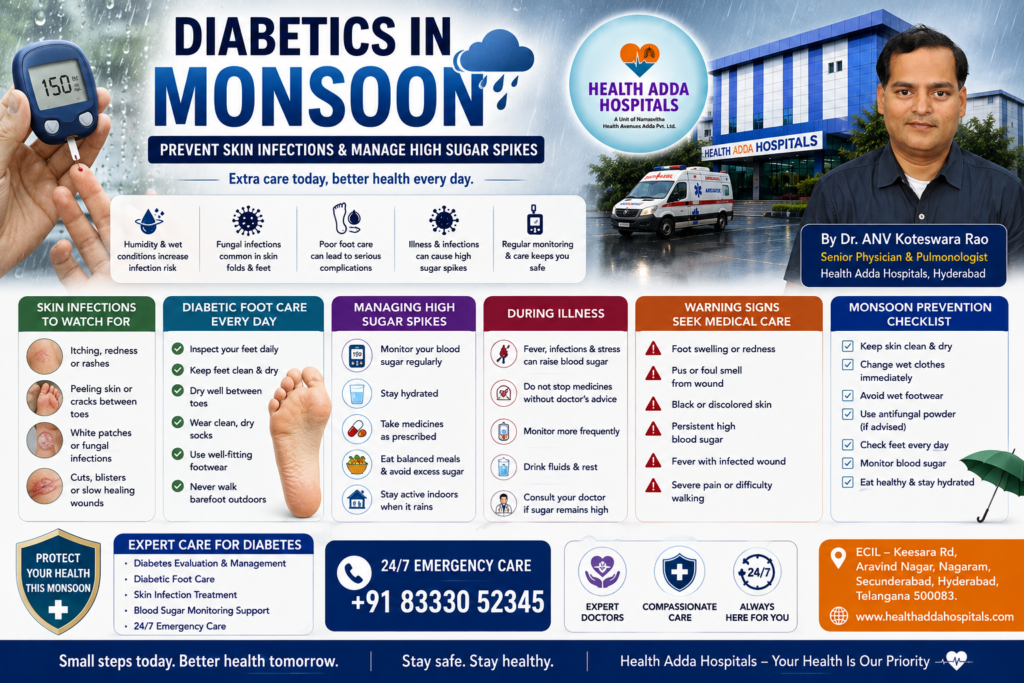
Warning Signs You Should Never Ignore
Seek medical evaluation if you notice:
🚨 Foot swelling
🚨 Redness spreading rapidly
🚨 Pus from a wound
🚨 Black or discolored skin
🚨 Persistent high blood sugar
🚨 Fever with an infected wound
🚨 Severe pain
🚨 Difficulty walking because of a foot problem
Common Monsoon Mistakes Diabetics Should Avoid
❌ Wearing wet shoes all day
❌ Ignoring itchy feet
❌ Walking barefoot after rain
❌ Delaying treatment for cuts
❌ Skipping blood sugar checks during illness
❌ Self-medicating skin infections
Monsoon Diabetes Checklist
Every Day
☑ Check both feet.
☑ Keep feet dry.
☑ Wear clean socks.
☑ Take medicines as prescribed.
☑ Monitor blood sugar as advised.
During Illness
☑ Drink fluids if possible.
☑ Continue monitoring.
☑ Watch for high sugar symptoms.
☑ Seek medical advice if symptoms worsen.
Expert Advice from Dr. ANV Koteswara Rao
“For people with diabetes, a small skin problem can become a larger complication if ignored. During the monsoon, keeping the skin and feet dry, monitoring blood sugar regularly and seeking early medical care for wounds or infections can help prevent serious complications.”
Why Choose Health Adda Hospitals?
At Health Adda Hospitals, diabetic patients receive:
✔ Diabetes-related medical evaluation
✔ Skin infection assessment
✔ Diabetic foot examination
✔ Wound care guidance
✔ Blood sugar monitoring support
✔ Personalized treatment plans
✔ 24/7 Emergency Care
Key Takeaways
- Humidity can increase the risk of fungal skin infections.
- Wet footwear should be changed promptly.
- Daily foot inspection is essential.
- Illness can temporarily raise blood sugar.
- Do not ignore cuts, blisters or infected wounds.
- Seek medical evaluation for persistent high sugar or worsening infections.
Frequently Asked Questions
1. Why do fungal infections increase during the monsoon?
Humidity and damp skin create conditions that allow fungi to grow more easily.
2. Can viral fever increase blood sugar?
Yes. Illness can temporarily raise blood sugar because of the body’s stress response.
3. Should diabetics wear wet shoes?
No. Wet footwear should be changed as soon as possible.
4. Why is foot care so important?
People with diabetes may not notice small injuries immediately, making daily inspection essential.
5. Can a small cut become serious?
Yes. Delayed healing and infection can make minor injuries more significant if left untreated.
6. Should I stop diabetes medicine if I’m eating less?
Do not change medication without medical advice.
7. What are signs of a diabetic foot infection?
Redness, swelling, warmth, pus, severe pain or black discoloration require prompt medical attention.
8. How often should I check my feet?
Daily inspection is recommended, especially during the rainy season.
9. Can dehydration affect blood sugar?
Yes. Dehydration can make diabetes management more challenging.
10. Where can diabetic patients seek care in East Hyderabad?
Patients can consult Dr. ANV Koteswara Rao at Health Adda Hospitals, ECIL–Nagaram, Secunderabad.