
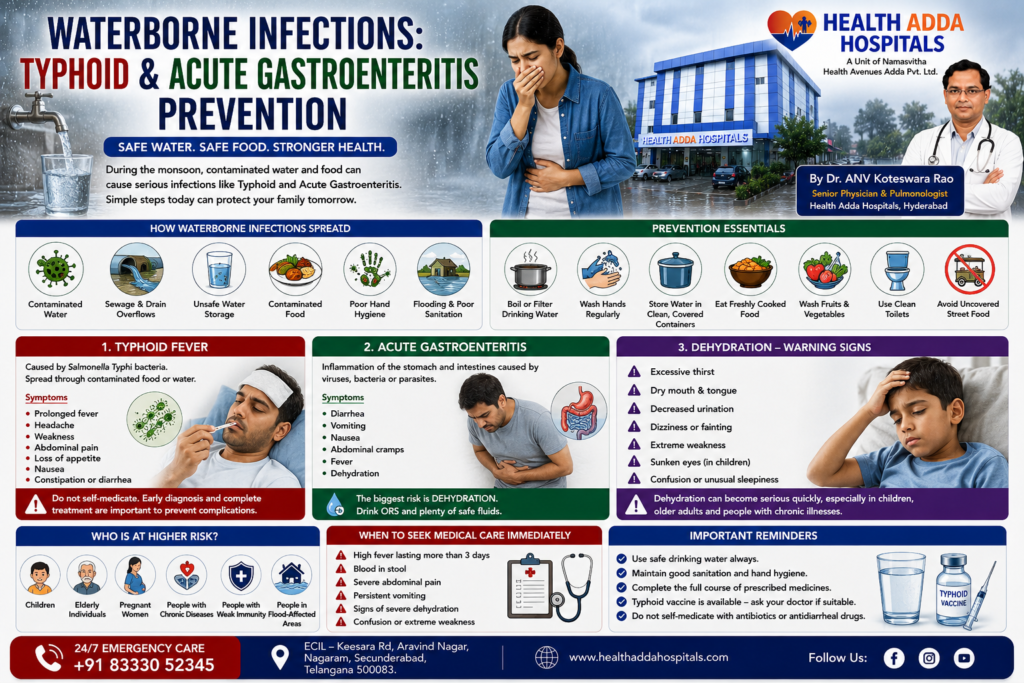
Typhoid and acute gastroenteritis are important water- and food-associated infections. Typhoid is caused by Salmonella Typhi and is usually transmitted through contaminated food or water. Acute gastroenteritis can have viral, bacterial, or parasitic causes and commonly results in diarrhea, vomiting and abdominal discomfort. Safe drinking water, sanitation, handwashing, food hygiene and appropriate water storage are among the most important preventive measures.
Introduction
The monsoon season brings changes that can increase concern about water and food safety.
Heavy rainfall, localized flooding, drainage problems and interruptions in water infrastructure can create opportunities for contamination. When contaminated water or food enters the household, infections such as typhoid and acute gastroenteritis can spread.
This does not mean that every episode of diarrhea or fever during the rainy season is caused by contaminated water. Gastrointestinal symptoms can have many causes, and proper clinical evaluation is important when symptoms are severe or persistent.
The World Health Organization identifies safe drinking water, sanitation and hygiene as fundamental measures for preventing diarrhoeal and other water-related diseases. In India, WHO specifically lists diarrhoea, typhoid and hepatitis A among diseases associated with contaminated water and poor sanitation.
What Are Waterborne Infections?
Waterborne infections occur when disease-causing microorganisms reach people through contaminated water.
Contamination can occur through:
💧 Contaminated drinking water
🚰 Unsafe water-storage practices
🌧️ Flooding and sewage contamination
🍲 Contaminated food
🧼 Poor hand hygiene
🥗 Unsafe food preparation
The important point is that water safety extends beyond the source of water. Storage, handling and preparation also matter.
1. Typhoid Fever
Typhoid is a bacterial infection caused by Salmonella Typhi.
It is generally transmitted through ingestion of food or water contaminated with the bacteria.
Common symptoms include:
🌡️ Prolonged fever
🤕 Headache
😴 Fatigue
🤢 Nausea
🤕 Abdominal pain
🍽️ Reduced appetite
💩 Constipation or diarrhea
Symptoms can overlap with several other infections, which is why a persistent fever should not automatically be labelled as typhoid without appropriate medical assessment.
Why Typhoid Should Not Be Ignored
Typhoid can become serious if untreated.
WHO notes that severe disease can result in serious complications, and increasing antimicrobial resistance makes appropriate diagnosis and antibiotic selection particularly important.
Avoid self-starting antibiotics.
The appropriate antibiotic depends on the clinical situation and local resistance patterns. Unnecessary or inappropriate antibiotic use can contribute to antimicrobial resistance.
2. Acute Gastroenteritis
Acute gastroenteritis refers to inflammation of the stomach and intestines that can result from a variety of infectious causes, including viruses, bacteria and parasites.
Typical symptoms include:
💩 Loose or watery stools
🤢 Nausea
🤮 Vomiting
🤕 Abdominal cramps
🌡️ Fever
💧 Dehydration
Not every case is caused by contaminated water. Infection can also spread through contaminated food, surfaces or person-to-person contact.
WHO identifies contaminated food and drinking water, as well as poor hygiene, as important routes for infectious diarrhoeal disease.
The Biggest Immediate Risk: Dehydration
For many acute diarrhoeal illnesses, the most immediate concern is loss of fluids and electrolytes.
This is particularly important for:
- Infants and young children
- Older adults
- Pregnant women
- People with chronic illnesses
- People with weakened immunity
Watch for signs such as:
⚠️ Excessive thirst
⚠️ Dry mouth
⚠️ Reduced urination
⚠️ Dizziness
⚠️ Marked weakness
⚠️ Unusual sleepiness or confusion
Severe dehydration can require urgent medical treatment.
Typhoid vs Acute Gastroenteritis
| Feature | Typhoid | Acute Gastroenteritis |
|---|---|---|
| Main cause | Salmonella Typhi | Viruses, bacteria or parasites |
| Common route | Contaminated food/water | Food, water or person-to-person transmission |
| Fever | Often prominent/prolonged | May occur |
| Diarrhea | May occur | Common |
| Vomiting | May occur | Common |
| Abdominal discomfort | Common | Common |
| Dehydration | Possible | Major concern |
| Treatment | Medical evaluation and appropriate antibiotics | Depends on cause; rehydration is important |
Important: Symptoms can overlap considerably. Diagnosis should be based on clinical assessment and investigations when indicated.
How Does Monsoon Weather Increase the Risk?
Rain itself does not cause typhoid or gastroenteritis.
The concern is what can happen around heavy rainfall and flooding.
For example:
Heavy rainfall → flooding/drain overflow → possible contamination → unsafe water or food → increased exposure risk
Poor sanitation and contaminated water are recognized contributors to the spread of typhoid and diarrhoeal disease.
Prevention Starts With Safe Water
1. Drink Safe Water
Use water from a reliable, safe source.
Where water safety is uncertain, appropriate household water treatment—such as boiling or a suitable treatment method—can reduce microbial risks.
Keep drinking water covered and protected from recontamination.
2. Store Water Safely
Even clean water can become contaminated after collection.
Remember:
✔ Use clean containers
✔ Keep containers covered
✔ Avoid dipping unwashed hands or utensils into stored water
✔ Clean storage containers regularly
✔ Use safe methods to dispense drinking water
WHO emphasizes both household water treatment and safe storage as components of diarrhoeal disease prevention.
3. Hand Hygiene Matters
Wash hands thoroughly with soap:
🧼 After using the toilet
🧼 Before preparing food
🧼 Before eating
🧼 After cleaning a child
🧼 After handling potentially contaminated materials
Handwashing with soap is an important intervention for reducing diarrhoeal disease transmission.
4. Be Careful With Food During the Monsoon
Food safety becomes particularly important when temperatures, humidity and storage conditions fluctuate.
Practical precautions:
✔ Eat freshly prepared food
✔ Cook food thoroughly
✔ Refrigerate perishable foods appropriately
✔ Wash produce with safe water
✔ Keep cooked food covered
✔ Avoid food that has been stored under questionable conditions
✔ Maintain clean kitchen surfaces
5. Be Careful With Outside Food
Street food is not automatically unsafe.
However, during periods of heavy rain or flooding, pay particular attention to:
- Water used for cooking
- Water used to wash utensils
- Food storage
- Hand hygiene
- Exposure to flies and contaminated surfaces
- Whether cooked food is adequately protected
6. Don’t Assume Every Fever Is Typhoid
A common mistake is:
Fever + stomach symptoms = Typhoid
That conclusion is not medically reliable.
Fever and gastrointestinal symptoms can occur with many infections.
A doctor may consider the duration of fever, symptoms, examination findings, exposure history and appropriate investigations before determining the likely cause.
7. Don’t Self-Medicate
Avoid automatically taking:
❌ Antibiotics
❌ Steroids
❌ Antidiarrhoeal medicines without appropriate advice
❌ Leftover prescription medicines
The correct treatment depends on the underlying cause.
For acute diarrhoea, oral rehydration solution (ORS) is an important treatment for replacing lost fluids and electrolytes. WHO recommends medical assessment when diarrhoea is persistent, when there is blood in the stool, or when signs of dehydration develop.
When Should You See a Doctor?
Seek medical evaluation if you develop:
🚨 Persistent or high fever
🚨 Blood in stool
🚨 Severe abdominal pain
🚨 Persistent vomiting
🚨 Significant dehydration
🚨 Reduced urine output
🚨 Confusion or unusual drowsiness
🚨 Diarrhea that does not improve
🚨 Symptoms in a young child or vulnerable adult
When Is Emergency Care Necessary?
Immediate medical attention may be necessary when there is:
Severe dehydration
Altered consciousness
Very low urine output
Persistent vomiting preventing fluid intake
Blood in stool with significant illness
Severe abdominal pain
Breathing difficulty or collapse
The risk of dehydration can become particularly significant in young children and older or medically vulnerable people.
Can Typhoid Be Prevented With Vaccination?
Yes.
Typhoid vaccines are available, and WHO recommends typhoid conjugate vaccine use in appropriate settings, particularly in areas where typhoid is endemic or where public-health recommendations support vaccination.
Vaccination does not replace safe water, sanitation and food hygiene.
It should be considered as part of a broader prevention strategy based on individual circumstances and applicable immunization recommendations.
Protecting Children During the Monsoon
Children can become dehydrated more quickly when they have repeated diarrhea or vomiting.
Parents should pay attention to:
- Fluid intake
- Urination
- Alertness and activity
- Frequency of stools
- Persistent vomiting
- Fever
- Blood in stool
If a child is unable to drink adequately or shows signs of dehydration, medical assessment should not be delayed.
A Simple Monsoon Water-Safety Checklist
Before drinking
☑ Is the water source reliable?
☑ Has the water been appropriately treated if needed?
☑ Is the storage container clean and covered?
Before eating
☑ Are hands clean?
☑ Is the food freshly prepared?
☑ Are fruits and vegetables washed with safe water?
During flooding
☑ Avoid potentially contaminated water.
☑ Follow local public-health advisories regarding water safety.
☑ Be particularly cautious about food and drinking-water sources.
Expert Perspective
Dr. ANV Koteswara Rao
Senior Physician & Pulmonologist
“During the monsoon, fever, vomiting and diarrhea should not automatically be assumed to be a simple stomach infection. The priority is to recognize dehydration, identify the likely cause and begin appropriate care early. Safe water, food hygiene and handwashing remain some of the most effective ways to prevent these infections.”
Why Timely Medical Evaluation Matters
Typhoid and gastroenteritis can initially appear relatively mild.
But the clinical picture can change.
A patient who initially has:
Fever → weakness → poor appetite
may later develop:
Persistent fever → dehydration → worsening weakness
Similarly:
Diarrhea → fluid loss → dehydration → electrolyte imbalance
Early assessment can help determine whether home supportive care is appropriate or whether further investigation and treatment are required.
Key Takeaways
💧 Safe water is one of the strongest defenses against waterborne infections.
🧼 Handwashing and food hygiene reduce transmission.
🌡️ Persistent fever should not automatically be labelled typhoid.
💩 Acute gastroenteritis can have viral, bacterial or parasitic causes.
💧 Dehydration is one of the most important complications of acute diarrhoea.
💊 Do not self-start antibiotics.
💉 Typhoid vaccination can be part of prevention where recommended.
🏥 Persistent fever, blood in stool, severe vomiting or dehydration requires medical evaluation.
Frequently Asked Questions
1. Can contaminated water cause typhoid?
Yes. Typhoid is usually transmitted through contaminated food or water containing Salmonella Typhi.
2. Is every case of diarrhea caused by contaminated water?
No. Diarrhoea can result from viral, bacterial or parasitic infections and can spread through food, water or person-to-person contact.
3. What is the biggest danger of acute gastroenteritis?
Dehydration is a major concern, particularly in young children, older adults and vulnerable patients.
4. Should I take antibiotics for diarrhea?
Not automatically. The cause needs to be considered before antibiotic treatment is prescribed.
5. Can boiling water help?
Appropriate boiling can reduce microbial contamination and is one household water-treatment option when the safety of drinking water is uncertain.
6. How can I prevent typhoid?
Use safe drinking water, practice good sanitation and hand hygiene, maintain food safety, and discuss typhoid vaccination where appropriate.
7. When should a person with diarrhea visit a doctor?
Seek medical care for persistent diarrhea, blood in stool, significant dehydration, persistent vomiting, severe abdominal pain or concerning symptoms in vulnerable individuals.
8. Can children become dehydrated quickly?
Yes. Children can become significantly dehydrated with repeated diarrhea or vomiting, so warning signs should be taken seriously.
9. Can monsoon flooding contaminate drinking water?
Flooding and inadequate sanitation can increase the risk of contamination of water sources and food. Safe water practices are particularly important during such conditions.
10. Where can patients seek medical evaluation in East Hyderabad?
Patients experiencing persistent fever, diarrhea, vomiting, dehydration or other concerning symptoms can seek medical evaluation at Health Adda Hospitals, ECIL–Nagaram, Secunderabad.