
Introduction
When choosing a hospital, most people focus on doctors and treatment options. While experienced medical professionals are essential, another equally important factor is often overlooked—hospital infrastructure.
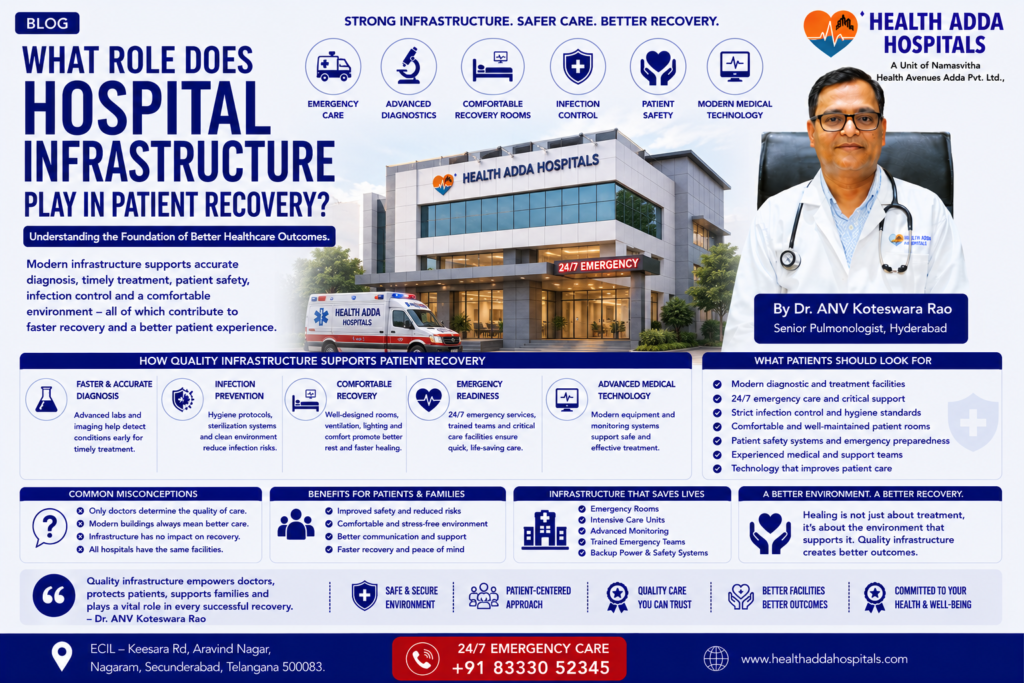
Modern healthcare is not only about medicines and surgeries. The environment in which patients receive treatment plays a crucial role in safety, comfort, recovery, and overall healthcare outcomes.
From emergency departments and intensive care units to infection control measures and diagnostic technology, hospital infrastructure supports every stage of a patient’s healthcare journey.
Understanding these facilities helps patients and families make informed healthcare decisions.
Why Hospital Infrastructure Matters
Hospital infrastructure is the foundation of quality healthcare.
Well-planned infrastructure supports:
- Faster diagnosis
- Timely treatment
- Better patient safety
- Improved infection prevention
- Comfortable recovery
- Efficient emergency response
Healthcare professionals rely on infrastructure every day to deliver effective patient care.
Modern Diagnostic Facilities Improve Early Diagnosis
Accurate diagnosis is the first step toward appropriate treatment.
Hospitals with advanced diagnostic support may offer:
- Digital laboratory services
- X-ray imaging
- Ultrasound
- ECG
- CT Scan
- Other diagnostic investigations
Quick access to diagnostic services can help healthcare teams make informed clinical decisions.
Infection Control Is Part of Good Infrastructure
Hospital-acquired infections are a concern worldwide.
Strong infrastructure supports infection prevention through:
- Sterilization systems
- Clean patient rooms
- Sanitized equipment
- Isolation facilities when required
- Strict hygiene protocols
Maintaining a clean healthcare environment protects both patients and healthcare workers.
Emergency Infrastructure Saves Valuable Time
Medical emergencies require rapid action.
Hospitals should have:
- 24/7 emergency services
- Emergency treatment rooms
- Patient monitoring systems
- Quick access to diagnostic services
- Trained emergency response teams
During emergencies, efficient infrastructure supports timely care.
Intensive Care Facilities Support Critical Patients
Patients with serious medical conditions may require specialized monitoring.
Critical care infrastructure often includes:
- Intensive Care Units (ICUs)
- Continuous monitoring systems
- Emergency equipment
- Oxygen support
- Specialized nursing care
These facilities help manage patients who require close observation.
Patient Rooms Influence Recovery
A comfortable recovery environment contributes to overall well-being.
Important features include:
- Clean surroundings
- Comfortable beds
- Proper ventilation
- Air-conditioned rooms
- Adequate lighting
- Patient privacy
A well-maintained environment promotes comfort during hospitalization.
Technology Improves Patient Care
Modern hospitals increasingly use technology to improve healthcare delivery.
Examples include:
- Digital medical records
- Electronic reporting
- Patient monitoring systems
- Appointment management
- Diagnostic integration
Technology helps improve efficiency and communication.
Safe Infrastructure Supports Every Patient
Patient safety remains one of the most important healthcare priorities.
Hospitals should have:
✔️ Fire safety systems
✔️ Emergency exits
✔️ Backup power supply
✔️ Wheelchair accessibility
✔️ Elevators
✔️ Patient transport facilities
Infrastructure supports both routine care and emergency preparedness.
Why Infrastructure Matters for Families
Hospital infrastructure benefits not only patients but also caregivers.
Families appreciate:
- Comfortable waiting areas
- Easy navigation
- Parking facilities
- Visitor support
- Clear communication systems
A patient-centered environment improves the overall healthcare experience.
Questions Patients Should Ask Before Choosing a Hospital
Does the Hospital Have Modern Diagnostic Facilities?
Are Emergency Services Available 24/7?
How Does the Hospital Maintain Hygiene and Infection Control?
Are Critical Care Facilities Available?
Does the Hospital Provide Comfortable Recovery Areas?
Asking these questions helps patients evaluate healthcare quality beyond treatment alone.
Common Misconceptions About Hospital Infrastructure
“Only Doctors Matter”
Doctors are essential, but quality infrastructure supports their ability to deliver effective care.
“Modern Buildings Mean Better Healthcare”
Appearance alone does not define healthcare quality.
Patients should look for functional infrastructure that supports diagnosis, treatment, safety, and recovery.
“Infrastructure Doesn’t Affect Recovery”
In reality, clean environments, infection prevention, diagnostic services, and patient comfort all contribute to a positive healthcare experience.
Why Hyderabad Families Should Consider Hospital Infrastructure
As Hyderabad continues to grow, patients have access to a wide range of healthcare facilities.
When selecting a hospital, families should evaluate:
- Infrastructure
- Medical expertise
- Accessibility
- Hygiene
- Emergency services
- Patient-centered care
Together, these factors contribute to better healthcare experiences.
How Health Adda Hospitals Supports Quality Healthcare
At Health Adda Hospitals, quality infrastructure and patient-centered care go hand in hand.
According to Dr. ANV Koteswara Rao, effective healthcare depends not only on medical expertise but also on a well-equipped environment that supports accurate diagnosis, patient safety, and comfortable recovery.
Health Adda Hospitals continues to invest in facilities, technology, and patient-focused healthcare to serve families across Hyderabad.
Clinical Perspective
From a physician’s perspective, infrastructure directly influences the quality of care delivered to patients.
According to Dr. ANV Koteswara Rao, modern medical facilities, hygiene standards, emergency preparedness, and diagnostic capabilities all play important roles in supporting informed clinical decisions and patient recovery.
Conclusion
Hospital infrastructure is much more than buildings and equipment.
It supports diagnosis, treatment, safety, infection prevention, emergency response, and patient comfort throughout the healthcare journey.
When choosing a hospital, patients should consider infrastructure alongside medical expertise to make informed healthcare decisions and support better recovery outcomes.