
Introduction
Most people experience headaches at some point in their lives.
A long workday, stress, dehydration, lack of sleep, or seasonal changes can often trigger temporary headaches that improve with rest.
However, what happens when headaches keep coming back?
Many people continue to take painkillers, ignore symptoms, or assume headaches are simply part of their daily routine.
While many headaches are harmless, recurring headaches that persist for weeks, months, or even years deserve proper medical evaluation.
In some cases, a second opinion can help patients understand whether an underlying health condition is contributing to their symptoms.
Why This Topic Matters
Headaches are among the most common reasons people seek medical advice.
Yet many patients:
- Self-medicate repeatedly
- Delay medical evaluation
- Ignore warning signs
- Accept recurring headaches as normal
The reality is that headaches are symptoms, not diagnoses.
Understanding the underlying cause is often the most important step toward effective management.
What Is Considered a Recurrent Headache?
A headache may be considered recurrent when it:
- Occurs frequently
- Returns after treatment
- Affects daily activities
- Interferes with sleep
- Impacts work or school performance
When symptoms continue despite treatment, additional evaluation may provide valuable insights.
Common Causes of Recurrent Headaches
Migraine
Migraine is one of the most common causes of recurring headaches.
Symptoms may include:
- Throbbing pain
- Sensitivity to light
- Sensitivity to sound
- Nausea
- Visual disturbances
Many patients suffer for years before receiving an accurate diagnosis.
Sinus-Related Headaches
Sinus problems may cause:
- Facial pressure
- Nasal congestion
- Forehead pain
- Persistent discomfort
Patients often confuse sinus headaches with migraines.
Blood Pressure Changes
Both high and low blood pressure can sometimes contribute to headaches.
Regular monitoring is important, particularly for adults with risk factors.
Vision Problems
Uncorrected vision issues may cause:
- Eye strain
- Forehead pain
- Headaches after reading or screen use
A simple eye examination can sometimes identify the cause.
Sleep Disorders
Poor sleep quality can affect overall health.
Conditions such as sleep deprivation or sleep apnea may contribute to recurring headaches.
Stress and Lifestyle Factors
Common triggers include:
- Emotional stress
- Anxiety
- Dehydration
- Irregular meals
- Excessive screen time
Lifestyle factors often play a significant role in headache patterns.
When Should You Consider a Second Opinion?
A second opinion may be beneficial when:
Headaches Keep Returning
Recurring symptoms deserve further evaluation.
Treatment Is Not Helping
If medications provide only temporary relief, additional assessment may be useful.
The Diagnosis Is Unclear
Patients should feel confident they understand the cause of their symptoms.
Symptoms Are Affecting Daily Life
Headaches that interfere with work, family responsibilities, or sleep should not be ignored.
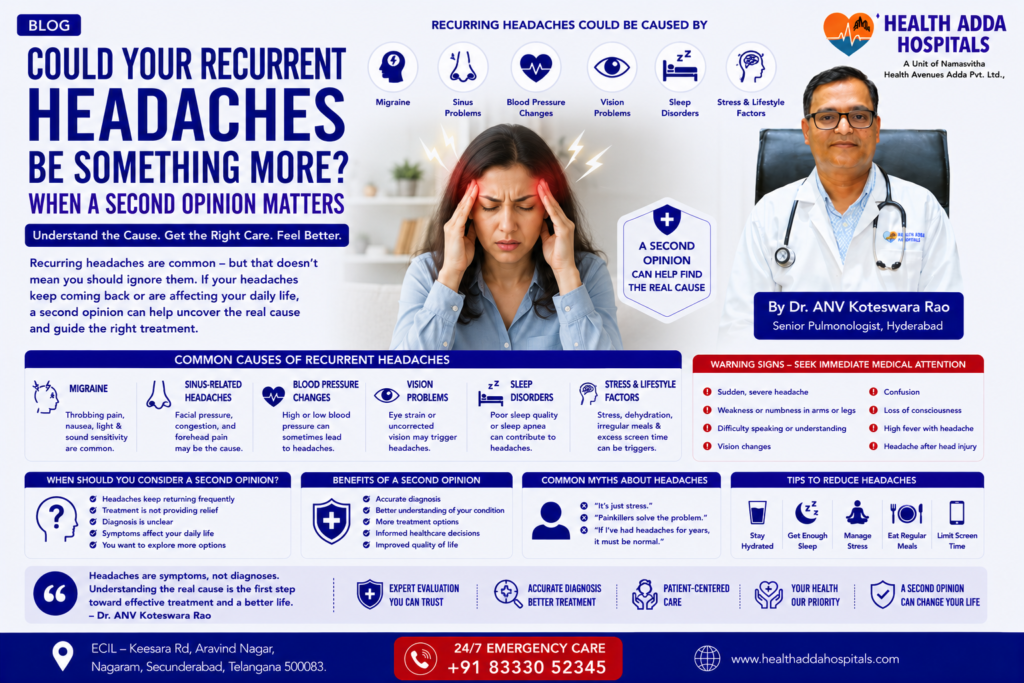
Warning Signs That Need Immediate Medical Attention
Seek urgent medical care if headaches occur with:
🚨 Sudden severe headache
🚨 Weakness in arms or legs
🚨 Difficulty speaking
🚨 Vision changes
🚨 Confusion
🚨 Loss of consciousness
🚨 High fever
These symptoms require immediate medical evaluation.
Why Patients Seek a Second Opinion
Many patients seek another medical opinion because:
- Symptoms continue despite treatment
- They want reassurance
- They feel their concerns have not been fully addressed
- They want to explore additional treatment options
A second opinion does not mean the first doctor was wrong.
Instead, it provides another professional perspective that can help patients make informed decisions.
Common Myths About Headaches
“It’s Just Stress”
Not all headaches are stress-related.
“Painkillers Solve the Problem”
Painkillers may relieve symptoms but do not always address the underlying cause.
“I’ve Had Headaches for Years, So It’s Normal”
Persistent symptoms should never be considered normal without proper evaluation.
The Importance of Early Evaluation
Early assessment can help:
✔️ Identify potential causes
✔️ Improve symptom management
✔️ Reduce uncertainty
✔️ Support informed healthcare decisions
✔️ Improve quality of life
The sooner patients understand their condition, the better equipped they are to manage it.
How Health Adda Hospitals Supports Patients
At Health Adda Hospitals, patient awareness and informed decision-making are important parts of healthcare.
According to Dr. ANV Koteswara Rao, patients experiencing recurrent headaches should seek proper evaluation rather than relying solely on repeated symptom relief.
Understanding the root cause of a headache often leads to better long-term outcomes and improved patient confidence.
Health Adda Hospitals continues to support patients through education, comprehensive healthcare, and patient-centered medical guidance.
Clinical Perspective
From a physician’s perspective, headaches can have many different causes.
According to Dr. ANV Koteswara Rao, persistent headaches should be evaluated carefully, especially when symptoms continue despite treatment or begin affecting daily life.
A second opinion can sometimes provide additional clarity and help patients better understand their condition and treatment options.
Conclusion
Most headaches are temporary and improve without complications.
However, recurrent headaches that continue despite treatment deserve attention.
A second opinion may help identify underlying causes, improve confidence in diagnosis, and support informed healthcare decisions.
If headaches are becoming a regular part of your life, it may be time to look beyond the symptom and understand the cause.
Why Trust This Guidance?
This article is reviewed by Dr. ANV Koteswara Rao, Senior Physician & Pulmonologist at Health Adda Hospitals, Hyderabad.
Health Adda Hospitals is committed to patient education, preventive healthcare, evidence-based medical guidance, and helping patients make informed healthcare decisions through accessible and compassionate care.
FAQ
Are recurring headaches always migraines?
No. Headaches can be caused by migraines, sinus conditions, vision problems, blood pressure changes, sleep disorders, stress, and other health conditions.
When should I worry about recurring headaches?
If headaches become frequent, severe, interfere with daily activities, or are associated with neurological symptoms, medical evaluation is recommended.
Can stress alone cause headaches?
Stress can contribute to headaches, but it is important to rule out other possible causes.
Is getting a second opinion common?
Yes. Seeking a second opinion is a normal part of healthcare and can help patients better understand their diagnosis and treatment options.
Can lifestyle changes help reduce headaches?
For some individuals, adequate sleep, hydration, stress management, and regular meals may help reduce headache frequency.