
Introduction
As Hyderabad transitions from summer to monsoon, many people experience cough, throat irritation, allergies, breathing difficulties, and respiratory infections.
Most seasonal coughs improve within a few days or weeks. However, what happens when the cough continues despite medications?
Many patients initially assume:
- “It’s just an allergy.”
- “The weather caused it.”
- “It will go away on its own.”
While this is often true, persistent cough can sometimes indicate an underlying condition that deserves further evaluation.
This is why a second opinion may sometimes provide important answers.
Why This Topic Matters Right Now
Seasonal weather changes increase exposure to:
✅ Airborne allergens
✅ Dust particles
✅ Mold growth
✅ Viral infections
✅ Pollution-related irritants
These triggers can affect both healthy individuals and people with existing respiratory conditions.
As a result, cough becomes one of the most common complaints seen during seasonal transitions.
When Is a Cough Considered Persistent?
A cough may deserve further evaluation when:
- It lasts longer than expected
- It repeatedly returns
- It worsens over time
- It interferes with sleep
- It affects daily activities
Because cough is a symptom rather than a diagnosis, understanding its cause is important.
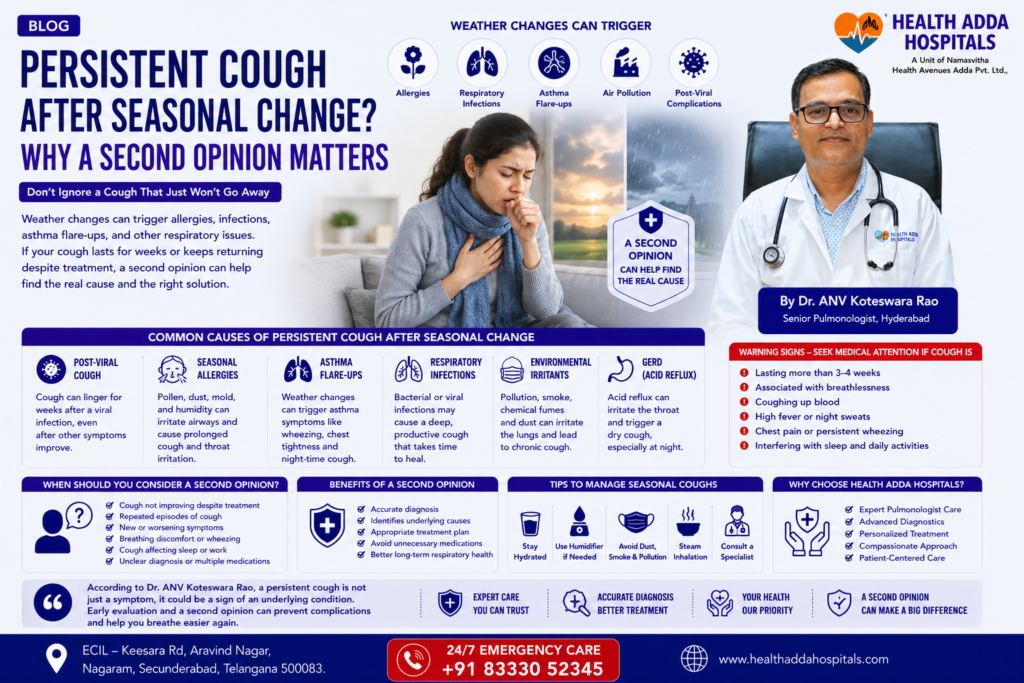
Common Causes of Persistent Cough After Seasonal Change
Post-Viral Cough
Many patients continue coughing even after recovering from a viral infection.
Symptoms may include:
- Dry cough
- Throat irritation
- Mild breathing discomfort
This type of cough may persist for several weeks after the infection resolves.
Seasonal Allergies
Changing weather often increases exposure to allergens.
Common symptoms include:
- Sneezing
- Runny nose
- Throat irritation
- Persistent cough
Allergy-related cough is frequently mistaken for infection.
Asthma Flare-Ups
Seasonal triggers may worsen asthma symptoms.
Warning signs include:
- Night-time coughing
- Wheezing
- Chest tightness
- Shortness of breath
Sometimes patients are unaware they have asthma until symptoms become persistent.
Respiratory Infections
Some respiratory infections may take longer to recover than expected.
A persistent cough after fever or illness should not be ignored.
Environmental Irritants
Dust, pollution, smoke, and workplace exposure may contribute to chronic coughing.
Hyderabad residents often encounter these triggers during seasonal transitions.
Signs That a Second Opinion May Be Helpful
Consider additional medical evaluation if:
The Cough Lasts More Than Several Weeks
Persistent symptoms deserve attention.
Symptoms Continue Despite Treatment
If medications are not providing expected relief, further evaluation may be beneficial.
Breathing Difficulties Develop
Shortness of breath should never be ignored.
Sleep Is Being Affected
Night-time coughing may indicate an underlying respiratory condition.
Symptoms Keep Returning
Repeated episodes often require a closer look.
Conditions That Can Be Mistaken for a Simple Seasonal Cough
Many patients believe they have a routine seasonal cough when the underlying cause may be:
- Asthma
- Allergic airway disease
- Post-viral inflammation
- Chronic respiratory conditions
- Environmental exposure-related illness
This is one reason why proper evaluation is important.
Warning Signs Requiring Prompt Medical Attention
Seek immediate medical evaluation if cough is associated with:
🚨 Difficulty breathing
🚨 Chest pain
🚨 High fever
🚨 Persistent wheezing
🚨 Severe weakness
🚨 Blood in sputum
These symptoms require urgent assessment.
Why Patients Seek a Second Opinion
Many patients seek another opinion because:
- Symptoms continue longer than expected
- Diagnosis remains uncertain
- Recovery is incomplete
- Treatment is not providing relief
A second opinion can provide additional clinical perspective and help patients better understand their condition.
Why Seasonal Coughs Are Common in Hyderabad
Several local factors contribute:
Weather Transitions
Rapid climate changes affect respiratory health.
Air Pollution
Urban pollution can aggravate airway irritation.
Dust Exposure
Construction activity and traffic increase airborne particles.
Seasonal Allergens
Pollen, mold, and environmental allergens often increase during monsoon months.
As a result, respiratory symptoms become more common during this period.
How Health Adda Hospitals Supports Respiratory Health
At Health Adda Hospitals, respiratory awareness and patient education remain important priorities.
According to Dr. ANV Koteswara Rao, a cough that does not improve should never be ignored simply because it began during a seasonal change.
Understanding the underlying cause helps patients receive appropriate care and make informed healthcare decisions.
Health Adda Hospitals continues to support respiratory health awareness for families across Hyderabad.
Clinical Perspective
From a pulmonologist’s perspective, persistent cough is one of the most common symptoms requiring evaluation.
According to Dr. ANV Koteswara Rao, cough may result from infections, allergies, asthma, environmental irritants, or other respiratory conditions.
A second opinion can sometimes provide additional clarity when symptoms continue despite treatment.
Conclusion
Most seasonal coughs improve naturally. However, persistent cough should not be ignored.
When symptoms continue, worsen, or repeatedly return, understanding the underlying cause becomes essential.
A second opinion may help identify respiratory conditions, improve confidence in treatment decisions, and provide valuable peace of mind.