
Introduction
When searching for a hospital, many patients look at online ratings and reviews. However, hospital ratings in India involve much more than star ratings on websites.
A hospital’s quality is often evaluated through clinical standards, patient safety measures, infrastructure, healthcare processes, specialist availability, accreditation systems, and patient experiences.
Understanding how hospital ratings work can help families make informed healthcare decisions, especially during important medical situations.
For patients in Hyderabad, knowing what to look for beyond online reviews can provide greater confidence when choosing a healthcare facility.
What Are Hospital Ratings?
Hospital ratings are systems used to assess healthcare quality and patient safety.
These ratings help patients understand:
- Quality of care
- Safety standards
- Infrastructure
- Clinical processes
- Patient experience
- Healthcare outcomes
However, not all ratings measure the same factors.
Therefore, patients should understand what each rating system actually evaluates.
Why Hospital Ratings Matter
Hospital ratings provide valuable insights into healthcare quality.
They can help patients:
- Compare healthcare facilities
- Understand quality standards
- Evaluate patient safety measures
- Assess hospital preparedness
- Make informed healthcare decisions
As a result, ratings often serve as one of several tools patients use when selecting a hospital.
What Is NABH Accreditation?
Understanding India’s Leading Hospital Accreditation System
One of the most recognized quality standards in India is accreditation from the:
National Accreditation Board for Hospitals & Healthcare Providers
NABH evaluates hospitals based on:
- Patient safety
- Infection control
- Clinical quality
- Staff qualifications
- Emergency preparedness
- Healthcare processes
Because NABH standards are comprehensive, accreditation often reflects a hospital’s commitment to structured healthcare quality.
What Factors Influence Hospital Ratings?
Hospital ratings are usually based on multiple quality indicators.
Patient Safety Standards
Patient safety remains one of the most important healthcare quality measures.
Hospitals are often evaluated on:
- Infection prevention
- Medication safety
- Emergency response systems
- Risk management practices
Therefore, strong safety systems contribute significantly to quality ratings.
Clinical Expertise
The qualifications and experience of healthcare professionals matter.
Hospitals may be assessed based on:
- Specialist availability
- Clinical governance
- Professional qualifications
- Continuing medical education
As healthcare becomes increasingly specialized, expertise remains a major quality indicator.
Infrastructure and Facilities
Modern healthcare relies heavily on infrastructure.
Important factors include:
- ICU availability
- Diagnostic facilities
- Operation theatres
- Medical technology
- Emergency departments
Therefore, infrastructure contributes to overall hospital evaluations.
Patient Experience
Healthcare quality is not only about medical treatment.
Patient experience also matters.
Hospitals may evaluate:
- Communication quality
- Waiting times
- Staff behavior
- Patient satisfaction
As a result, patient-centered care increasingly influences hospital assessments.
Are Online Reviews Enough?
Many patients rely heavily on Google reviews and social media ratings.
While reviews can provide useful insights, they should not be the only factor considered.
Reviews may reflect:
- Individual experiences
- Communication quality
- Customer service
- Convenience factors
However, they may not always accurately represent clinical quality or safety standards.
Therefore, patients should combine reviews with other quality indicators.
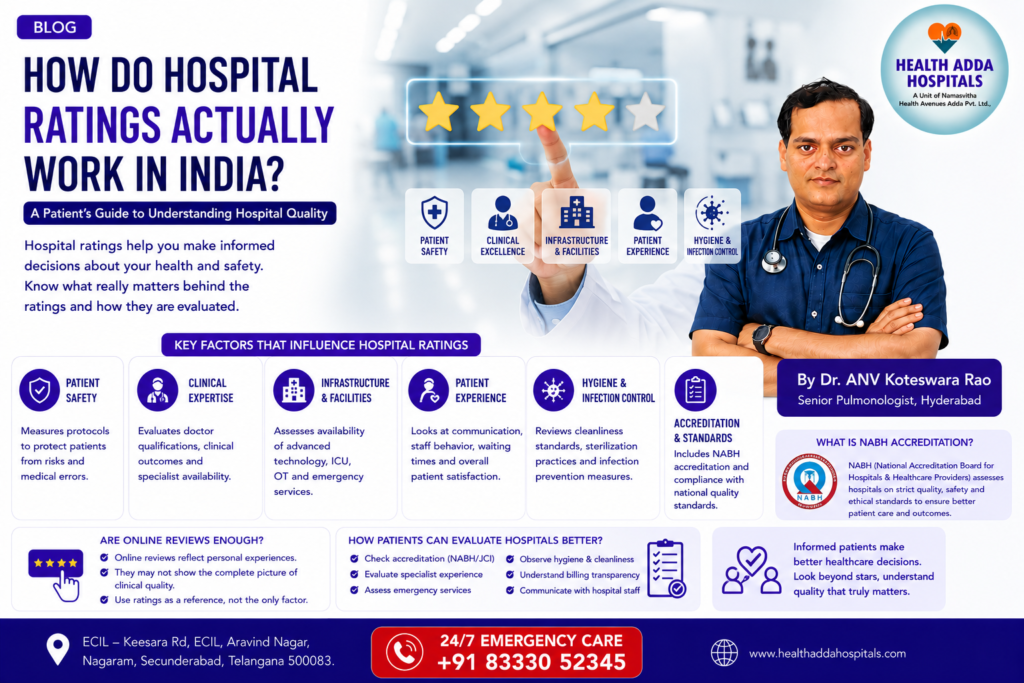
How Patients Can Evaluate Hospitals Beyond Ratings
Instead of relying solely on star ratings, consider:
Accreditation Status
Look for recognized healthcare accreditations.
Specialist Availability
Evaluate the qualifications and experience of specialists.
Emergency Services
Assess emergency preparedness and critical care capabilities.
Patient Communication
Observe how staff communicate with patients and families.
Healthcare Transparency
Look for clear communication regarding procedures, services, and patient care.
Common Misconceptions About Hospital Ratings
Many people misunderstand hospital quality assessments.
Higher Cost Does Not Always Mean Higher Quality
Expensive healthcare services do not automatically indicate better care.
Online Ratings Are Not the Complete Picture
Star ratings alone cannot fully measure clinical excellence.
Infrastructure Alone Is Not Enough
A modern building does not automatically guarantee high-quality healthcare.
Why Hyderabad Patients Are Becoming More Quality Conscious
Healthcare awareness is increasing rapidly.
Patients now evaluate:
- Accreditation
- Specialist expertise
- Patient safety
- Emergency preparedness
- Communication quality
Therefore, hospital quality assessments are becoming more sophisticated than simple online reviews.
How Health Adda Hospitals Supports Quality Healthcare Awareness
At Health Adda Hospitals, healthcare awareness, patient education, and quality-focused care remain important priorities.
According to Dr. ANV Koteswara Rao, patients should understand that healthcare quality involves multiple factors including patient safety, communication, clinical expertise, and hospital systems.
Healthcare decisions are most effective when based on informed evaluation rather than assumptions.
Clinical Perspective
From a healthcare standpoint, quality hospitals typically demonstrate:
- Strong patient safety systems
- Skilled healthcare professionals
- Effective communication
- Reliable emergency support
- Continuous quality improvement
According to Dr. ANV Koteswara Rao, these factors often provide a more meaningful picture of healthcare quality than simple star ratings.
Conclusion
Hospital ratings in India can provide useful information, but they should be interpreted carefully.
Patients should evaluate accreditation, patient safety standards, specialist expertise, infrastructure, communication quality, and healthcare processes alongside reviews and ratings.
As healthcare choices continue to expand in Hyderabad, understanding how hospital ratings work can help families make more informed healthcare decisions and choose facilities that prioritize quality and patient-centered care.